
Compare models

Google Pixel 8 Pro vs iPhone Air

  • 1-year warranty
  • Free standard shipping
  • Free 30-day returns
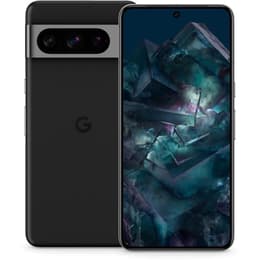
Google Pixel 8 Pro
Starting at

Refurbished price:A$477.00

Versus A$1,859.00 new

See options
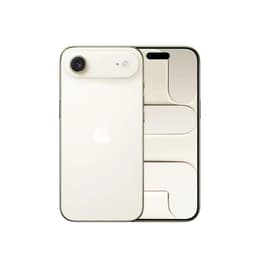
iPhone Air
Starting at

Refurbished price:A$1,099.00

Versus A$1,899.00 new

See options

Differences at a glance

The Google Pixel 8 Pro (2023) and the Apple iPhone Air (2025) represent distinct approaches to modern smartphone design, contrasting an established flagship Android ecosystem with an ultra-slim mobile experience running iOS. While both devices serve demanding daily routines, they diverge sharply in physical form factor, operating system philosophy, and specialized hardware features. Choosing between them depends on how you balance physical ergonomics against ecosystem preferences.

Available Models

Colour

Storage

Scores

Durability

Both smartphones provide robust long-term software support, though their release schedules and hardware durability standards shape different expected lifespans.

  • Software Support Window: The Google Pixel 8 Pro benefits from a comprehensive seven-year commitment covering full system updates and security patches, matching the long-term update framework typical of contemporary Apple hardware.
  • Build and Repairability: The Google Pixel 8 Pro utilizes sturdy glass panels and an aluminum frame designed for resilience, whereas the iPhone Air prioritizes an ultra-thin titanium chassis that requires careful handling due to its slim profile.
  • Expected Lifespan: Both models are built to remain functional and secure for years of daily use, making a quality-assured refurbished option an eco-friendly way to maximize device longevity.

Release year

2023

2025

Compatible with latest Update

Yes

Yes

Foldable

No

No

Performance

Everyday responsiveness and battery behavior differ significantly due to varying hardware architectures and physical dimensions.

  • Multitasking and App Handling: Both devices manage demanding applications, complex web browsing, and multi-window workflows smoothly, ensuring reliable system fluidity during heavy daily tasks.
  • Storage Configurations: The Google Pixel 8 Pro offers spacious tiers starting from 128 GB, while the iPhone Air begins at higher baseline storage capacities to accommodate extensive media libraries.
  • Battery Behavior: The Google Pixel 8 Pro accommodates a larger physical battery capacity for extended daily usage, whereas the iPhone Air trades physical battery volume for an extremely thin chassis, resulting in lighter daily endurance.

Screen quality

Viewing experiences vary across display sizes, panel technologies, and peak brightness capabilities.

  • Display Technology: Both models feature advanced OLED panels that deliver deep contrast levels, sharp text clarity, and vivid color reproduction for media consumption.
  • Refresh Rate and Smoothness: Both devices support high refresh rate technology up to 120 Hz, ensuring fluid scrolling through web pages and responsive touch interactions.
  • Size and Brightness: The Google Pixel 8 Pro provides a larger 6.7-inch viewing area with high peak outdoor brightness, while the iPhone Air offers a slightly more compact 6.5-inch display tailored for single-handed navigation.

Resolution

1344 x 2992

2736x1260

Screen type

LTPO OLED

Super Retina XDR

Audiovisual

Optics and media playback hardware cater to distinct photography styles and audio preferences.

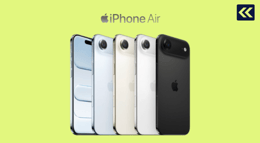
  • Camera Versatility: The Google Pixel 8 Pro features a triple-lens rear array including a dedicated telephoto lens for long-range optical zoom, whereas the iPhone Air employs a streamlined single-lens system focused on everyday clarity.
  • Low-Light and Video: Both smartphones capture detailed low-light imagery and stable high-resolution video, supported by intelligent software processing for balanced exposures.
  • Audio Output: The Google Pixel 8 Pro delivers balanced stereo sound output, while the slim profile of the iPhone Air limits internal acoustic chamber space for media playback.

Main camera

50 megapixels

48 megapixels

Front camera

10.5 megapixels

18 megapixels

Miscellaneous

Physical dimensions, weight distribution, and connectivity standards define the daily handling experience of each phone.

  • Dimensions and Weight: The Google Pixel 8 Pro has a substantial feel at 213 grams and an 8.8 mm thickness, contrasted by the iPhone Air's featherlight 165-gram build and record-thin 5.6 mm profile.
  • Biometrics and Security: The Google Pixel 8 Pro utilizes an in-display fingerprint reader alongside facial recognition, while the iPhone Air relies exclusively on advanced facial authentication.
  • Connectivity and Ports: Both devices support fast 5G cellular networks and modern Wi-Fi standards, with the iPhone Air using a standard USB-C port alongside a strong focus on digital eSIM technology.

Weight

213 oz

165 oz

Screen size (in)

6.7

6.5

Network

5G

5G

SIM card

Physical SIM + eSIM

eSIM

Carrier compatibility

Unlocked

Unlocked

What the community thinks

User discussions and community feedback highlight distinct preferences for each device. Owners of the Google Pixel 8 Pro frequently praise its versatile multi-lens camera system, comprehensive editing tools, and large screen estate, though some note its heavier physical footprint. Conversely, admirers of the iPhone Air emphasize its groundbreaking slim profile and lightweight handling, while noting that its minimalist camera layout and thinner battery trade away some specialized versatility.

Users prioritizing long-range optical zoom, split-screen multitasking flexibility, and an Android environment will find the Google Pixel 8 Pro well-suited to their needs. Meanwhile, users prioritizing maximum portability, a featherlight physical feel, and the iOS ecosystem may lean toward the iPhone Air. Selecting either model as a sustainable, quality-assured refurbished device provides an eco-friendly path to acquiring reliable consumer technology without compromise.