Compare models

Google Pixel 7a vs iPhone Air

  • 1-year warranty
  • Free standard shipping
  • Free 30-day returns
Google Pixel 7a
Starting at

Refurbished price:A$318.00

Versus A$604.50 new

See options
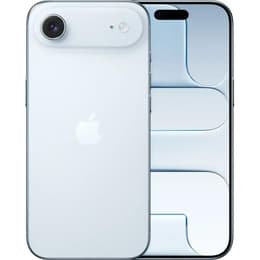
iPhone Air
Starting at

Refurbished price:A$1,061.00

Versus A$1,899.00 new

See options

Differences at a glance

The Google Pixel 7a (2023) and the Apple iPhone Air (2025) are distinct smartphones representing different eras, design philosophies, and operating systems. The Pixel 7a runs Android and focuses on delivering core everyday capabilities in a compact form, while the iPhone Air runs iOS and emphasizes an ultra-slim profile with high-end processing power. While both devices serve daily communication and media needs, they approach hardware construction and user experience from entirely different perspectives.

Available Models

Colour

Storage (GB)

Scores

Durability

Durability and software longevity differ notably between these two models due to their release timelines and hardware support windows.

  • Software support timeline: The iPhone Air benefits from a more recent release year, ensuring extended major operating system updates compared to the older Google Pixel 7a.
  • Build and repair structure: The Pixel 7a uses a robust composite back with an aluminum frame, whereas the iPhone Air features a rigid titanium frame paired with reinforced glass layers. Both provide reliable water and dust resistance ratings for daily protection against accidental spills.

Release year

2022

2025

Compatible with latest Update

Yes

Yes

Operating system

Android

iOS

Foldable

No

No

Performance

System responsiveness and daily multitasking capabilities vary, shaped by each device's internal architecture and memory configuration.

  • Everyday multitasking: Both devices handle standard web browsing, social media feeds, and navigation smoothly, though the iPhone Air provides additional memory headroom for intensive background processes.
  • Storage capacity: The Pixel 7a comes with a fixed storage tier suitable for standard file storage, whereas the iPhone Air offers higher capacity configurations for large media libraries.
  • Battery behavior: The Pixel 7a includes a moderately sized battery capable of lasting a typical day of mixed use, while the iPhone Air's ultra-thin chassis houses a compact battery that may require more frequent charging during heavy tasks.

Screen quality

Viewing experiences differ significantly in physical dimensions, brightness output, and motion fluidity.

  • Display technology and size: The Pixel 7a features a compact 6.1-inch OLED screen, whereas the iPhone Air utilizes a larger 6.5-inch OLED panel with narrow bezels.
  • Brightness and outdoor visibility: The iPhone Air achieves a higher peak outdoor brightness level for clear visibility under direct sunlight, while the Pixel 7a delivers comfortable indoor and shaded viewing.
  • Refresh rate: Both screens support fluid motion handling, with the Pixel 7a offering a smooth 90Hz refresh rate and the iPhone Air scaling up to an adaptive 120Hz.

Resolution

1080 x 2400

2736x1260

Screen type

OLED

Super Retina XDR

Audiovisual

Photography and media recording hardware reflect each manufacturer's approach to imaging and audio reproduction.

  • Camera systems: The Pixel 7a uses a dual rear camera setup pairing a high-resolution main sensor with an ultra-wide lens, while the iPhone Air streamlines photography through a single versatile high-megapixel main lens.
  • Video and low-light performance: Both models capture detailed video with stabilization features, though Apple devices generally excel in cinematic video transitions and ambient audio capture.
  • Audio output: The Pixel 7a is equipped with stereo speakers for media playback, whereas the iPhone Air utilizes a specialized mono speaker configuration optimized for its slim build.

Main camera

64 megapixels

48 megapixels

Front camera

13 megapixels

18 megapixels

Miscellaneous

Physical dimensions and connectivity standards influence daily handling comfort and peripheral compatibility.

  • Form factor and weight: The Pixel 7a has a thicker, heavier footprint that feels substantial in the hand, whereas the iPhone Air focuses on an exceptionally thin and lightweight profile.
  • Ports and charging: Both models utilize standard USB-C ports for charging and data transfer, alongside modern wireless charging capabilities.
  • Connectivity: Each device supports 5G networks, Wi-Fi connectivity, and dual-SIM configurations using physical or electronic SIM cards. Choosing a quality-assured refurbished option provides a sustainable way to access these features while reducing electronic waste.

Weight

212 oz

165 oz

Screen size (in)

6.3

6.5

Network

5G

5G

SIM card

Physical SIM + eSIM

eSIM

Carrier compatibility

Unlocked

Unlocked

What the community thinks

Users evaluating the Google Pixel 7a and the iPhone Air will find that each device caters to distinct preferences. Owners of the Pixel 7a frequently praise its straightforward Android interface, compact ergonomics, and reliable daily camera performance. Conversely, users highlight the iPhone Air for its exceptionally thin profile, lightweight handling, and vibrant large display, though some note that the single-camera setup and mono speaker represent trade-offs for its slim design.

Users prioritizing a compact Android device with a traditional dual-lens camera system may prefer the Google Pixel 7a, while users prioritizing an expansive screen, iOS ecosystem integration, and a remarkably lightweight chassis may lean toward the iPhone Air. Exploring quality-assured refurbished models on Back Market offers a sustainable choice for acquiring either device. Reviewing personal software preferences and handling habits will help determine which device aligns best with individual daily routines.