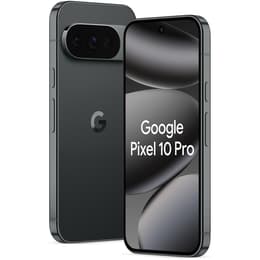


Compare models
Google Pixel 10 Pro vs Google Pixel 7 Pro
- 1-year warranty
- Free standard shipping
- Free 30-day returns
Differences at a glance
The Google Pixel 10 Pro (2025) and the Google Pixel 7 Pro (2022) are premium Android smartphones representing different generations of Google's flagship hardware ecosystem. While both models deliver high-end mobile experiences, the Pixel 10 Pro introduces refined processing capabilities, a brighter display, and updated software support compared to its earlier counterpart. Operating on successive iterations of Android, these devices cater to users seeking reliable daily performance, though they differ significantly in release age and internal maturity.
Available Models
Colour
Storage (GB)
Scores
Durability
The Google Pixel 10 Pro and Google Pixel 7 Pro offer different outlooks on long-term usability based on their release timelines and software update pathways.
- Release timeline and software support: The Pixel 10 Pro benefits from a newer release date and an extended software support window, ensuring longevity for future operating system upgrades. The Pixel 7 Pro operates on an earlier release schedule with a finite remaining window for major software updates.
- Repairability and build durability: Both devices feature robust aluminum and glass construction with IP68 water resistance ratings. Quality-assured refurbished options provide an eco-friendly alternative for buyers seeking reliable hardware longevity without purchasing newly manufactured devices.
- Expected practical lifespan: The Pixel 10 Pro provides extended hardware headroom and software currency, while the Pixel 7 Pro offers a reliable lifespan suited for users seeking established, older-generation technology.
Release year
2025
2022
Foldable
No
No
Performance
System responsiveness and daily multitasking capabilities vary between the two generations due to hardware iterations and memory configurations.
- Processor capabilities and responsiveness: The Pixel 10 Pro handles demanding applications, high-end gaming, and complex multitasking smoothly with its current-generation processor and ample RAM headroom. The Pixel 7 Pro manages everyday navigation, media streaming, and moderate multitasking efficiently using its mature processor architecture.
- Storage and memory configurations: The Pixel 10 Pro features expansive memory and faster storage tiers designed for heavy data loads, whereas the Pixel 7 Pro provides balanced storage options adequate for standard document and media storage needs.
- Battery behavior: The Pixel 10 Pro incorporates modern power management and magnetic accessory charging support for convenient top-ups, while the Pixel 7 Pro relies on standard wireless and wired charging routines to sustain a full day of typical use.
Screen quality
Visual output and display engineering reflect notable shifts in brightness and panel technology across these two generations.
- Display technology and clarity: Both models utilize high-resolution OLED panels supporting smooth refresh rates up to 120Hz for fluid scrolling and responsive touch interaction.
- Outdoor visibility: The Pixel 10 Pro achieves significantly higher peak brightness levels, making it well-suited for clear visibility in direct sunlight. The Pixel 7 Pro delivers balanced indoor clarity and adequate outdoor brightness for daily viewing tasks.
- Screen dimensions and handling: The Pixel 10 Pro adopts a slightly more compact form factor for easier one-handed use, while the Pixel 7 Pro features a larger physical footprint that maximizes media consumption space.
Resolution
1280x2856
1440 x 3120
Audiovisual
Multimedia capture and audio playback capabilities span multiple generations of computational photography and hardware tuning.
- Camera versatility: The Pixel 10 Pro features advanced software-guided shooting features and high-resolution sensor arrays across its primary, ultra-wide, and telephoto lenses. The Pixel 7 Pro relies on a dependable triple-lens configuration capable of sharp detail and long-range optical zoom.
- Low-light and video performance: Both devices excel in challenging lighting conditions using specialized night modes, though the newer model processes video and high-contrast scenes with improved computational speed.
- Media consumption and audio: Stereo speakers on both smartphones deliver clear audio output for calls and video playback, supported by sensitive multi-microphone arrays.
Miscellaneous
Practical daily usability elements, physical dimensions, and connectivity standards highlight the physical evolution of the product line.
- Connectivity and ports: Both models support 5G networks, Wi-Fi standards, and Bluetooth pairing, utilizing reversible USB-C ports for charging and data transfer.
- Security sensors: Secure authentication is handled via responsive under-display fingerprint sensors and facial recognition capabilities on both devices.
- Physical dimensions and handling: The Pixel 10 Pro offers a slightly lighter and more compact chassis, whereas the Pixel 7 Pro presents a heavier, broader build that accommodates its larger display panel.
Weight
213 oz
212 oz
Screen size (in)
6.3
67
SIM card
Physical SIM + eSIM
Physical SIM + eSIM
Carrier compatibility
Unlocked
Unlocked
What the community thinks
User feedback from online communities highlights distinct generational advantages for both smartphones. Owners of the Google Pixel 10 Pro frequently praise its exceptional outdoor screen brightness, fluid multitasking responsiveness, and the introduction of convenient magnetic accessory charging. Conversely, users of the Google Pixel 7 Pro often emphasize its reliable everyday photography performance, sturdy build quality, and dependable software stability within a larger display format. Common discussions frequently note that while the newer model commands attention for its refined power efficiency and extended software lifecycle, the older model remains a capable device for standard communication and media consumption tasks.
Users prioritizing extended software support, maximum display brightness, and modern accessory integration may prefer the Google Pixel 10 Pro. Meanwhile, users prioritizing a larger viewing canvas and dependable core functionality at a mature stage of the hardware lifecycle may lean toward the Google Pixel 7 Pro. Choosing a quality-assured refurbished option provides a sustainable, eco-friendly way to access either device. Evaluating individual preferences regarding physical size, processing headroom, and update longevity will guide the final decision between these two options.