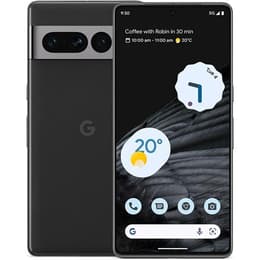
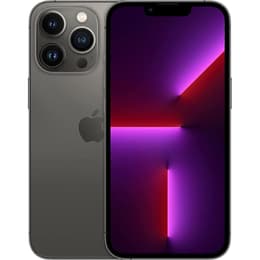

Google Pixel 7 Pro vs iPhone 13 Pro

Google Pixel 7 Pro
Google Pixel 7 Pro
Starting at

Refurbished price:A$520.00

Versus A$1,219.00 new

See options
iPhone 13 Pro
iPhone 13 Pro
Starting at

Refurbished price:A$549.00

Versus A$1,539.00 new

See options

Ratings

The Google Pixel 7 Pro, released in October 2022, and the iPhone 13 Pro, launched in September 2021, represent distinct approaches to the premium smartphone experience. While both offer advanced camera systems and high-quality displays, they differ significantly in their operating systems, with the Pixel 7 Pro running Android and the iPhone 13 Pro operating on iOS, leading to varied user interactions and feature sets.

Scores

Durability

When considering the long-term usability of these devices, their release timelines and software support policies are key factors.

  • Release and Software Support: The Google Pixel 7 Pro, launched in October 2022, is guaranteed to receive Android OS updates until October 2025 and security updates until October 2027. The iPhone 13 Pro, released in September 2021, typically benefits from Apple's longer software support, often receiving iOS updates for five to six years from its launch.
  • Physical Durability: Both smartphones feature an IP68 rating for dust and water resistance, indicating robust protection against environmental elements. The Pixel 7 Pro incorporates Gorilla Glass Victus for screen and back panel protection, while the iPhone 13 Pro utilizes Apple's Ceramic Shield on the front, designed for enhanced drop performance.
  • Expected Lifespan: Users on online forums frequently report their iPhone 13 Pro devices are still performing strongly years after release, suggesting a practical lifespan that extends well beyond initial purchase. The Pixel 7 Pro, being a newer device, also shows good longevity, with users appreciating its continued performance and software updates.

Release year

2022

2021

Compatible with latest Update

Yes

Yes

Foldable

No

No

Performance

Performance is a critical aspect for daily smartphone use, encompassing everything from app responsiveness to battery endurance.

  • Processing Power: The Google Pixel 7 Pro is equipped with a processor optimized for artificial intelligence and machine learning tasks, which enhances features like photo processing and voice commands. Users generally find it capable for everyday applications and multitasking, though some have noted occasional warmth during intensive camera use or prolonged 5G activity. The iPhone 13 Pro features a powerful chip known for its strong central and graphics processing capabilities, providing a consistently smooth experience across demanding applications and games.
  • Multitasking and Storage: The Pixel 7 Pro typically comes with 12GB of RAM, contributing to efficient multitasking. The iPhone 13 Pro generally includes 6GB of RAM, which, combined with iOS optimization, also delivers fluid performance. Both devices offer various internal storage configurations, ranging from 128GB to 512GB for the Pixel 7 Pro and up to 1TB for the iPhone 13 Pro, catering to different user needs for app and media storage.
  • Battery Performance: The Pixel 7 Pro houses a 5000 mAh battery. Real-world usage tests indicate approximately 8 to 11 hours of screen-on time, though heavy use of the camera or 5G connectivity can lead to faster depletion. The iPhone 13 Pro, with a 3095 mAh battery, is frequently praised by users for its excellent battery life, often lasting a full day or more under typical usage conditions.

Memory (GB)

12 GB

6 GB

Screen quality

The visual experience is largely defined by the display, and both devices offer high-quality screens with distinct characteristics.

  • Display Technology and Size: The Google Pixel 7 Pro features a larger 6.7-inch LTPO OLED display, offering a Quad HD+ resolution of 3120 x 1440 pixels. This screen also boasts an adaptive refresh rate of up to 120Hz, providing smooth scrolling and responsiveness. The iPhone 13 Pro comes with a 6.1-inch Super Retina XDR OLED display, featuring a resolution of 1170 x 2532 pixels. Its ProMotion technology also enables an adaptive refresh rate, scaling from 10Hz to 120Hz for efficient and fluid visuals.
  • Brightness and Clarity: The Pixel 7 Pro's display can reach a peak brightness of up to 1500 nits, which contributes to good visibility in bright outdoor conditions. The iPhone 13 Pro offers a peak brightness of up to 1200 nits, also ensuring clear viewing in various lighting environments. Both displays provide high pixel densities, resulting in sharp text and detailed images.
  • Viewing Experience: The Pixel 7 Pro's larger screen and curved edges offer an immersive viewing experience, particularly for media consumption. The iPhone 13 Pro's slightly smaller form factor makes it more manageable for one-handed use, while still delivering a vibrant and color-accurate display.

Resolution

1440 x 3120

1170 x 2532

Screen type

LTPO AMOLED

Super Retina XDR OLED

Audiovisual

Both smartphones are recognized for their advanced camera capabilities, though they approach photography with different strengths and software optimizations.

  • Rear Camera Systems: The Google Pixel 7 Pro features a versatile triple camera setup, including a 50MP wide, 12MP ultrawide, and a 48MP telephoto lens with 5x optical zoom. It excels in computational photography, offering features like Magic Eraser and Photo Unblur, and delivers strong low-light performance on its main sensor. The iPhone 13 Pro also has a triple 12MP camera system, comprising wide, ultrawide, and telephoto lenses with 3x optical zoom. It introduced larger sensors for improved light capture and features like Cinematic Mode for video and a dedicated macro mode.
  • Photography Features: The Pixel 7 Pro is praised for its ability to capture detailed and vibrant photos, with an emphasis on realistic skin tones through its Real Tone technology. Its video capabilities also saw significant improvements over previous generations, with enhanced stabilization. The iPhone 13 Pro offers Photographic Styles for personalized image looks and ProRes video recording for professional-grade footage. Its macro photography feature allows for detailed close-up shots.
  • Audio and Media: Both devices provide good speaker output for media consumption. The Pixel 7 Pro's microphone quality is generally suitable for calls and recordings. The iPhone 13 Pro also offers clear audio capture, contributing to its strong video recording performance.

Main camera

50 megapixels

12 megapixels

Front camera

10.8 megapixels

12 megapixels

Miscellaneous

Beyond core features, several practical elements contribute to the overall user experience and daily convenience.

  • Connectivity and Ports: Both the Google Pixel 7 Pro and iPhone 13 Pro support 5G connectivity for fast mobile data. The Pixel 7 Pro includes Wi-Fi 6E and Bluetooth 5.2, along with a USB-C port for charging and data transfer. The iPhone 13 Pro supports Wi-Fi 6 and Bluetooth 5.0, and uses Apple's proprietary Lightning port.
  • Biometric Security: The Pixel 7 Pro offers both an under-display fingerprint sensor and Face Unlock for secure authentication. The iPhone 13 Pro relies on its advanced Face ID system for secure facial recognition.
  • Physical Design and Handling: The Pixel 7 Pro is a larger device, measuring 162.9 x 76.6 x 8.9 mm and weighing 212g, which might appeal to users who prefer a more expansive screen. The iPhone 13 Pro is more compact at 146.7 x 71.5 x 7.65 mm and weighs 204g, offering a more manageable size for one-handed operation.

Weight

212 oz

203 oz

Screen size (in)

67

6,1

SIM card

Physical SIM + eSIM

Physical SIM + eSIM

Carrier compatibility

Unlocked

Unlocked

Connector

USB-C

Lightning

The Google Pixel 7 Pro and iPhone 13 Pro each offer a compelling smartphone experience, catering to different user preferences and priorities. User feedback for the Pixel 7 Pro often highlights its exceptional camera capabilities, particularly its computational photography features and clean Android interface. However, some users have noted inconsistent battery performance, especially with heavy usage or 5G, and occasional overheating. The iPhone 13 Pro is frequently praised for its consistent and powerful performance, excellent battery life, and the seamless integration within the iOS ecosystem. Criticisms sometimes include the continued use of the Lightning port and occasional camera lens flare in specific lighting conditions.

Users prioritizing an advanced camera system with unique AI-driven features, a larger display, and a pure Android experience may find the Google Pixel 7 Pro well-suited to their needs. Conversely, individuals who value consistent performance, robust battery life in a slightly more compact form factor, and the established iOS ecosystem will likely lean towards the iPhone 13 Pro. Both devices remain strong contenders in the smartphone market, and considering a quality-assured refurbished option for either model can be an eco-friendly alternative for those seeking premium features.

See all articles

Our recent comparisons