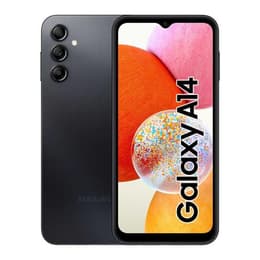
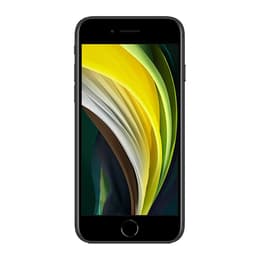

Galaxy A14 vs iPhone SE (2020)

Galaxy A14
Galaxy A14
Starting at

Refurbished price:A$216.00

Versus A$390.00 new

See options
iPhone SE (2020)
iPhone SE (2020)
Starting at

Refurbished price:A$108.00

Versus A$529.00 new

See options

Ratings

The Samsung Galaxy A14, released in early 2023, and the iPhone SE 2020, launched in April 2020, represent distinct approaches to smartphone design and functionality. While the Galaxy A14 operates on the Android platform, offering a larger display and modern connectivity, the iPhone SE 2020 runs on iOS, providing a compact form factor and robust internal performance. These differences cater to varying user preferences, from operating system loyalty to screen size and overall user experience.

Scores

Durability

When considering the practical lifespan of these devices, both offer a reasonable duration of software support and varying degrees of physical resilience.

  • Software Longevity: The iPhone SE 2020, running iOS, is known for receiving software updates for an extended period, typically five to six years from its release, ensuring continued access to new features and security enhancements. The Galaxy A14, an Android device, is generally supported with two years of operating system updates and five years of security updates for its 5G variant, providing a solid, though shorter, update cycle.
  • Physical Durability: The iPhone SE 2020 features a glass front and back with an aluminum frame, along with an IP67 rating for water and dust resistance, offering protection against splashes and submersion. The Galaxy A14 typically uses a plastic construction, which can be more resistant to minor drops but generally lacks an official IP rating for water and dust protection.
  • Repairability: The Galaxy A14 has a notable repairability score, often rated around 8 out of 10, due to its relatively easy disassembly and the use of adhesive pull tabs for the battery, making common repairs more accessible. The iPhone SE 2020 scores around 6 out of 10 for repairability, which is considered good for an Apple device, with straightforward access to the display and battery, though the glass back can be challenging to replace.

Release year

2023

2020

Compatible with latest Update

No

Yes

Operating system

Android

iOS

Foldable

No

No

Performance

The performance of a smartphone significantly impacts daily usage, from app responsiveness to handling demanding tasks.

  • Everyday Responsiveness: The iPhone SE 2020, equipped with a powerful internal processor for its release year, delivers a consistently fast and smooth experience for general navigation, app loading, and multitasking. Users often report lag-free operation even with more intensive applications and mobile gaming. The Galaxy A14, while capable for daily tasks like browsing, social media, and video streaming, may exhibit occasional delays when booting up or loading graphically intensive webpages and applications.
  • Multitasking and App Handling: The iPhone SE 2020's internal components allow for efficient multitasking, enabling users to switch between applications without significant slowdowns. Its performance capabilities ensure that it can run current applications effectively. The Galaxy A14, with its available RAM configurations, handles typical multitasking scenarios adequately, though very demanding applications or numerous background processes might lead to a less fluid experience compared to devices with more powerful processing.
  • Gaming and Demanding Apps: For mobile gaming and more intensive applications, the iPhone SE 2020 provides a robust experience, running games smoothly with good frame rates. The Galaxy A14 can run many games, but users might notice performance limitations or reduced graphical settings in more demanding titles.

Memory (GB)

4 GB

3 GB

Screen quality

The display is a primary interface for smartphone interaction, and both devices offer different visual experiences.

  • Display Technology and Clarity: The iPhone SE 2020 features a 4.7-inch Retina HD IPS LCD display, known for its accurate color reproduction, wide color support (P3), and True Tone technology, which adjusts the display to ambient light. The Galaxy A14 comes with a larger 6.6-inch PLS LCD display, offering a Full HD+ resolution that provides clear and vibrant visuals.
  • Brightness and Outdoor Visibility: The iPhone SE 2020 offers a typical maximum brightness of 625 nits, which generally provides good visibility outdoors, even in direct sunlight. The Galaxy A14's display, while vibrant indoors, can be somewhat dim in bright outdoor conditions, potentially impacting readability.
  • Refresh Rate and Smoothness: The Galaxy A14 features a 90Hz refresh rate, which contributes to a smoother scrolling experience and more fluid animations compared to standard 60Hz displays. The iPhone SE 2020 has a standard 60Hz refresh rate, which is still responsive but does not offer the same level of visual fluidity as higher refresh rate screens.

Resolution

1080 x 2408

750 x 1334

Screen type

PLS LCD

Retina IPS LCD

Audiovisual

Camera capabilities are a significant factor for many users, and these two phones approach photography with different hardware and software philosophies.

  • Rear Camera System: The Galaxy A14 features a triple rear camera setup, including a 50-megapixel main sensor, a 5-megapixel ultrawide lens, and a 2-megapixel macro or depth sensor. The 50MP main camera is capable of capturing detailed and vibrant photos in good lighting conditions, often with good HDR processing. The iPhone SE 2020 has a single 12-megapixel wide-angle rear camera. Despite having fewer lenses, it leverages its internal processing power to deliver strong image quality, including Portrait mode with advanced depth control and Smart HDR for balanced exposures.
  • Low-Light and Video Performance: In low-light conditions, the Galaxy A14's main camera can produce usable images, but users may notice increased noise and a lack of fine detail. Video recording on the A14 is limited to 1080p at 30 frames per second for both front and rear cameras. The iPhone SE 2020 performs well in good lighting, but it lacks a dedicated Night mode, which can limit its performance in very dim environments. It excels in video recording, offering up to 4K resolution with optical image stabilization on the main camera.
  • Front Camera and Media Experience: The Galaxy A14 includes a 13-megapixel front-facing camera that captures decent selfies in good lighting. The iPhone SE 2020 features a 7-megapixel front camera, which provides good quality for video calls and selfies, benefiting from the device's image processing. For audio, the Galaxy A14 typically features a single bottom-firing speaker, while the iPhone SE 2020 offers stereo speakers for a more immersive audio experience.

Main camera

50 megapixels

12 megapixels

Front camera

13 megapixels

7 megapixels

Miscellaneous

Beyond the core features, several practical elements contribute to the overall user experience and device utility.

  • Connectivity Standards: The Galaxy A14 (5G model) supports 5G networks, offering faster download and upload speeds where available, along with Wi-Fi 5 (802.11ac) and Bluetooth 5.1 or 5.2. The iPhone SE 2020 supports 4G LTE connectivity, Wi-Fi 6, and Bluetooth 5.0, providing fast and reliable wireless connections.
  • Ports and Biometrics: The Galaxy A14 includes a USB-C 2.0 port for charging and data transfer, and notably retains a 3.5mm headphone jack. It features a side-mounted fingerprint sensor for secure unlocking. The iPhone SE 2020 uses Apple's Lightning port and integrates Touch ID, a front-mounted fingerprint sensor within its physical home button, for authentication. It does not include a 3.5mm headphone jack.
  • Design and Handling: The Galaxy A14 has a larger footprint with its 6.6-inch display, and a plastic build that some users find comfortable to grip. The iPhone SE 2020 maintains a compact 4.7-inch form factor with a glass and aluminum construction, making it highly pocketable and easy for one-handed use, though its bezels are more prominent.

Weight

201 oz

148 oz

Screen size (in)

6.6

4.7

Network

4G

4G

SIM card

Physical SIM

Physical SIM + eSIM

Carrier compatibility

Unlocked

Unlocked

Choosing between the Samsung Galaxy A14 and the iPhone SE 2020 involves weighing different priorities in smartphone usage. User feedback often highlights the Galaxy A14's strong battery life and large display as significant advantages, making it suitable for extended media consumption and users who prefer a more expansive screen. However, some users note that its performance can occasionally feel less fluid, and its camera system, while capable, may not consistently impress beyond its main sensor, particularly in challenging lighting. The iPhone SE 2020, conversely, is frequently praised for its powerful and consistent performance, offering a remarkably smooth experience for its age, and its compact design appeals to those who prefer a smaller, more manageable device. Criticisms often point to its smaller screen size, dated design with larger bezels, and a battery life that may require more frequent charging for heavy users. The absence of a dedicated Night mode is also a common point of discussion among photography enthusiasts.

Users prioritizing a large display, long battery life, modern 5G connectivity (on the 5G model), and the Android ecosystem will find the Galaxy A14 well-suited to their needs. It's a practical choice for those who value screen real estate and extended usage between charges. On the other hand, users who prefer a compact device, the intuitive iOS experience, robust performance for everyday tasks, and a physical home button with Touch ID may lean toward the iPhone SE 2020. It remains a strong contender for those seeking a powerful device in a smaller package. Both devices offer reliable functionality, and considering a quality-assured refurbished option for either model can be an eco-friendly alternative to purchasing new.
See all articles

Our recent comparisons