

Compare models
Galaxy Z Flip7 vs Google Pixel 9 Pro
- 1-year warranty
- Free standard shipping
- Free 30-day returns
Differences at a glance
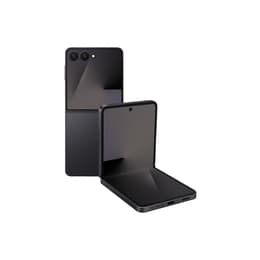
The Samsung Galaxy Z Flip7 (2025) and the Google Pixel 9 Pro (2024) represent two distinct approaches to modern smartphone design, contrasting a compact clamshell foldable build with a traditional candy-bar flagship structure. While both run on the Android operating system and deliver robust daily functionality, they cater to completely different user preferences through their form factors, hardware layouts, and software integration.
Available Models
Colour
Storage (GB)
Scores
Durability
The Galaxy Z Flip7 and Google Pixel 9 Pro feature contemporary release timelines and robust software support frameworks, though their physical longevity profiles differ due to their unique engineering formats.
- Software longevity and updates: Both devices receive multi-year operating system upgrades and security patches, helping maintain software relevance and system security over an extended timeframe.
- Physical durability: The Google Pixel 9 Pro features a rigid glass-and-metal slab construction with standardized impact resistance, whereas the Galaxy Z Flip7 utilizes a folding mechanism and flexible display panel that requires careful handling during long-term daily use.
- Repairability expectations: Traditional candy-bar smartphones like the Pixel model generally offer straightforward physical maintenance paths, while foldable devices involve specialized hinge and display components that can influence repair complexity over the device lifecycle.
Release year
2025
2024
Operating system
Android
Android
Foldable
Yes
No
Performance
Both smartphones provide responsive system navigation and handle demanding everyday applications smoothly, though they manage multitasking and power consumption through different hardware configurations.
- Multitasking and memory capacity: Generous random access memory allocations on both models allow seamless switching between heavy productivity apps, media streaming tools, and background navigation services without noticeable slowdowns.
- Battery behavior in daily routines: Energy management varies between the two; the Pixel 9 Pro relies on a conventional battery size to sustain standard usage profiles, while the clamshell layout of the Galaxy Z Flip7 houses a split battery cell designed to fit within a slim folding profile.
- Storage configuration availability: Both devices offer ample internal storage capacities starting at standard baseline tiers, accommodating large media libraries, offline documents, and high-resolution photo archives locally.
Screen quality
Visual delivery differs significantly between the two models, primarily driven by the Samsung device's flexible inner panel versus the Google device's rigid high-resolution display technology.
- Display technology and clarity: The Pixel 9 Pro utilizes a bright organic light-emitting diode panel with high pixel density for crisp text rendering, while the Galaxy Z Flip7 features a foldable organic light-emitting diode screen accompanied by an expansive external cover display for quick interactions.
- Outdoor visibility: Both screens reach high peak brightness thresholds to ensure legible content viewing and comfortable navigation under direct sunlight or bright ambient lighting conditions.
- Refresh rate smoothness: Adaptive high refresh rate support on both displays enables fluid scrolling through web pages, smooth animation transitions, and responsive touch feedback during interactive tasks.
Resolution
1080x2520
1280x2856
Audiovisual
Photography and media capture capabilities on both smartphones deliver detailed everyday imagery, though their lens arrangements and software processing styles offer varied creative options.
- Camera hardware setups: The Pixel 9 Pro incorporates a versatile triple-lens rear array featuring a dedicated telephoto zoom lens, whereas the Galaxy Z Flip7 utilizes a dual-lens rear system that benefits uniquely from the folding form factor for hands-free framing.
- Low-light and video performance: Both models employ advanced computational processing to sharpen low-light scenes and stabilize moving video recordings, ensuring clear results during evening outings or indoor events.
- Media consumption and audio output: Stereo speaker configurations on both devices provide balanced sound reproduction for podcasts, video calls, and casual media playback without requiring external speakers.
Miscellaneous
Practical daily usability elements such as connectivity, biometric sensors, and physical dimensions shape how each smartphone fits into travel and professional routines.
- Connectivity and ports: Both devices support modern fifth-generation cellular networks, rapid wireless standards, and reliable Bluetooth pairing, utilizing reversible connector ports for charging and wired data transfer.
- Security and sensors: Fast biometric authentication is handled via responsive fingerprint recognition technology and secure facial scanning capabilities integrated directly into the hardware design.
- Handling and ergonomics: The Pixel 9 Pro offers a familiar, weighted slab profile that rests comfortably in one hand, while the Galaxy Z Flip7 folds compactly to occupy minimal pocket or bag space during transit. Choosing a quality-assured refurbished option provides a sustainable choice for acquiring either model while reducing electronic waste.
Weight
188 oz
199 oz
Screen size (in)
6.9
6.3
Network
5G
5G
SIM card
Physical SIM + eSIM
Physical SIM + eSIM
Carrier compatibility
Unlocked
Unlocked
What the community thinks
Choosing between the Samsung Galaxy Z Flip7 and the Google Pixel 9 Pro ultimately depends on whether form factor versatility or traditional candy-bar reliability takes priority in daily routines. Community discussions often highlight the Galaxy Z Flip7 for its pocket-friendly folding design and practical cover screen utility, though some users note the physical crease requires mild adjustment. Conversely, the Google Pixel 9 Pro receives widespread praise for its dependable battery endurance, versatile telephoto camera reach, and clean software interface, though its standard slab dimensions lack the compact portability of a clamshell device.
Users prioritizing pocket space, innovative folding mechanics, and hands-free media framing will find the Galaxy Z Flip7 well-suited to their needs. Meanwhile, users prioritizing dedicated zoom photography, traditional ergonomics, and long-term structural simplicity may lean toward the Google Pixel 9 Pro. Opting for a quality-assured refurbished option presents an eco-friendly alternative for acquiring either device responsibly. Reviewing these core differences ensures a well-informed decision that aligns with your specific daily requirements.