

Compare models

Galaxy A53 5G vs Google Pixel 9a

  • 1-year warranty
  • Free standard shipping
  • Free 30-day returns
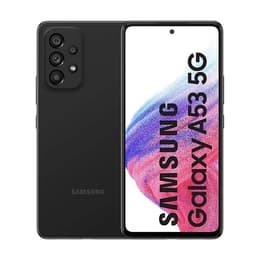
Galaxy A53 5G
Starting at

Refurbished price:A$252.00

Versus A$495.00 new

See options
Google Pixel 9a
Starting at

Refurbished price:A$570.00

Versus A$731.50 new

See options

Differences at a glance

The Samsung Galaxy A53 5G (2022) and the Google Pixel 9a (2025) are mid-range Android smartphones designed to deliver reliable everyday performance without the complexity of top-tier flagships. While both devices cater to users seeking balanced modern features, they differ notably in their generation timeline, software ecosystem, and hardware refinement. The Galaxy A53 5G runs on Samsung's customizable One UI interface, whereas the Google Pixel 9a provides a clean, software experience directly from Google, giving buyers distinct choices in interface design and long-term support.

Available Models

Colour

Storage (GB)

Scores

Durability

Comparing the durability and long-term viability of these two devices reveals distinct differences in release age and software backing, making quality-assured refurbished options an appealing and sustainable choice for users seeking modern longevity.

  • Release timeline and support: The Galaxy A53 5G debuted in early 2022 and provides multi-year software updates, while the newer Google Pixel 9a launched in early 2025 and benefits from an extended seven-year update commitment covering operating systems and security patches.
  • Build and repairability: Both models feature robust dust and water resistance ratings, with the Pixel offering a slightly higher ingress protection grade, though each device handles daily wear reliably when paired with standard protective cases.
  • Expected lifespan: Due to its much newer release date and prolonged update schedule, the Pixel 9a retains software currency further into the future, whereas the Galaxy A53 5G relies on a mature, stable software history.

Release year

2022

2025

Operating system

Android

Android

Foldable

No

No

Performance

System responsiveness and everyday multitasking capabilities vary between these models, driven by differences in internal processing hardware and memory configuration.

  • Multitasking and app handling: The Google Pixel 9a features a current-generation processor and ample RAM that handles demanding applications, complex multitasking, and modern games smoothly, while the Galaxy A53 5G manages routine daily tasks, messaging, and media streaming comfortably with its capable mid-range architecture.
  • Battery behavior: Both phones include large battery capacities exceeding 5000 mAh, easily lasting through a full day of typical mixed usage involving web browsing, social media, and navigation.
  • Storage configurations: Storage options start at standard baselines with support for local file management, though user preferences may vary regarding expandable storage slots versus fixed internal capacity.

Screen quality

Viewing experiences differ slightly in display technology, panel dimensions, and outdoor visibility across both handsets.

  • Display technology and clarity: Both devices utilize vibrant OLED panels with crisp high-definition resolutions, offering deep black levels, rich contrast, and sharp text rendering for reading and media consumption.
  • Brightness and outdoor use: The Google Pixel 9a reaches higher peak brightness levels for comfortable visibility under direct sunlight, while the Galaxy A53 5G performs reliably under standard daylight conditions.
  • Refresh rate and fluidity: Both screens support smooth 120Hz refresh rates, ensuring fluid scrolling through web pages, menus, and application interfaces.

Resolution

1080 x 2400

1080x2424

Screen type

Super AMOLED

P-OLED

Audiovisual

Photography and media output reflect distinct design philosophies in image processing and hardware configurations.

  • Camera systems: The Galaxy A53 5G employs a versatile multi-lens rear array including a high-resolution main sensor and dedicated macro capabilities, whereas the Google Pixel 9a focuses on a streamlined dual-lens setup paired with advanced computational photography software for balanced lighting and sharp detail.
  • Low-light and video performance: Google's image processing excels at balancing challenging night scenes and high-contrast environments, while Samsung provides stable video recording with reliable stabilization for casual home videos and video calls.
  • Audio and media output: Both phones feature clear stereo speakers suitable for hands-free calls, casual video viewing, and listening to podcasts without external headphones.

Miscellaneous

Practical physical characteristics and connectivity standards shape how each device fits into everyday routines.

  • Connectivity and ports: Both models support widespread 5G networks, modern Wi-Fi standards, Bluetooth pairing, and NFC for contactless payments via standard USB Type-C physical ports.
  • Biometrics and sensors: Fast and secure authentication is handled by responsive under-display optical fingerprint scanners and facial recognition features on both devices.
  • Dimensions and handling: The Google Pixel 9a offers a slightly more compact footprint and balanced weight distribution for single-handed use, while the Galaxy A53 5G provides a slightly larger screen real estate within a slim profile.

Weight

189 oz

186 oz

Screen size (in)

6.5

6.3

Network

5G

5G

SIM card

Physical SIM

Physical SIM + eSIM

Carrier compatibility

Unlocked

Unlocked

What the community thinks

Choosing between the Samsung Galaxy A53 5G and the Google Pixel 9a depends largely on individual software preferences and support timelines. Users prioritizing a clean interface, advanced computational photography, and an extended software update schedule often lean toward the Google Pixel 9a. Conversely, users who appreciate a larger display format and Samsung's feature-rich ecosystem frequently find the Galaxy A53 5G well-suited to their daily routines. Real-world feedback notes that both devices offer dependable battery life and smooth daily performance, though users seeking maximum software longevity benefit from newer release cycles. Exploring quality-assured refurbished options on Back Market provides an eco-friendly and sustainable path to acquiring either smartphone while reducing electronic waste.