
Google Pixel 7 vs Motorola Edge 30 Fusion

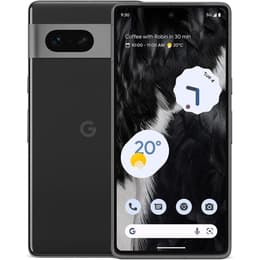
Google Pixel 7
Google Pixel 7
Starting at

Refurbished price:A$348.00

Versus A$879.00 new

See options
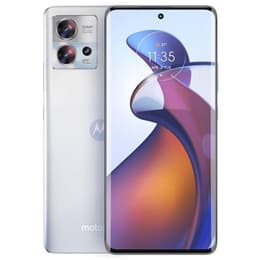
Motorola Edge 30 Fusion
Starting at

Refurbished price:A$257.46

Versus A$1,352.00 new

See options

The Google Pixel 7 (released October 2022) and the Motorola Edge 30 Fusion (released September 2022) are both Android smartphones that offer distinct experiences. While the Pixel 7 emphasizes advanced computational photography and a streamlined software experience, the Edge 30 Fusion focuses on a high refresh rate display and rapid charging capabilities. Both devices run on the Android operating system, but they differ in their approach to software updates and user interface.

Scores

Durability

The longevity of a smartphone is influenced by its build quality, software support, and ease of repair. These two devices present different profiles in these areas.

  • Software Support: The Google Pixel 7 was launched with Android 13 and is guaranteed to receive five years of OS and security updates, extending its support until October 2027. This means it will likely receive Android 17 and a future Android 18. In contrast, the Motorola Edge 30 Fusion launched with Android 12 and was promised two major OS updates and three years of security updates, meaning its OS support ends with Android 14 and security patches until 2025.
  • Physical Durability: The Pixel 7 features Gorilla Glass Victus for screen protection and an IP68 rating for dust and water resistance, offering robust protection against environmental elements. The Edge 30 Fusion uses Gorilla Glass 5 and has an IP52 rating, providing basic splash and dust resistance.
  • Repairability: The Pixel 7 has a repairability score of approximately 6 out of 10, with screen replacements being relatively straightforward, though battery removal can be complex due to strong adhesive and a soldered USB-C port. Information on the specific repairability score for the Edge 30 Fusion is less widely available, but user reports suggest that battery replacement can be challenging.

Release year

2022

2022

Compatible with latest Update

Yes

Yes

Foldable

No

No

Performance

Performance in daily use is a key differentiator, with both phones offering capable hardware for various tasks.

  • Processing Power: The Google Pixel 7 is powered by a custom-designed processor that focuses on efficient AI and machine learning tasks, contributing to features like advanced camera processing and voice recognition. The Motorola Edge 30 Fusion utilizes a high-end processor from the previous year, which provides strong performance for demanding applications and gaming.
  • Multitasking and Responsiveness: Both devices come with 8GB of RAM, allowing for smooth multitasking and app switching. Users of the Pixel 7 generally report a fluid and responsive system, though some have noted occasional sluggishness with the fingerprint sensor. The Edge 30 Fusion also offers a generally smooth experience, but some users have reported a laggy user interface, which may improve with software updates.
  • Thermal Management: The Pixel 7 has shown improvements in thermal management compared to its predecessors, though intensive tasks can still cause it to warm up. The Edge 30 Fusion, with its powerful processor, has been noted by some users to heat up during benchmark tests and extended gaming sessions.

Memory (GB)

8 GB

8 GB

Screen quality

The visual experience is central to smartphone interaction, and both models offer vibrant displays with different characteristics.

  • Display Technology and Clarity: The Google Pixel 7 features a 6.3-inch AMOLED display, providing deep blacks and vibrant colors with a resolution of 1080x2400 pixels. The Motorola Edge 30 Fusion sports a slightly larger 6.55-inch P-OLED display, also with a 1080x2400 pixel resolution, offering similar color reproduction and contrast.
  • Refresh Rate and Smoothness: The Pixel 7 has a 90Hz refresh rate, which provides a smoother scrolling and animation experience compared to standard 60Hz displays. The Edge 30 Fusion offers a higher 144Hz refresh rate, resulting in even more fluid visuals, particularly noticeable in fast-paced content and gaming.
  • Brightness and Viewing Experience: Both displays support HDR10+, enhancing contrast and color depth for compatible content. The Edge 30 Fusion can reach a peak brightness of up to 1100 cd/m², which aids visibility in bright outdoor conditions. The Pixel 7's display is also bright and clear for outdoor use.

Resolution

1080 x 2400

1080 x 2400

Screen type

AMOLED

P-OLED

Audiovisual

Camera capabilities are a significant factor for many users, and these devices approach photography with different strengths.

  • Rear Camera System: The Google Pixel 7 features a dual-camera setup with a 50MP main sensor and a 12MP ultrawide lens, known for its computational photography that enhances image quality, especially in challenging lighting. The Motorola Edge 30 Fusion has a triple-camera system, including a 50MP main sensor, a 13MP ultrawide lens with macro capabilities, and a 2MP depth sensor.
  • Photography Performance: The Pixel 7 is often praised for its consistent point-and-shoot performance, producing detailed images with accurate colors. Some users have reported issues with the front-facing camera producing blurry or grainy photos and distorted 4K HDR video. The Edge 30 Fusion performs well in daylight, capturing crisp photos, but its low-light performance, particularly with the ultrawide camera, has received some criticism for noise.
  • Video Recording and Audio: Both phones are capable of recording 4K video. The Pixel 7 offers improved video stability and quality compared to previous generations. The Edge 30 Fusion also records 4K video, but some users have noted noise in videos recorded in dimly lit environments. Both devices include stereo speakers, with the Edge 30 Fusion featuring Dolby Atmos for an enhanced audio experience.

Main camera

50 megapixels

50 megapixels

Front camera

10.8 megapixels

32 megapixels

Miscellaneous

Beyond core features, several practical elements contribute to the overall user experience.

  • Connectivity: Both the Google Pixel 7 and Motorola Edge 30 Fusion support 5G connectivity, along with modern Wi-Fi standards and Bluetooth for wireless connections. Some Pixel 7 users have reported occasional issues with maintaining a stable 5G connection.
  • Ports and Biometrics: The Pixel 7 uses a USB-C port for charging and data transfer and includes an under-display optical fingerprint scanner and face unlock for security. The Edge 30 Fusion also features a USB-C port and an in-display fingerprint sensor. Neither device includes a traditional 3.5mm headphone jack.
  • Design and Handling: The Pixel 7 has dimensions of 155.6 x 73.2 x 8.7 mm and weighs 197g, offering a comfortable in-hand feel. The Edge 30 Fusion is slightly thinner and lighter at 158.48 x 71.99 x 7.45 mm and 175g, contributing to a sleek profile. The Edge 30 Fusion features a curved display, which some users find aesthetically pleasing but can impact screen protector application and edge distortion.

Weight

212 oz

168 oz

Screen size (in)

6.3

6,55

SIM card

Physical SIM + eSIM

Dual Physical SIM

Carrier compatibility

Unlocked

Unlocked

The Google Pixel 7 and Motorola Edge 30 Fusion each offer a compelling package, catering to different user priorities. The Pixel 7 is frequently praised for its exceptional camera performance, particularly its computational photography capabilities, and its commitment to extended software updates. Users appreciate its clean Android experience and the integration of Google's AI features. However, common criticisms include inconsistent battery life for heavy users, occasional network connectivity issues, and a fingerprint sensor that can be slow or unreliable.

The Motorola Edge 30 Fusion is often lauded for its vibrant, high refresh rate display and its rapid charging technology. Its design and in-hand feel also receive positive remarks. On the other hand, users have expressed concerns about its battery drain with moderate to heavy use, the absence of an Always-On Display, and the camera's performance in low-light conditions. Its shorter software support timeline is also a consideration for long-term users.

Users prioritizing a long-lasting software experience, advanced camera features, and a pure Android interface may find the Google Pixel 7 well-suited to their needs. Those who value a very smooth display, fast charging, and a sleek design, and are comfortable with a shorter software update cycle, might lean toward the Motorola Edge 30 Fusion. Both devices are available as quality-assured refurbished options, providing an eco-friendly alternative for consumers looking to make a sustainable choice.
See all articles

Our recent comparisons