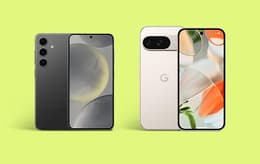
Compare models

Google Pixel 9 Pro vs iPhone 13

  • 1-year warranty
  • Free standard shipping
  • Free 30-day returns
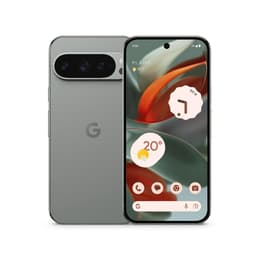
Google Pixel 9 Pro
Starting at

Refurbished price:A$720.00

Versus A$884.00 new

See options
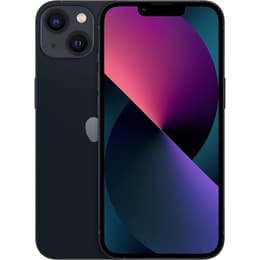
iPhone 13
Starting at

Refurbished price:A$408.00

Versus A$1,099.00 new

See options

Differences at a glance

The Google Pixel 9 Pro (2024) and the Apple iPhone 13 (2021) represent distinct generations and operating systems in the smartphone market. While both devices deliver reliable everyday performance and pocket-friendly dimensions, they diverge significantly in software ecosystems, release timelines, and hardware capabilities. Choosing between them involves balancing Android customization with iOS integration.

Available Models

Colour

Storage

Scores

Durability

When examining longevity and durability, both devices offer robust build quality, though their release timelines and software update commitments differ considerably.

  • Software Support Window: The Google Pixel 9 Pro benefits from an extended multi-year update policy providing operating system refreshes and security patches, whereas the iPhone 13 has a shorter remaining official support window due to its earlier release year.
  • Repairability and Materials: Both handsets utilize durable glass and metal frames combined with high-level water and dust resistance ratings, while supporting standard modular component replacements through authorized channels.
  • Expected Lifespan: Users can expect several more years of reliable daily operation from both models, though software enthusiasts prioritizing the latest system features will find extended relevance in the newer Android flagship.

Release year

2024

2021

Operating system

Android

iOS

Foldable

No

No

Performance

Performance capabilities vary across these models based on their internal hardware configurations and memory allocation for multitasking.

  • Multitasking and Memory: The Google Pixel 9 Pro includes a generous amount of system memory that handles heavy app switching smoothly, while the iPhone 13 relies on optimized resource management to maintain responsiveness with lesser memory.
  • Storage Variations: Both phones offer standard starting capacities with options scaling upward to accommodate large media libraries, though storage cannot be expanded physically via memory cards on either device.
  • Battery Behavior: Daily power delivery handles typical messaging, browsing, and media streaming comfortably through a full day on both models, though heavy gaming or navigation use may necessitate a top-up before evening.

Screen quality

Display technologies on both devices deliver sharp visuals, though peak brightness and panel flexibility present distinct user experiences.

  • Display Panel Technology: Both models feature vibrant organic light-emitting diode screens with deep black levels, but the Google Pixel 9 Pro adopts an adaptive refresh rate panel scaling up to 120Hz for smoother scrolling compared to the fixed 60Hz rate on the iPhone 13.
  • Outdoor Visibility: Maximum brightness thresholds allow both screens to remain legible under direct sunlight, with the newer Android device reaching higher peak luminance levels during intense outdoor use.
  • Resolution and Clarity: Panel resolutions on both handsets provide crisp text and detailed image rendering suitable for daily reading and high-definition video playback.

Resolution

1280x2856

1170 x 2532

Audiovisual

Media capture and audio output configurations reflect different design priorities for photography and entertainment.

  • Rear Camera Versatility: The Google Pixel 9 Pro features a triple-lens array incorporating a dedicated periscope telephoto zoom lens, whereas the iPhone 13 utilizes a dual-lens system focused on wide and ultra-wide perspectives.
  • Computational Photography: Both devices process low-light scenes and high-contrast environments effectively using advanced software algorithms, producing clear details and natural colors.
  • Audio and Video: Stereo speaker output on both smartphones delivers clear dialogue and balanced sound for casual media consumption, supported by sensitive multi-microphone arrays for calls.

Miscellaneous

Practical daily usability is shaped by connectivity standards, physical dimensions, and biometric security methods.

  • Biometric Authentication: The Google Pixel 9 Pro combines facial recognition with an under-display fingerprint sensor, while the iPhone 13 relies entirely on secure facial mapping technology.
  • Physical Handling: Both devices share a compact form factor with flat edges and manageable weights, making them comfortable for single-handed operation during travel or commuting.
  • Connectivity and Ports: Each model supports modern fifth-generation cellular networks and standard wireless protocols, utilizing proprietary or universal reversible cable connectors for charging and data transfer.

Weight

199 oz

173 oz

Screen size (in)

6.3

6,1

Network

5G

5G

SIM card

Physical SIM + eSIM

Physical SIM + eSIM

Carrier compatibility

Unlocked

Unlocked

What the community thinks

Real-world feedback from community forums highlights distinct preferences for each device. Users frequently praise the Google Pixel 9 Pro for its versatile telephoto zoom lens, fluid high-refresh-rate display, and deep integration of smart assistant features. Conversely, iPhone 13 owners frequently commend its dependable day-to-day stability, straightforward operating system interface, and consistent battery efficiency over years of use. Common criticisms for the Pixel occasionally center on warm operating temperatures during prolonged heavy tasks, while iPhone 13 users sometimes note limitations with the fixed 60Hz display refresh rate.

Users prioritizing advanced photographic zoom, high screen fluidity, and deep Android customization will find the Google Pixel 9 Pro well-suited to their needs. Meanwhile, users preferring streamlined ecosystem synchronization and straightforward software reliability may lean toward the iPhone 13. For those seeking a sustainable choice, a quality-assured refurbished option provides an eco-friendly alternative that extends device life cycles without compromising functional integrity. Ultimately, the right choice depends on individual comfort with mobile operating systems and specific daily utility requirements.