
Galaxy A55 vs Galaxy Z Fold4

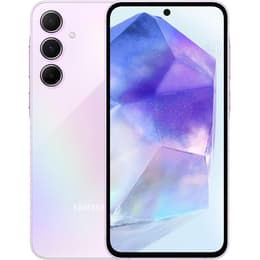
Galaxy A55
Galaxy A55
Starting at

Refurbished price:A$340.00

Versus A$699.00 new

See options
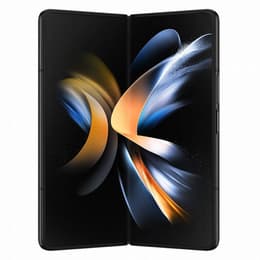
Galaxy Z Fold4
Galaxy Z Fold4
Starting at

Refurbished price:A$738.00

Versus A$3,628.00 new

See options

Ratings

The Samsung Galaxy A55, released in March 2024, is a traditional smartphone offering a balanced experience. In contrast, the Samsung Galaxy Z Fold4, launched in August 2022, is a premium foldable device that transforms from a compact smartphone into a tablet-like experience. The primary distinctions lie in their form factor, performance tier, and display technology, catering to different user needs. Both devices operate on the Android platform, utilizing Samsung's One UI for their user interface.

Scores

Durability

The longevity and update support for these devices vary, primarily due to their release timelines and Samsung's software commitment.

  • Release Timeline: The Galaxy A55 is a newer device, released in March 2024, while the Galaxy Z Fold4 was launched in August 2022. This difference in age impacts their remaining software support.
  • Software Support: The Galaxy A55 is promised four major Android operating system upgrades and five years of security updates from its release date. This means it is expected to receive OS updates up to Android 18 and security patches until March 2029. The Galaxy Z Fold4 also received four major OS updates and five years of security updates from its launch. Given its August 2022 release, it is expected to receive OS updates up to Android 16 and security patches until August 2027.
  • Physical Durability: The Galaxy A55 features an IP67 rating for dust and water resistance, along with Corning Gorilla Glass Victus+ on the front and Gorilla Glass on the back, encased in an aluminum frame. The Galaxy Z Fold4 has an IPX8 water resistance rating, meaning it can withstand submersion in water, but it lacks an official dust resistance rating. Its construction includes Gorilla Glass Victus+ for the cover screen and back, an Armor Aluminum frame, and an Ultra Thin Glass inner display, which requires careful handling compared to a traditional glass screen.

Release year

2024

2022

Operating system

Android

Android

Foldable

No

Yes

Performance

The performance capabilities of these two devices cater to different usage intensities, reflecting their respective market segments.

  • Everyday Responsiveness: The Galaxy A55 handles daily applications, web browsing, and social media smoothly, providing a responsive experience for most users. It is equipped with a processor that allows for moderate gaming without significant issues. The Galaxy Z Fold4, with its more powerful internal components, excels at running graphically intensive games, complex productivity applications, and heavy multitasking without noticeable slowdowns.
  • Battery Behavior: The Galaxy A55 features a 5000mAh battery, which typically provides over a full day of use for heavy users, with some reports indicating up to 49 hours on a single charge in specific tests. The Galaxy Z Fold4 has a 4400mAh battery. Despite a smaller capacity, its power management allows it to last through a typical workday, with some users reporting around 20 hours of total usage with moderate screen-on time.
  • Multitasking and Storage: The Galaxy A55 offers 8GB or 12GB of RAM and 128GB or 256GB of internal storage, which is expandable via a microSD card. The Galaxy Z Fold4 comes with 12GB of RAM and storage options of 256GB, 512GB, or 1TB, but it does not support expandable storage. The higher RAM and larger internal display of the Z Fold4 contribute to a more fluid multitasking experience, allowing for multiple applications to run simultaneously with greater ease.

Memory (GB)

8 GB

12 GB

Screen quality

The display experience is a major differentiator, with the Galaxy A55 offering a single, high-quality screen and the Z Fold4 providing a versatile dual-screen setup.

  • Display Technology and Clarity: Both devices utilize AMOLED technology, delivering vibrant colors, deep blacks, and excellent contrast. The Galaxy A55 features a 6.6-inch Super AMOLED display with a resolution of 1080 x 2340 pixels, providing a clear viewing experience. The Galaxy Z Fold4 offers a 6.2-inch cover screen and unfolds to a larger 7.6-inch inner Foldable Dynamic AMOLED 2X display with a resolution of 1812 x 2176 pixels. The larger, higher-resolution inner screen of the Z Fold4 provides a more immersive viewing area.
  • Brightness and Refresh Rate: Both models feature a 120Hz refresh rate for smooth scrolling and animations. The Galaxy A55 can reach up to 1000 nits of peak brightness in High Brightness Mode, ensuring good visibility in various lighting conditions. The Galaxy Z Fold4 offers a slightly higher peak brightness of 1200 nits, which can be beneficial for outdoor visibility.
  • Form Factor Impact: The Galaxy A55 provides a conventional flat display experience. The Galaxy Z Fold4's foldable design allows for a compact phone when closed and an expansive tablet-like screen when open, enhancing productivity and media consumption. The inner foldable screen of the Z Fold4 does have a visible crease, which is a characteristic of foldable display technology.

Resolution

1080x2340

1812 x 2176

Audiovisual

Both smartphones are capable of capturing quality images, but the Galaxy Z Fold4 offers a more advanced and versatile camera system.

  • Rear Camera System: The Galaxy A55 features a triple-camera setup on the rear, including a 50-megapixel main sensor with optical image stabilization, a 12-megapixel ultrawide lens, and a 5-megapixel macro lens. In good lighting conditions, it delivers sharp and detailed photos with natural colors. The Galaxy Z Fold4 also has a 50-megapixel main sensor with optical image stabilization, a 12-megapixel ultrawide lens, and a 10-megapixel telephoto lens with 3x optical zoom. The Z Fold4's camera system generally produces more refined images, particularly in challenging lighting conditions, and offers greater versatility with its dedicated telephoto lens.
  • Front Camera and Video Recording: The Galaxy A55 is equipped with a 32-megapixel front camera, capable of producing clear selfies and supporting 4K video recording at 30 frames per second. The Galaxy Z Fold4 has a 10-megapixel front camera on its cover screen and a 4-megapixel under-display camera on its main screen, which is primarily suited for video calls. The Z Fold4 supports video recording up to 8K at 24 frames per second and 4K at 60 frames per second, offering higher resolution and smoother video capture.
  • Special Features: The Galaxy Z Fold4's foldable design allows for unique photography angles and hands-free shooting using Flex Mode, where the device can be partially folded to act as its own tripod. Both devices offer decent low-light performance with dedicated night modes, though the Z Fold4's larger main sensor and improved processing contribute to better results in darker environments.

Miscellaneous

Beyond core specifications, several practical elements differentiate these two devices in daily use.

  • Connectivity and Ports: Both devices support 5G connectivity. The Galaxy A55 features Wi-Fi 6 and Bluetooth 5.3, with a USB-C 2.0 port for charging and data transfer. The Galaxy Z Fold4 offers Wi-Fi 6E and Bluetooth 5.2, alongside a faster USB-C 3.2 port. Neither device includes a traditional 3.5mm headphone jack.
  • Biometric Security and Handling: The Galaxy A55 incorporates an in-display fingerprint sensor for secure unlocking. Its traditional slab design, with dimensions of 161.1 x 77.4 x 8.2mm and a weight of 213g, makes it relatively comfortable for one-handed use. The Galaxy Z Fold4 features a side-mounted fingerprint sensor integrated into the power button. When folded, it measures 155.1 x 67.1 x 15.8mm and weighs 263g, making it thicker and heavier than the A55. When unfolded, its dimensions are 155.1 x 130.1 x 6.3mm, offering a much larger screen area.
  • Additional Features: The Galaxy Z Fold4 supports the S Pen, allowing for precise input, drawing, and note-taking, though the S Pen is typically sold separately. This feature enhances its utility for creative and productivity tasks. The Galaxy A55 offers expandable storage via a microSD card, providing flexibility for users who need more space for media and files.

Weight

213 oz

263 oz

Screen size (in)

6.6

7.6

Network

5G

5G

SIM card

Physical SIM

Physical SIM + eSIM

Carrier compatibility

Unlocked

Unlocked

User feedback for the Galaxy A55 often highlights its solid all-round performance for daily tasks, its vibrant display, and its robust battery life as key strengths. Users appreciate its durable build quality, which includes an aluminum frame and enhanced glass protection. However, some criticisms point to the camera's inconsistency in low-light conditions and the absence of a telephoto lens. For the Galaxy Z Fold4, common praise centers on its innovative and versatile foldable design, powerful performance for demanding applications, and its excellent multitasking capabilities. The improved camera system and S Pen support are also frequently noted as significant advantages. Conversely, users sometimes mention the visible crease on the inner foldable screen and its heavier, thicker form factor when folded as areas for consideration.

Users prioritizing a reliable, traditional smartphone experience with strong battery life and consistent software support for everyday tasks and casual photography may find the Galaxy A55 well-suited to their needs. Its conventional design and robust build make it a practical choice for many. Users seeking a highly versatile device for productivity, immersive media consumption, and advanced multitasking, who value the unique foldable form factor and S Pen functionality, will likely lean towards the Galaxy Z Fold4. Its ability to transform from a phone to a tablet offers a distinct advantage for those requiring a larger screen on the go. Both devices, whether new or as quality-assured refurbished options, represent different approaches to the smartphone experience, catering to distinct user priorities.

See all articles

Our recent comparisons