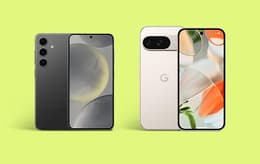
Compare models

Google Pixel 9 Pro vs iPhone 14 Pro

  • 1-year warranty
  • Free standard shipping
  • Free 30-day returns
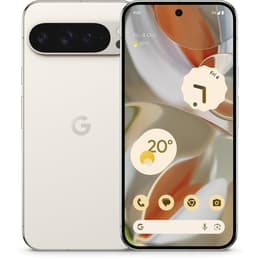
Google Pixel 9 Pro
Starting at

Refurbished price:A$736.00

Versus A$2,205.75 new

See options
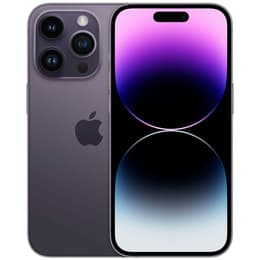
iPhone 14 Pro
Starting at

Refurbished price:A$659.00

Versus A$1,749.00 new

See options

Differences at a glance

The Google Pixel 9 Pro (2024) and the iPhone 14 Pro (2022) represent high-end smartphone engineering from their respective release years. While they originate from different ecosystems, both devices target users seeking premium daily reliability, advanced camera capabilities, and refined handling. The Google Pixel 9 Pro runs on the Android operating system with custom Google software integrations, whereas the iPhone 14 Pro operates on Apple's iOS ecosystem. A primary differentiator between the two lies in their software philosophy and long-term support timelines, with each device catering to distinct user preferences for interface customization and application handling.

Available Models

Colour

Storage

Scores

Durability

When evaluating how these devices age and hold up over time, software update commitments and build resilience play a central role in long-term usability.

  • Software support timeline: The Google Pixel 9 Pro benefits from a multi-year update commitment spanning seven years of operating system and security patches, while the iPhone 14 Pro follows Apple's traditional support lifecycle, which typically averages five to six years from its release date.
  • Repairability and durability: Both models utilize robust frame materials and reinforced glass fronts designed to withstand daily wear, though finding replacement components and repair services varies depending on regional infrastructure and official service center availability.
  • Practical lifespan: Users can expect both smartphones to maintain stable daily performance across several years of ownership, provided the battery health is maintained or replaced as it naturally degrades with standard use cycles.

Release year

2024

2022

Compatible with latest Update

Yes

Yes

Operating system

Android

iOS

Foldable

No

No

Performance

Underneath the exterior, both devices manage demanding workloads efficiently, though they utilize different hardware architectures to handle multitasking and applications.

  • Memory and storage management: The Google Pixel 9 Pro incorporates ample RAM to support advanced background processing and on-device machine learning tasks, whereas the iPhone 14 Pro relies on optimized memory integration within iOS to maintain smooth switching between resource-heavy applications.
  • Everyday responsiveness and gaming: Both devices load heavy applications quickly and handle modern mobile games without noticeable stutter, maintaining consistent thermal management during extended periods of use.
  • Battery behavior: Users report that both smartphones comfortably manage a full day of mixed usage under standard conditions, though heavy navigation and continuous video streaming will require a midday top-up for either device.

Screen quality

Display technology on both handsets delivers sharp details, deep contrast levels, and high peak brightness for comfortable viewing in direct sunlight.

  • Panel technology and clarity: Both devices utilize advanced organic light-emitting diode panels that produce rich colors and true blacks, ensuring crisp text rendering and clear photo reproduction.
  • Refresh rate smoothness: Both screens support adaptive high refresh rates that dynamically scale down during static viewing to conserve power and scale up during scrolling or gaming for fluid motion.
  • Outdoor visibility: High maximum brightness outputs on both models ensure that menus, maps, and media remain legible even under bright outdoor lighting conditions.

Resolution

1280x2856

1179 x 2556

Screen type

LTPO OLED

LTPO Super Retina XDR OLED

Audiovisual

Imaging capabilities are a primary focus for both smartphones, offering versatile multi-lens setups designed for various photography scenarios.

  • Multi-lens versatility: Both devices feature a primary wide lens, an ultra-wide lens, and a telephoto lens with optical zoom capabilities, allowing users to capture detailed close-ups and wide landscapes alike.
  • Low-light and video performance: Computational photography algorithms on the Google Pixel 9 Pro excel at brightening dark scenes and rendering natural skin tones, while the iPhone 14 Pro delivers stable video stabilization and smooth exposure transitions during recording.
  • Audio and media consumption: Built-in stereo speakers on both models provide clear sound separation for hands-free calls and casual media playback, complemented by sensitive multi-microphone arrays for clear voice recording.

Main camera

50 megapixels

48 megapixels

Front camera

42 megapixels

12 megapixels

Miscellaneous

Practical physical design choices and connectivity standards shape how these devices fit into daily routines and travel requirements.

  • Connectivity and ports: Both smartphones support modern fifth-generation cellular networks, rapid wireless data standards, and near-field communication for digital payments, utilizing distinct proprietary or universal connector types for wired charging and data transfer.
  • Biometric security: The Google Pixel 9 Pro offers both facial recognition and an under-display fingerprint sensor for convenient unlocking, whereas the iPhone 14 Pro relies exclusively on advanced facial mapping sensors housed within the screen cutout.
  • Dimensions and handling: Ergonomic dimensions and balanced weight distribution make both devices comfortable to hold during extended phone calls or single-handed messaging sessions. Choosing a quality-assured refurbished option from Back Market provides a sustainable path to owning either of these capable devices.

Weight

199 oz

206 oz

Screen size (in)

6.3

6.1

SIM card

Physical SIM + eSIM

Physical SIM + eSIM

Carrier compatibility

Unlocked

Unlocked

What the community thinks

User discussions across community forums highlight distinct points of praise for each smartphone. Owners of the Google Pixel 9 Pro frequently commend its intuitive software features, reliable everyday camera output, and extended multi-year update window. Conversely, users of the iPhone 14 Pro often highlight the seamless ecosystem integration, consistent video recording quality, and responsive interface design. Common criticisms for both models generally center on battery depletion during intensive mobile gaming or prolonged outdoor usage under maximum screen brightness levels.

Users prioritizing deep Android customization, extensive software support longevity, and advanced photo processing will find the Google Pixel 9 Pro well-suited to their needs. Meanwhile, users who prefer the Apple iOS ecosystem, robust video production tools, and streamlined device synchronization may lean toward the iPhone 14 Pro. Opting for a quality-assured refurbished device through Back Market offers an eco-friendly alternative for acquiring either model without compromising on performance or reliability. Ultimately, the choice depends on preferred operating system ecosystems and individual workflow priorities.