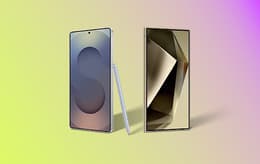
Compare models

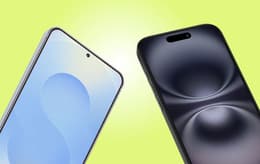
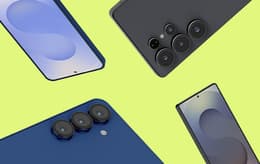
Galaxy S25 Ultra vs iPhone Air

  • 1-year warranty
  • Free standard shipping
  • Free 30-day returns
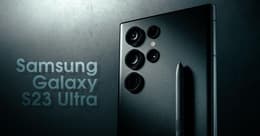
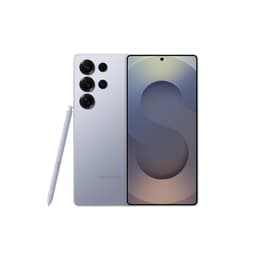
Galaxy S25 Ultra
Starting at

Refurbished price:A$1,020.00

Versus A$2,149.00 new

See options
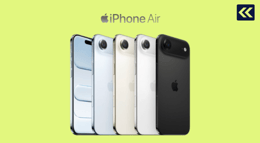
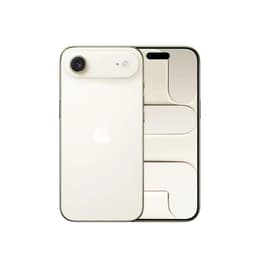
iPhone Air
Starting at

Refurbished price:A$1,099.00

Versus A$1,899.00 new

See options

Differences at a glance

The Samsung Galaxy S25 Ultra (2025) and the Apple iPhone Air (2025) represent two distinct approaches to high-end mobile engineering. While the Galaxy S25 Ultra prioritizes maximum productivity features and an expansive multi-lens camera system, the iPhone Air focuses on an ultra-slim profile and lightweight everyday handling. Running on Android and iOS respectively, these flagship smartphones serve very different user philosophies.

Available Models

Colour

Storage

Scores

Durability

Both devices launched in early to mid-2025, positioning them as modern options with extended longevity. Long-term usability differs primarily in software support structures and hardware build intentions.

    Software longevity: The Galaxy S25 Ultra benefits from a multi-year manufacturer commitment for operating system upgrades, whereas Apple typically supports its iOS ecosystem for an extended lifespan averaging five to seven years.
    Build endurance: Both models utilize titanium framing and reinforced glass protection, though the exceptionally thin chassis of the iPhone Air requires careful handling compared to the more robust, structured frame of the Samsung flagship.
    Repair framework: Authorized repair pathways are widely established for both brands, with components designed to sustain structural integrity over several years of daily operation.

Release year

2025

2025

Operating system

Android

iOS

Foldable

No

No

Performance

Underneath their exteriors, both smartphones house current-generation silicon that easily handles demanding tasks, though thermal capacity and memory management vary.

    Multitasking capacity: Both models handle heavy app switching, intensive creative software, and complex workflows smoothly without noticeable stutter, aided by generous random access memory allocation.
    Battery behavior: The Galaxy S25 Ultra incorporates a larger physical power cell designed for extended heavy-duty use, while the streamlined profile of the iPhone Air houses a smaller battery that typically requires a daily recharge for intensive users.
    Storage configurations: Both lineups offer high-capacity tiers starting at generous baselines, accommodating large offline media libraries and heavy document storage without expandable memory slots.

Screen quality

Visual output differs significantly in size and format, catering to distinct media consumption preferences and outdoor visibility needs.

    Display technology: The Galaxy S25 Ultra features a larger, expansive flat OLED screen with anti-reflective properties, whereas the iPhone Air utilizes a slightly smaller Super Retina OLED panel focused on color accuracy and contrast.
    Smoothness and motion: Both devices support adaptive high refresh rates up to 120Hz, ensuring fluid scrolling through web pages and responsive animation during navigation.
    Outdoor legibility: High peak brightness capabilities on both screens allow for clear readability under direct sunlight, minimizing glare during outdoor navigation or photography.

Resolution

1440x3120

2736x1260

Audiovisual

Photography and media recording capabilities highlight a fundamental divide between versatile multi-lens utility and streamlined single-lens efficiency.

    Camera versatility: The Galaxy S25 Ultra employs a quad-lens array featuring ultra-wide, multiple telephoto options, and a very high-resolution main sensor, whereas the iPhone Air streamlines photography with a single high-performance main rear lens.
    Video recording: Both smartphones capture stabilized, high-definition video with advanced audio mixing features, making them reliable tools for content creation and casual recording.
    Media output: The Galaxy S25 Ultra provides robust stereo speaker output and a built-in stylus for productivity, while the iPhone Air focuses on a lightweight media consumption footprint. Choosing a quality-assured refurbished option from Back Market provides a sustainable way to access these advanced multimedia systems.

Miscellaneous

Practical daily usability is shaped by physical dimensions, biometric security choices, and connectivity standards.

    Handling and weight: The iPhone Air emphasizes a featherlight, ultra-thin physical profile that minimizes pocket bulk, whereas the Galaxy S25 Ultra is heavier and wider to accommodate its integrated stylus silo and larger screen.
    Biometric authentication: Samsung utilizes an ultrasonic in-screen fingerprint sensor alongside facial recognition, while Apple relies exclusively on face mapping technology for security.
    Connectivity: Both models support modern global standards including widespread fifth-generation cellular networks, rapid wireless communication protocols, and universal USB-C ports for charging and data transfer.

Weight

218 oz

165 oz

Screen size (in)

6.9

6.5

Network

5G

5G

SIM card

Physical SIM + eSIM

eSIM

Carrier compatibility

Unlocked

Unlocked

What the community thinks

Choosing between the Samsung Galaxy S25 Ultra and the Apple iPhone Air depends heavily on individual daily requirements and hardware preferences. Users prioritizing maximum productivity, extensive optical zoom capabilities, and an integrated stylus will find the Galaxy S25 Ultra well-suited to their workflow. Conversely, users who value a lightweight build, a remarkably slim physical profile, and seamless integration within the iOS ecosystem may lean toward the iPhone Air. Public discussions often praise the Galaxy S25 Ultra for its robust photography reach and battery longevity, while community feedback frequently highlights the iPhone Air for its comfortable, featherlight handling in the hand.

Evaluating these models alongside a quality-assured refurbished option allows consumers to make an environmentally conscious choice without compromising on modern device capabilities. Neither device stands as a universal choice; rather, each caters to specific daily habits, operating system preferences, and ergonomic priorities.