
Compare models
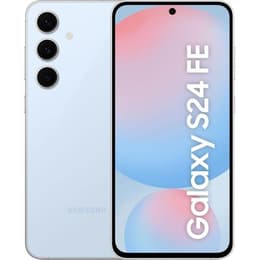
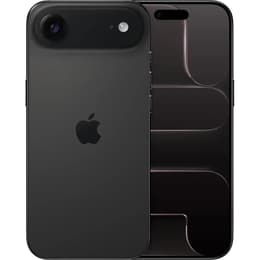
Galaxy S24 FE vs iPhone Air
- 1-year warranty
- Free standard shipping
- Free 30-day returns
Differences at a glance
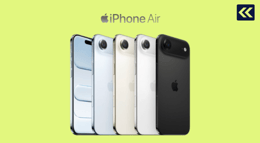
The Samsung Galaxy S24 FE (2024) and the Apple iPhone Air (2025) represent two distinct approaches to modern smartphone engineering, balancing screen estate with structural design. While the Galaxy S24 FE focuses on a feature-rich, balanced everyday experience within Samsung's ecosystem, the iPhone Air prioritizes an ultra-slim profile and lightweight footprint within Apple's iOS environment. Choosing between them largely depends on whether you prefer a traditional sturdy build or an ultra-minimalist physical profile.
Available Models
Colour
Storage
Scores
Durability
Both devices are engineered to handle years of daily use, though their software update pathways and structural durability design differ to suit distinct user expectations.
- Software longevity and OS support: The Galaxy S24 FE benefits from an extended multi-year update commitment covering numerous operating system upgrades, while the iPhone Air relies on Apple's standard long-term iOS support cycle.
- Build robustness and repairability: Samsung utilizes a structured frame with reliable water and dust resistance scores, whereas Apple's device emphasizes an extremely thin titanium shell that requires precise handling during repairs.
- Expected lifespan: Both smartphones maintain smooth operational capability over several years, though physical wear patterns differ due to the stark contrast in housing thickness.
Release year
2024
2025
Operating system
Android
iOS
Foldable
No
No
Performance
Underneath the exterior, both smartphones deliver responsive multitasking and handle demanding mobile applications with ease, backed by generous memory configurations.
- Everyday system responsiveness: Both devices load heavy applications swiftly, switch between open tasks smoothly, and maintain fluid navigation across user interfaces.
- Battery behavior: The Galaxy S24 FE integrates a larger capacity power cell suitable for extended daily use, whereas the iPhone Air balances a slim physical footprint with power-efficient internals that require attention during heavy workloads.
- Multitasking capacity: Ample onboard memory ensures that background processes remain active without sudden reloads, accommodating demanding productivity and multimedia apps.
Screen quality
Visual immersion is a priority for both models, offering vibrant panels equipped with high refresh rates for smooth scrolling and media viewing.
- Display technology: Both smartphones utilize advanced OLED panels that produce deep contrast levels, sharp text clarity, and vivid color reproduction.
- Brightness and outdoor visibility: High peak brightness capabilities on both screens ensure that content remains legible under direct sunlight or bright ambient lighting conditions.
- Motion smoothness: High refresh rate support allows for fluid animations and responsive touch feedback during gaming and general browsing.
Resolution
1080x2340
2736x1260
Audiovisual
Imaging capabilities reflect the physical design choices of each manufacturer, balancing versatile multi-lens arrays against streamlined single-lens efficiency.
- Photography versatility: The Galaxy S24 FE features a flexible multi-lens setup including dedicated optical zoom, while the iPhone Air concentrates its imaging power into a single high-resolution primary sensor.
- Low-light and video performance: Both models utilize computational processing to brighten nighttime scenes and stabilize moving video recordings effectively.
- Media and audio output: Built-in microphone arrays capture clear audio for calls and recordings, while integrated speakers provide clear sound output for casual media consumption.
Miscellaneous
Practical daily usability elements, including connectivity standards and physical ergonomics, define how each device feels in the hand.
- Connectivity and ports: Both models support fast cellular networks and modern wireless standards, utilizing standard connector ports for charging and data transfer.
- Ergonomics and dimensions: The Galaxy S24 FE offers a standard grip weight and thickness, whereas the iPhone Air stands out with its exceptionally thin profile and light build.
- Authentication sensors: Secure biometric options are integrated smoothly into each device for rapid unlocking and secure payment authorization.
Weight
213 oz
165 oz
Screen size (in)
6.7
6.5
Network
5G
5G
SIM card
Physical SIM + eSIM
eSIM
Carrier compatibility
Unlocked
Unlocked
What the community thinks
User feedback highlights distinct preferences for each device across community forums. Samsung users frequently praise the Galaxy S24 FE for its reliable battery endurance, comprehensive multi-lens camera versatility, and durable feel. Conversely, Apple users lean toward the iPhone Air for its striking ultra-slim profile, exceptionally lightweight handling, and fluid display technology, though some note that the single-camera setup and battery capacity require compromises compared to thicker alternatives. For those exploring sustainable tech habits, opting for a quality-assured refurbished option provides a practical way to acquire these devices while minimizing environmental impact.
Users prioritizing multi-lens photography and long battery endurance during heavy daily use may prefer the Galaxy S24 FE, while users prioritizing a featherlight weight and a remarkably thin physical profile will lean toward the iPhone Air. Evaluating these core ergonomic and functional differences will guide you toward the model that best fits your lifestyle.