
Compare models
Galaxy S24 FE vs Galaxy Z Flip7
- 1-year warranty
- Free standard shipping
- Free 30-day returns
Differences at a glance
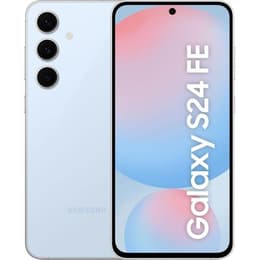
The Samsung Galaxy S24 FE (2024) and the Samsung Galaxy Z Flip7 (2025) represent two distinct approaches to modern mobile design, pairing a traditional candy-bar smartphone form factor with a cutting-edge foldable clamshell configuration. While the Galaxy S24 FE prioritizes robust everyday utility and a classic structure, the Galaxy Z Flip7 introduces an innovative folding body paired with an expanded exterior display. Operating on Android platforms with Samsung's custom interface, both devices cater to different structural preferences while delivering distinct daily experiences.
Available Models
Colour
Storage
Scores
Durability
When examining structural longevity and software support, both devices provide extended maintenance timelines, though their physical builds introduce unique handling considerations.
- Release timeline and hardware age: The Galaxy S24 FE debuted in late 2024, whereas the Galaxy Z Flip7 launched in mid-2025, placing them roughly several months apart in generational release terms.
- Software support duration: Both smartphones receive multi-year operating system updates and security patches, helping maintain software relevance over extended ownership periods.
- Physical durability and repairability: The Galaxy S24 FE relies on a standard glass-and-aluminum slab construction with high-grade dust and water resistance, while the Galaxy Z Flip7 features a complex folding hinge mechanism that requires careful handling alongside its protective outer glass layers.
Release year
2024
2025
Operating system
Android
Android
Foldable
No
Yes
Performance
System responsiveness and power management vary significantly between these two models due to their differing internal layouts and hardware capacities.
- Storage and memory configurations: The Galaxy S24 FE offers standard memory pairings with multiple storage tiers, while the Galaxy Z Flip7 provides higher baseline memory capacity to support intensive multitasking routines.
- Battery behavior and endurance: The Galaxy S24 FE incorporates a larger physical power cell designed to comfortably sustain standard daily workflows, whereas the Galaxy Z Flip7 balances a more compact battery capacity with energy-efficient processing to manage dual-screen usage.
- Everyday execution: Both handsets handle standard web browsing, social media applications, and moderate gaming smoothly, though resource-heavy tasks benefit from the current-generation processing architecture found in the newer foldable model.
Screen quality
Display technology represents one of the most prominent points of divergence, influencing how media and daily notifications are consumed.
- Panel technology and viewing experience: The Galaxy S24 FE utilizes a traditional flat organic light-emitting display with sharp clarity, whereas the Galaxy Z Flip7 features a flexible folding main display complemented by a large, interactive cover screen for quick glances.
- Refresh rate and smoothness: Both devices support high adaptive refresh rates up to 120Hz, ensuring fluid scrolling through menus, web pages, and supported applications.
- Outdoor visibility: High peak brightness capabilities on both panels allow contents to remain legible under direct sunlight, though reflective folding creases may occasionally catch light differently on the foldable model.
Resolution
1080x2340
1080x2520
Audiovisual
Optics and media playback hardware cater to distinct photography styles and entertainment preferences.
- Camera system versatility: The Galaxy S24 FE features a versatile triple-lens rear array including a dedicated telephoto lens for optical zoom, while the Galaxy Z Flip7 relies on a dual-lens rear configuration that leverages its folding design for flexible angles and hands-free tripod-style framing.
- Low-light and video performance: Both units capture detailed everyday photos and stable high-resolution video, utilizing advanced image stabilization to reduce blur during movement.
- Audio output: Stereo speaker configurations on both models deliver clear sound for media streaming, hands-free calls, and casual listening sessions.
Miscellaneous
Practical daily usability elements define how easily each device integrates into pockets, travel bags, and modern network environments.
- Connectivity features: Both smartphones support widespread 5G network bands, modern Wi-Fi standards, and fast Bluetooth connectivity for wireless accessories.
- Physical dimensions and weight: The Galaxy S24 FE follows a traditional, slightly heavier slab footprint, whereas the Galaxy Z Flip7 folds neatly in half to take up less vertical space in a pocket or small bag.
- Biometric security: Both models incorporate responsive biometric authentication methods, including secure facial recognition and fingerprint sensors integrated into the power key or display.
Weight
213 oz
188 oz
Screen size (in)
6.7
6.9
Network
5G
5G
SIM card
Physical SIM + eSIM
Physical SIM + eSIM
Carrier compatibility
Unlocked
Unlocked
What the community thinks
User discussions across community forums highlight distinct preferences for each device based on lifestyle and form-factor priorities. Owners of the Galaxy S24 FE frequently praise its dependable battery endurance, traditional slab durability, and straightforward reliability for everyday tasks. Conversely, users drawn to the Galaxy Z Flip7 often emphasize the convenience of its compact folding shape, expanded outer display functionality for quick notifications, and flexible camera angles. Common points of discussion involve managing the physical hinge maintenance on the foldable model versus accepting a larger, non-folding footprint on the standard model.
Users prioritizing a classic smartphone build with traditional structural robustness and dedicated optical zoom may find the Galaxy S24 FE well-suited to their needs. Meanwhile, users prioritizing pocket-friendly dimensions, innovative display layouts, and modern foldable versatility will likely lean toward the Galaxy Z Flip7. For buyers exploring sustainable purchasing alternatives, selecting a quality-assured refurbished option provides an eco-friendly way to access these technologies without supporting new manufacturing footprints.