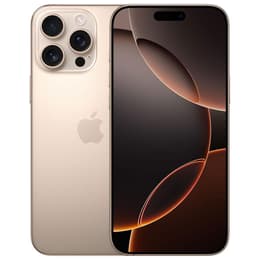

Google Pixel 8 Pro vs iPhone 16 Pro Max

Google Pixel 8 Pro
Google Pixel 8 Pro
Starting at

Refurbished price:A$565.00

Versus A$1,859.00 new

See options
iPhone 16 Pro Max
iPhone 16 Pro Max
Starting at

Refurbished price:A$1,318.00

Versus A$2,149.00 new

See options

Ratings

The Google Pixel 8 Pro, released in October 2023, and the iPhone 16 Pro Max, launched in September 2024, represent advanced offerings from their respective manufacturers. While both are premium smartphones designed for demanding users, they approach mobile technology with distinct philosophies. The Pixel 8 Pro emphasizes artificial intelligence integration and a user-friendly Android experience, whereas the iPhone 16 Pro Max focuses on raw performance, a refined iOS ecosystem, and enhanced multimedia capabilities.

Scores

Durability

When considering the long-term usability of a smartphone, software support and physical resilience are key factors. Both devices offer robust build quality and extended software update commitments, contributing to a prolonged practical lifespan.

  • Software Longevity: The Google Pixel 8 Pro is notable for its commitment to seven years of operating system, security, and Feature Drop updates, extending its software support until 2030. The iPhone 16 Pro Max, typically supported for five to seven years, is expected to receive iOS updates until at least 2031, ensuring a comparable period of access to the latest features and security patches.
  • Physical Durability: The Pixel 8 Pro features Corning Gorilla Glass Victus 2 on both its front and back, paired with an aluminum frame. The iPhone 16 Pro Max utilizes Apple's Ceramic Shield on the front, a glass back, and a titanium frame. Both devices carry an IP68 rating for water and dust resistance, indicating protection against immersion in water up to 6 meters for 30 minutes.
  • Repairability: While specific repairability scores can vary, both devices are designed with modern smartphone construction, which often involves specialized tools and expertise for repairs. Users seeking to extend the life of their device beyond software support can consider quality-assured refurbished options, offering a sustainable choice.

Release year

2023

2024

Compatible with latest Update

Yes

Yes

Foldable

No

No

Performance

Performance is a critical aspect for users who engage in demanding tasks, and both the Pixel 8 Pro and iPhone 16 Pro Max deliver substantial processing power, though with different underlying architectures.

  • Everyday Responsiveness: The Pixel 8 Pro, powered by its custom-designed processor, handles daily applications, multitasking, and general navigation with fluidity. Users report a smooth experience for most tasks, though some heavy gaming scenarios might show slight variations compared to top-tier competitors. The iPhone 16 Pro Max, featuring its advanced A-series chip, provides exceptional speed and responsiveness across all applications, including graphically intensive games and professional-grade video editing.
  • Multitasking and Storage: The Pixel 8 Pro comes with 12GB of RAM, facilitating efficient multitasking and app retention in memory. The iPhone 16 Pro Max is equipped with 8GB of RAM, optimized by iOS to manage multiple applications effectively. Both devices offer various internal storage options, ranging from 128GB or 256GB up to 1TB, catering to different user needs for media and application storage.
  • Battery Behavior: The Pixel 8 Pro houses a 5050 mAh battery, generally providing a full day of use for most users, with some reporting occasional inconsistencies in battery drain. The iPhone 16 Pro Max, with its 4676 mAh battery, is noted for its exceptional battery longevity, often extending well beyond a single day even with heavy usage.

Memory (GB)

12 GB

8 GB

Screen quality

The visual experience on a smartphone is largely defined by its display, and both the Pixel 8 Pro and iPhone 16 Pro Max offer high-quality screens with distinct characteristics.

  • Display Technology and Clarity: The Pixel 8 Pro features a 6.7-inch LTPO OLED display with a resolution of 1344 x 2992 pixels, resulting in a pixel density of 489 ppi. The iPhone 16 Pro Max boasts a slightly larger 6.9-inch LTPO Super Retina XDR OLED display with a resolution of 1320 x 2868 pixels and a pixel density of 460 ppi. Both displays offer deep blacks, vibrant colors, and excellent contrast, characteristic of OLED technology.
  • Brightness and Refresh Rate: The Pixel 8 Pro's display can reach a peak brightness of up to 2400 nits, providing excellent visibility even in bright outdoor conditions. It also features a variable refresh rate from 1Hz to 120Hz for smooth scrolling and power efficiency. The iPhone 16 Pro Max offers a peak brightness of up to 2000 nits (HBM) and includes ProMotion technology, providing an adaptive refresh rate up to 120Hz for fluid visuals.
  • Viewing Experience: Both devices provide immersive viewing experiences for media consumption and daily interactions. The Pixel 8 Pro's display is flat, which some users prefer, while the iPhone 16 Pro Max offers a slightly larger screen size, enhancing the overall viewing area.

Resolution

1344 x 2992

1320 x 2868

Screen type

LTPO OLED

LTPO Super Retina XDR OLED

Audiovisual

Both the Google Pixel 8 Pro and the iPhone 16 Pro Max are equipped with advanced camera systems, each excelling in different aspects of mobile photography and videography.

  • Rear Camera Systems: The Pixel 8 Pro features a versatile triple camera setup, including a 50MP wide, 48MP ultrawide, and a 48MP telephoto lens with 5x optical zoom. It is renowned for its computational photography, delivering consistent image quality and advanced AI-powered editing tools. The iPhone 16 Pro Max also has a triple camera system, comprising a 48MP wide, a 48MP ultrawide, and a 12MP periscope telephoto lens with 5x optical zoom, complemented by a TOF 3D LiDAR scanner. It is praised for its detailed images, improved low-light performance, and advanced video capabilities.
  • Photography Performance: The Pixel 8 Pro consistently produces images with natural colors and excellent dynamic range, with users appreciating its point-and-shoot reliability and unique AI features for photo enhancement. The iPhone 16 Pro Max offers sharp, detailed photos with accurate color reproduction, and its upgraded ultrawide camera and new 'tone' control provide more flexibility for photographic styles.
  • Video Recording and Front Camera: Both devices offer high-quality video recording, with the iPhone 16 Pro Max supporting 4K video at various frame rates, including ProRes and spatial video capabilities. The Pixel 8 Pro also records 4K video and provides solid stabilization. For selfies and video calls, the Pixel 8 Pro has a 10.5MP front camera, while the iPhone 16 Pro Max features a 12MP front camera with advanced features like OIS and PDAF.

Main camera

50 megapixels

48 megapixels

Front camera

10.5 megapixels

12 megapixels

Miscellaneous

Beyond core specifications, several practical elements contribute to the overall user experience and daily convenience of these smartphones.

  • Connectivity and Ports: Both the Pixel 8 Pro and iPhone 16 Pro Max support 5G cellular networks and are equipped with Wi-Fi 7 for faster wireless internet speeds. They both feature Bluetooth 5.3 for efficient wireless accessory connections. The Pixel 8 Pro uses a USB-C port, as does the iPhone 16 Pro Max, offering universal charging and data transfer capabilities.
  • Biometric Security: The Pixel 8 Pro offers both an in-display fingerprint sensor and face unlock for secure authentication. The iPhone 16 Pro Max relies on its Face ID system for secure facial recognition.
  • Design and Handling: The Pixel 8 Pro weighs 213 grams and has dimensions of 162.6 x 76.5 x 8.8 mm, with a design that many users find comfortable to hold due to its rounded frame. The iPhone 16 Pro Max weighs 227 grams and measures 163 x 77.6 x 8.3 mm, featuring a titanium frame that contributes to its durable yet premium feel. The iPhone 16 Pro Max also introduces a new Camera Control button for quick access to camera functions.

Weight

213 oz

227 oz

Screen size (in)

6.7

6.9

Network

5G

5G

SIM card

Physical SIM + eSIM

Physical SIM + eSIM

Carrier compatibility

Unlocked

Unlocked

The Google Pixel 8 Pro and iPhone 16 Pro Max each offer a compelling smartphone experience, catering to different user preferences and priorities. User feedback for the Pixel 8 Pro often highlights its exceptional camera capabilities, particularly its AI-driven photo enhancements, and the long-term software support commitment from Google. Its vibrant display and comfortable design are also frequently praised. Some users, however, note that its performance in very demanding games might not always match the absolute top tier, and battery life, while generally good, can occasionally be inconsistent.

The iPhone 16 Pro Max receives significant acclaim for its outstanding battery life, which is often described as class-leading, and its powerful overall performance that handles any task with ease. Its camera system, with upgrades to the ultrawide lens and new creative controls, is also a strong point, as is its large, bright display. The new Camera Control button has garnered mixed opinions, with some finding it highly useful and others less so.

Users prioritizing a highly intelligent camera system with extensive AI features, coupled with a long software support window and a comfortable Android experience, may find the Google Pixel 8 Pro well-suited to their needs. Conversely, those who value industry-leading performance, exceptional battery longevity, a robust iOS ecosystem, and advanced video capabilities will likely lean towards the iPhone 16 Pro Max. Both devices represent excellent choices, and considering a quality-assured refurbished option can be an eco-friendly alternative for either model.
See all articles

Our recent comparisons