
Compare models

Galaxy A54 vs iPhone Air

  • 1-year warranty
  • Free standard shipping
  • Free 30-day returns
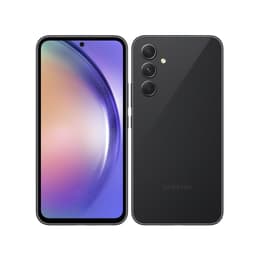
Galaxy A54
Starting at

Refurbished price:A$312.00

Versus A$716.75 new

See options
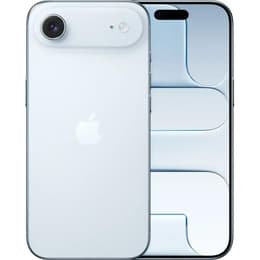
iPhone Air
Starting at

Refurbished price:A$1,061.00

Versus A$1,899.00 new

See options

Differences at a glance

The Samsung Galaxy A54 (2023) and the Apple iPhone Air (2025) are distinct smartphones representing different generations, operating systems, and design philosophies. While the Galaxy A54 is an Android-powered mid-range device built for everyday practicality, the iPhone Air is an ultra-slim iOS device focused on lightweight portability and advanced processing capability. These two models cater to very different user preferences regarding form factor, software ecosystem, and hardware capabilities.

Available Models

Colour

Storage (GB)

Scores

Durability

When evaluating hardware longevity and software support, both smartphones offer robust update pathways suited for long-term ownership, though they stem from different release years.

  • Software support duration: The Galaxy A54 provides multi-year Android OS upgrades, while the iPhone Air benefits from Apple's extended iOS lifecycle support, ensuring prolonged feature updates and security patches.
  • Repairability and build durability: Both models feature glass and reinforced structures with dust and water resistance ratings, and selecting a quality-assured refurbished option provides a sustainable choice that extends device longevity.
  • Expected practical lifespan: The iPhone Air's advanced processor headroom ensures prolonged responsiveness under future software demands, whereas the Galaxy A54 offers reliable daily performance for standard tasks over several years.

Release year

2023

2025

Compatible with latest Update

Yes

Yes

Operating system

Android

iOS

Foldable

No

No

Performance

Underneath the exterior, these devices handle multitasking, storage, and power management through contrasting hardware configurations designed for varying workloads.

  • Storage configurations: The Galaxy A54 typically offers 128 GB and 256 GB storage options with expandable storage potential, while the iPhone Air starts at 256 GB and relies entirely on internal capacity.
  • System responsiveness: The iPhone Air handles demanding applications and intensive gaming seamlessly with advanced processing hardware, whereas the Galaxy A54 manages everyday multitasking, social media apps, and casual browsing smoothly.
  • Battery behavior: The Galaxy A54 incorporates a larger capacity battery capable of lasting through extended daily routines, while the iPhone Air balances a slim profile with efficient power consumption for typical use cases.

Screen quality

Visual output and display responsiveness play a central role in daily interaction, with both models utilizing high-refresh-rate panel technology.

  • Display technology: Both devices feature vibrant OLED displays that deliver deep contrast levels, rich colors, and wide viewing angles for media consumption.
  • Refresh rate and smoothness: Both screens support a 120Hz refresh rate, providing fluid scrolling through web pages, documents, and system menus.
  • Outdoor visibility and brightness: High peak brightness capabilities on both panels ensure that content remains legible and clear even under direct sunlight.

Resolution

1080 x 2340

2736x1260

Screen type

Super AMOLED

Super Retina XDR

Audiovisual

Photography and media recording capabilities differ noticeably in hardware arrangement and processing output between the two handsets.

  • Camera system setup: The Galaxy A54 utilizes a versatile multi-lens rear array including main, ultra-wide, and macro sensors, whereas the iPhone Air focuses on a streamlined single high-resolution primary lens setup.
  • Video recording quality: The iPhone Air delivers refined stabilization, high-detail video capture, and spatial audio features, while the Galaxy A54 provides stable 4K recording suitable for everyday moments.
  • Audio and media output: Both models feature stereo sound capabilities for calls and media playback, though acoustic depth varies based on internal physical speaker housing dimensions.

Main camera

50 megapixels

48 megapixels

Front camera

32 megapixels

18 megapixels

Miscellaneous

Practical daily usability is shaped by physical dimensions, connectivity standards, and biometric authentication methods built into each chassis.

  • Physical dimensions and weight: The iPhone Air prioritizes an exceptionally thin and lightweight profile, whereas the Galaxy A54 offers a slightly thicker, traditional form factor with a substantial feel in the hand.
  • Biometric security: The Galaxy A54 uses an under-display optical fingerprint scanner alongside facial recognition, while the iPhone Air relies exclusively on advanced facial recognition technology.
  • Connectivity and ports: Both handsets support 5G connectivity and universal USB-C ports for charging and data transfer, alongside modern Wi-Fi and Bluetooth standards.

Weight

202 oz

165 oz

Screen size (in)

6.4

6.5

Network

5G

5G

SIM card

Physical SIM + eSIM

eSIM

Carrier compatibility

Unlocked

Unlocked

What the community thinks

User feedback from online communities highlights distinct preferences when comparing these two devices. Owners of the Galaxy A54 frequently praise its reliable battery longevity, dependable everyday screen quality, and balanced feature set for standard tasks. Conversely, users of the iPhone Air emphasize appreciation for its remarkably thin chassis, lightweight portability, and smooth system responsiveness under demanding workloads. At the same time, some discussions note that the Galaxy A54 can feel heavier in daily handling, while others mention that the iPhone Air's minimalist design omits certain physical lens versatility found in multi-camera setups.

Users prioritizing extended battery capacity, expandable storage flexibility, and a traditional build will find the Galaxy A54 well-suited to their needs. Meanwhile, users prioritizing maximum portability, a featherlight feel, and powerful processing headroom for intensive applications will lean toward the iPhone Air. Choosing either model as an eco-friendly, quality-assured refurbished option allows consumers to make a sustainable choice that aligns with their functional requirements and personal device preferences.
Our recent comparisons