
Compare models

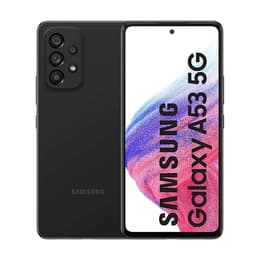
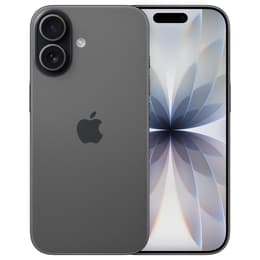
Galaxy A53 5G vs iPhone 17

  • 1-year warranty
  • Free standard shipping
  • Free 30-day returns
Galaxy A53 5G
Starting at

Refurbished price:A$220.00

Versus A$495.00 new

See options
iPhone 17
Starting at

Refurbished price:A$1,229.00

Versus A$1,549.00 new

See options

Differences at a glance

The Samsung Galaxy A53 5G (2022) and the Apple iPhone 17 (2025) belong to entirely different product generations and ecosystem classes, serving distinct market sectors. While the Galaxy A53 5G focuses on everyday reliability within the Android ecosystem, the iPhone 17 offers a modern flagship design running iOS. Choosing between them involves weighing release timelines, software environments, and core hardware capabilities.

Available Models

Colour

Storage

Scores

Durability

Lifecycle expectations differ significantly due to a multi-year gap in release schedules, impacting long-term software support and hardware viability.

  • Release timeline and age: The Galaxy A53 5G launched in early 2022, whereas the iPhone 17 debuted in late 2025, placing them several years apart in technological evolution.
  • Software longevity: The iPhone 17 benefits from a prolonged update schedule extending deep into future operating system cycles, while the Galaxy A53 5G approaches the later stages of its structured multi-year support policy.
  • Repairability and build durability: Both devices offer IP67 or IP68 water and dust resistance ratings, with standard components that are serviceable by professional technicians to extend practical operational lifespans.

Release year

2022

2025

Compatible with latest Update

Yes

Yes

Operating system

Android

iOS

Foldable

No

No

Performance

System responsiveness and daily multitasking capabilities reflect their respective hardware tiers and processor architectures.

  • Multitasking and app handling: The iPhone 17 handles demanding applications and intensive background tasks seamlessly, while the Galaxy A53 5G manages routine daily workflows, web browsing, and social media efficiently using its mid-range octa-core configuration.
  • Storage configurations: The iPhone 17 starts at higher baseline storage tiers without expandable memory slots, whereas the Galaxy A53 5G provides micro-SD card expansion alongside standard internal storage options.
  • Battery behavior: The Galaxy A53 5G features a large capacity cell suited for extended standard usage, while the iPhone 17 utilizes optimized power management to sustain full-day workloads efficiently under varied conditions.

Screen quality

Viewing experiences vary across panel technologies, peak brightness capabilities, and motion smoothness.

  • Display technology: Both models utilize vibrant OLED panels that deliver deep contrast levels, rich colors, and wide viewing angles.
  • Refresh rate and fluidity: Both screens support a 120Hz refresh rate, ensuring smooth scrolling through web pages, menus, and supported applications.
  • Outdoor visibility: The iPhone 17 reaches significantly higher peak luminance levels for clear visibility under direct sunlight, compared to the moderate brightness profile of the Galaxy A53 5G display.

Audiovisual

Imaging hardware and computational photography features cater to different creator preferences and media consumption habits.

  • Rear camera systems: The iPhone 17 relies on a dual high-resolution lens arrangement supported by advanced computational processing, whereas the Galaxy A53 5G employs a versatile quad-lens array including dedicated macro and depth sensors.
  • Low-light and video capture: The iPhone 17 excels in challenging lighting conditions and records stabilized video with wide dynamic range, while the Galaxy A53 5G captures clear everyday photos and stable 4K video clips suitable for casual sharing.
  • Audio and media output: Both devices feature balanced stereo speaker setups that deliver clear sound output for hands-free calls, podcasts, and casual video streaming.

Front camera

32 megapixels

18 megapixels

Miscellaneous

Physical dimensions, connectivity standards, and daily handling characteristics define the ergonomic profile of each handset.

  • Connectivity options: Both smartphones support fast 5G cellular networks, with the iPhone 17 incorporating advanced Wi-Fi 7 standards and the Galaxy A53 5G featuring standard Wi-Fi connectivity.
  • Physical ports and biometrics: The iPhone 17 utilizes a universal USB-C connection and facial recognition, while the Galaxy A53 5G combines a USB-C port with an optical in-display fingerprint sensor.
  • Build materials: The iPhone 17 uses glass and refined metal frame construction, whereas the Galaxy A53 5G implements a matte plastic rear panel paired with a sturdy frame.

Weight

189 oz

177 oz

Screen size (in)

6.5

6.3

Network

5G

5G

SIM card

Physical SIM

Physical SIM + eSIM

Carrier compatibility

Unlocked

Unlocked

What the community thinks

User feedback from online forums highlights distinct preferences for each device based on individual daily requirements. Owners of the Galaxy A53 5G frequently praise its dependable battery life, expandable storage support, and reliable everyday performance for standard communication tasks. Conversely, community discussions surrounding the iPhone 17 emphasize satisfaction with its rapid processing speeds, premium display brightness, and robust long-term software support pipeline.

Users prioritizing extended software longevity, high processing headroom, and seamless integration within the iOS ecosystem will find the iPhone 17 well-suited to their needs. Meanwhile, users seeking a quality-assured refurbished option with expandable storage flexibility and dependable everyday Android functionality may lean toward the Galaxy A53 5G. Evaluating these core differences ensures a choice that aligns directly with personal workflow habits and technical expectations.


See all articles