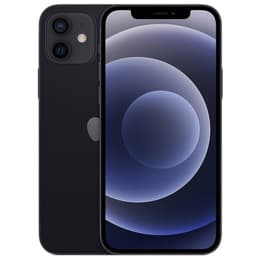

Galaxy A15 5G vs iPhone 12

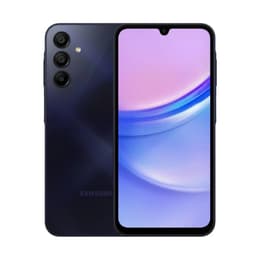
Galaxy A15 5G
Galaxy A15 5G
Starting at

Refurbished price:A$257.00

Versus A$329.00 new

See options
iPhone 12
iPhone 12
Starting at

Refurbished price:A$305.00

Versus A$1,129.00 new

See options

Ratings

The Samsung Galaxy A15 5G, released in December 2023, and the Apple iPhone 12, launched in October 2020, represent distinct approaches to smartphone design and functionality. While the Galaxy A15 5G operates on Android with Samsung's One UI, the iPhone 12 runs on Apple's iOS platform. These devices offer different user experiences, primarily diverging in their operating systems, display technologies, and camera philosophies.

Scores

Durability

The practical lifespan of a smartphone is significantly influenced by its build quality and the duration of software support it receives.

  • Release Timeline and Software Support: The Galaxy A15 5G, being a newer device from late 2023, is promised four major Android OS updates (up to Android 18) and five years of security patches, extending its support until 2028. The iPhone 12, released in late 2020, typically receives around five to seven years of major iOS updates, with security updates potentially extending beyond that, making it usable until at least 2028.
  • Physical Durability: The iPhone 12 features a Ceramic Shield front cover, an aluminum frame, and a glass back, contributing to its robust feel and includes an IP68 rating for water and dust resistance, allowing submersion up to 6 meters for 30 minutes. The Galaxy A15 5G has a primarily plastic build for its back and frame, with Dragontrail Pro glass protecting its display.
  • Repairability: While specific repairability scores vary, the iPhone 12's design, with its internal components, can present challenges for repairs. The Galaxy A15 5G's construction, while plastic, may offer a different repair experience.

Release year

2023

2020

Operating system

Android

iOS

Foldable

No

No

Performance

Performance in daily use is a key factor for any smartphone, affecting how smoothly applications run and how efficiently tasks are handled.

  • Processing Power: The iPhone 12 is equipped with a powerful processor that ensures smooth and responsive performance across various applications, including demanding games and multitasking. The Galaxy A15 5G features an octa-core processor designed for everyday tasks. While it handles multitasking adequately, users may notice some slowness or stuttering when running very demanding applications or graphics-intensive games.
  • Storage and Multitasking: The iPhone 12 is available with 64GB, 128GB, or 256GB of internal storage and 4GB of RAM. The Galaxy A15 5G offers more flexible storage options, including 128GB or 256GB, and comes with 4GB, 6GB, or 8GB of RAM, alongside expandable storage via a microSD card slot up to 1TB. This expandable storage is a notable advantage for users who require significant space for media and applications.
  • Battery Behavior: The Galaxy A15 5G is known for its extended battery life, often lasting up to two days with moderate use, thanks to its large battery capacity. The iPhone 12's battery life is generally considered average, and heavy use, particularly with 5G connectivity, can lead to more frequent charging.

Memory (GB)

8 GB

4 GB

Screen quality

The display is the primary interface for smartphone interaction, and differences in technology and specifications can greatly impact the viewing experience.

  • Display Technology and Clarity: The iPhone 12 features a 6.1-inch Super Retina XDR OLED display, offering deep blacks, vibrant colors, and a sharp resolution of 2532 x 1170 pixels. The Galaxy A15 5G comes with a larger 6.5-inch Super AMOLED display, also providing vivid colors and good contrast, with a resolution of 2340 x 1080 pixels.
  • Brightness and Refresh Rate: The Galaxy A15 5G boasts a 90Hz refresh rate, contributing to smoother scrolling and a more fluid visual experience, and can reach up to 800 nits of brightness in high brightness mode for better outdoor visibility. The iPhone 12 has a standard 60Hz refresh rate but offers excellent brightness, with typical levels up to 625 nits and a peak of 1200 nits for HDR content.
  • Design and Viewing Experience: The iPhone 12 features a more uniform bezel design, while the Galaxy A15 5G has more noticeable bezels around its display. Both displays offer a clear viewing experience, but the higher refresh rate on the Galaxy A15 5G provides a subtle advantage in visual fluidity.

Resolution

1080x2340

1170 x 2532

Audiovisual

The camera systems on both devices cater to different photography needs, with varying strengths in image and video capture.

  • Rear Camera Capabilities: The iPhone 12 features a dual 12MP camera system, comprising a wide lens with a wider aperture and optical image stabilization, and an ultra-wide lens. This setup excels in low-light conditions, producing brighter and more detailed images, and supports Night Mode on both lenses. The Galaxy A15 5G has a triple rear camera array, including a 50MP main sensor, a 5MP ultrawide, and a 2MP macro lens. Its main camera performs well in good lighting, though colors can appear slightly oversaturated, and the ultrawide and macro lenses offer limited detail.
  • Video Recording and Front Camera: The iPhone 12 offers advanced video recording capabilities, including 4K resolution at various frame rates and Dolby Vision HDR video. Its 12MP front camera also supports Night Mode. The Galaxy A15 5G records video in Full HD at 30 frames per second and has a 13MP front camera.
  • Audio Experience: The iPhone 12 provides a stereo speaker setup for media consumption. The Galaxy A15 5G features a single down-firing speaker but includes a 3.5mm headphone jack, a feature absent on the iPhone 12.

Miscellaneous

Beyond core features, several practical elements contribute to the overall user experience and device utility.

  • Connectivity and Ports: Both devices support 5G connectivity. The iPhone 12 uses Wi-Fi 6 and Bluetooth 5.0, connecting via a Lightning port. The Galaxy A15 5G supports Wi-Fi 5 and Bluetooth 5.3, featuring a USB-C 2.0 port. The inclusion of a 3.5mm headphone jack on the Galaxy A15 5G offers traditional audio connectivity.
  • Biometric Security: The iPhone 12 relies on Face ID for secure facial recognition. The Galaxy A15 5G incorporates a side-mounted fingerprint sensor for biometric authentication.
  • Physical Characteristics: The iPhone 12 is more compact and lighter, measuring 146.7 x 71.5 x 7.4 mm and weighing 164g. The Galaxy A15 5G is slightly larger and heavier at 160.1 x 76.8 x 8.4 mm and 200g. These differences impact one-handed use and pocketability.

Weight

200 oz

164 oz

Screen size (in)

6.5

6.1

Network

5G

5G

SIM card

Physical SIM

Physical SIM + eSIM

Carrier compatibility

Unlocked

Unlocked

User sentiment for the Galaxy A15 5G frequently highlights its exceptional battery life, with many reporting up to two days of use on a single charge, making it a reliable choice for users on the go. Its vibrant AMOLED display is also a common praise point, offering a visually engaging experience. However, some users note that its performance can be sluggish with demanding applications or games, and the camera system, while decent for everyday shots, has limitations with its ultrawide and macro lenses.

The iPhone 12 is often lauded for its robust overall performance, handling various tasks and applications with consistent smoothness. Its camera system receives positive feedback for its improved low-light capabilities and the ability to record high-quality Dolby Vision HDR video. The device's durable build, featuring Ceramic Shield and IP68 water resistance, is also a valued aspect. Conversely, a frequent criticism is its average battery life, particularly when utilizing 5G, which may necessitate more frequent charging for heavy users. The 60Hz refresh rate of its display is also sometimes mentioned as a point of comparison against newer devices.

Users prioritizing extended battery life, a larger, high-refresh-rate AMOLED display, and expandable storage may find the Galaxy A15 5G well-suited to their needs. This device is a practical choice for those who value longevity between charges and media consumption. Conversely, users who prioritize a consistently powerful and responsive performance, advanced camera capabilities for diverse lighting conditions, and a more compact, premium build with strong water resistance may lean toward the iPhone 12. Both devices offer compelling features for different user profiles, and considering a quality-assured refurbished option for either model can be an eco-friendly alternative to purchasing new.
See all articles

Our recent comparisons