Galaxy A33 5G vs Motorola Edge 30 Neo

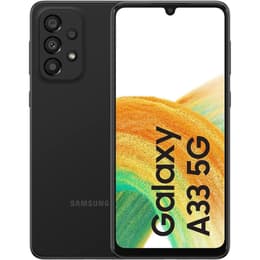
Galaxy A33 5G
Galaxy A33 5G
Starting at

Refurbished price:A$205.00

Versus A$495.00 new

See options
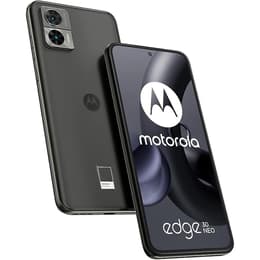
Motorola Edge 30 Neo
Starting at

Refurbished price:A$306.00

Versus A$414.00 new

See options

The Samsung Galaxy A33 5G, released in April 2022, and the Motorola Edge 30 Neo, launched in September 2022, are both smartphones designed for everyday use. While both devices offer 5G connectivity and run on the Android operating system, they present distinct approaches to display technology, camera capabilities, and software support. The Galaxy A33 5G operates with Samsung's One UI overlay, whereas the Edge 30 Neo features a near-stock Android experience with Motorola's My UX enhancements.

Scores

Durability

When considering the long-term usability of these devices, their release timelines and software support policies are key factors.

  • Software Longevity: The Samsung Galaxy A33 5G offers a more extended software support period, with a commitment to four generations of Android OS updates and five years of security updates from its release. This means it is expected to receive updates up to Android 16. In contrast, the Motorola Edge 30 Neo was promised two major OS updates and three years of security patches, having already reached Android 14 as its final OS update.
  • Physical Durability: The Galaxy A33 5G features an IP67 rating for dust and water resistance, indicating protection against immersion in water up to 1 meter for 30 minutes, and its display is protected by Corning Gorilla Glass 5. The Motorola Edge 30 Neo has an IP52 rating, offering protection against splashes and limited dust ingress. Both devices utilize plastic for their frames and back panels, contributing to a lighter feel.
  • Repairability: The Samsung Galaxy A33 5G has a repairability score of 7.75 out of 10, suggesting it is relatively straightforward to disassemble, with the battery and screen being accessible without excessive component removal. The Motorola Edge 30 Neo's repairability is rated at 6.5 out of 10 for a similar model, indicating that adhesive use for the back cover and battery, along with multiple components needing disassembly for screen replacement, can make repairs more complex.

Release year

2022

2022

Compatible with latest Update

Yes

Yes

Operating system

Android

Android

Foldable

No

No

Performance

The performance of both smartphones is suitable for daily tasks, though they differ in their handling of more demanding applications.

  • Everyday Responsiveness: The Samsung Galaxy A33 5G, powered by an octa-core processor, handles general applications and multitasking smoothly. Users report a fluid experience for social media and web browsing, though some minor stutters can occur with many apps open or during boot-up. The Motorola Edge 30 Neo, also featuring an octa-core processor, provides a snappy feel for everyday tasks and UI navigation, partly due to its high screen refresh rate.
  • Gaming and Demanding Apps: For graphically intensive games, the Galaxy A33 5G offers decent performance but may not sustain high frame rates on the most demanding titles, with some fluctuation and temperature increases noted. The Edge 30 Neo's processor is capable of handling gaming quite well for its class, though it is not considered a top performer in benchmarks.
  • Storage and Multitasking: Both devices offer 6GB or 8GB of RAM and 128GB or 256GB of internal storage. The Galaxy A33 5G supports expandable storage via a microSD card up to 1TB, providing flexibility for users who require more space. The Motorola Edge 30 Neo does not offer expandable storage.

Memory (GB)

4 GB

8 GB

Screen quality

Both devices offer vibrant displays, but they employ different technologies and refresh rates that impact the visual experience.

  • Display Technology and Clarity: The Samsung Galaxy A33 5G features a 6.4-inch Super AMOLED display, known for its deep blacks and vibrant colors, with a resolution of 1080x2400 pixels. The Motorola Edge 30 Neo comes with a slightly smaller 6.28-inch pOLED display, also offering a 1080x2400 pixel resolution, which provides bold colors and strong contrast.
  • Refresh Rate and Smoothness: The Galaxy A33 5G has a 90Hz refresh rate, contributing to smooth scrolling and a responsive user interface. The Edge 30 Neo offers a higher 120Hz refresh rate, which results in an even smoother visual experience, particularly noticeable during scrolling and animations.
  • Brightness and Viewing Experience: The Galaxy A33 5G's display can reach a peak brightness of 800 nits, offering good outdoor legibility. The Edge 30 Neo's screen is also noted for being pleasantly bright, making it easy to read outdoors. Both displays are well-suited for media consumption, with the Edge 30 Neo often praised for its suitability for video streaming.

Resolution

1080 x 2400

1080 x 2400

Screen type

Super AMOLED

P-OLED

Audiovisual

The camera systems on both smartphones are designed for different photography and videography needs.

  • Rear Camera Capabilities: The Samsung Galaxy A33 5G features a quad-camera setup with a 48MP main sensor that includes Optical Image Stabilization (OIS), an 8MP ultrawide lens, a 5MP macro lens, and a 2MP depth sensor. The Motorola Edge 30 Neo has a dual-camera system, comprising a 64MP main sensor with OIS and a 13MP ultrawide lens that also handles macro shots.
  • Photography Performance: In good lighting conditions, both phones capture detailed images with vibrant colors. The Galaxy A33 5G's main camera, with OIS, helps in producing stable shots. The Edge 30 Neo's 64MP main camera performs well in adequate light, though its low-light performance is often noted as a weaker point.
  • Video Recording and Audio: The Galaxy A33 5G can record videos up to 4K resolution at 30 frames per second with its main rear camera, benefiting from OIS for stability. The Motorola Edge 30 Neo's video recording is limited to 1080p resolution across all its cameras. Both devices include stereo speakers, with the Edge 30 Neo also featuring Dolby Atmos support for an enhanced audio experience.

Main camera

48 megapixels

64 megapixels

Front camera

13 megapixels

32 megapixels

Miscellaneous

Beyond core features, several practical elements differentiate these two smartphones.

  • Connectivity and Ports: Both the Galaxy A33 5G and Motorola Edge 30 Neo support 5G connectivity and modern Wi-Fi standards (Wi-Fi 5 for A33 5G, Wi-Fi 6 for Edge 30 Neo). They both feature USB-C ports for charging and data transfer, but neither includes a 3.5mm headphone jack.
  • Biometric Security: Both phones incorporate in-display fingerprint sensors for secure unlocking. The Edge 30 Neo also supports Android's Face Unlock feature.
  • Design and Handling: The Galaxy A33 5G measures 159.7 x 74 x 8.1 mm and weighs 186 grams, featuring a matte finish on its plastic back and frame. The Motorola Edge 30 Neo is more compact and lighter at 152.9 x 71.2 x 7.75 mm and 155 grams, making it comfortable for one-handed use. The Edge 30 Neo also stands out with its unique color options and an LED ring around the camera module that functions as a notification light.

Weight

186 oz

155 oz

Screen size (in)

6.4

6.28

Network

5G

5G

SIM card

Physical SIM

Dual Physical SIM

Carrier compatibility

Unlocked

Unlocked

User feedback for the Samsung Galaxy A33 5G often highlights its strong software support, vibrant AMOLED display, and IP67 water resistance as significant advantages. Many users appreciate its reliable performance for daily tasks and the inclusion of OIS in its main camera. Criticisms sometimes point to its performance not being ideal for intensive gaming and the absence of a 3.5mm headphone jack.

The Motorola Edge 30 Neo receives praise for its compact and lightweight design, its smooth 120Hz pOLED display, and fast charging capabilities. Users also value its near-stock Android experience and stereo speakers. However, common concerns include its shorter software update commitment, less impressive low-light camera performance, and the lack of expandable storage.

Users prioritizing extended software longevity, a higher degree of water and dust resistance, and expandable storage may find the Samsung Galaxy A33 5G better suited to their needs. Conversely, those who value a more compact and lighter device, a higher display refresh rate, faster charging, and a cleaner Android interface might lean towards the Motorola Edge 30 Neo. Both devices offer solid performance for general use, making them practical choices depending on individual preferences. For those seeking an eco-friendly alternative, considering a quality-assured refurbished option for either model can provide excellent value and contribute to sustainability.


See all articles

Our recent comparisons