Compare models
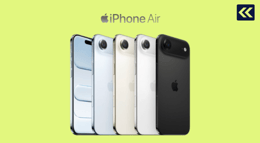
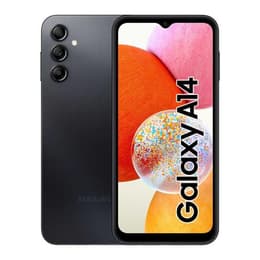
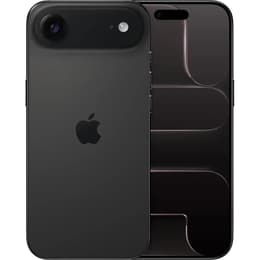
Galaxy A14 vs iPhone Air
- 1-year warranty
- Free standard shipping
- Free 30-day returns
Differences at a glance
The Samsung Galaxy A14 (2023) and the Apple iPhone Air (2025) represent different approaches to mobile device engineering, spanning distinct release years, operating systems, and market categories. While the Galaxy A14 focuses on providing essential everyday connectivity on the Android platform, the iPhone Air prioritizes a breakthrough ultra-slim form factor and advanced computing capabilities within the iOS ecosystem. These contrasting models cater to distinct user requirements ranging from straightforward daily communication to high-end mobile performance.
Available Models
Colour
Storage
Scores
Durability
Comparing the structural build and software support timelines of both devices highlights distinct expectations for long-term usability and physical longevity.
- Release timeline and support: The Galaxy A14 debuted in early 2023 running Android, while the iPhone Air launched in late 2025 with iOS, providing the Apple device with a significantly extended window for future software updates and security patches.
- Build and repairability: The Galaxy A14 features a standard plastic and glass construction, whereas the iPhone Air utilizes a titanium frame combined with reinforced glass protection, contributing to differing handling characteristics over time.
- Expected lifespan: Users selecting the newer Apple model benefit from extended software longevity, while those opting for a quality-assured refurbished option [Back Market] can access reliable performance backed by professional testing.
Release year
2023
2025
Compatible with latest Update
No
Yes
Operating system
Android
iOS
Foldable
No
No
Performance
System responsiveness and daily multitasking capabilities vary notably due to the generation gap and internal hardware architecture of each smartphone.
- Everyday execution: The Galaxy A14 handles standard messaging, web browsing, and media streaming adequately for routine tasks, whereas the iPhone Air manages demanding applications, complex graphics, and intensive multitasking with seamless fluidity.
- Storage and memory: Internal storage configurations differ between the expandable storage support found on the Android device and the fixed, high-capacity solid-state storage tiers standard on the Apple model.
- Battery behavior: The Galaxy A14 relies on a high-capacity cell designed to comfortably stretch across a full day of moderate use, while the ultra-thin profile of the iPhone Air houses a more compact battery that suits lighter daily usage patterns.
Screen quality
Display technologies differ substantially between the two models, directly influencing visual clarity, outdoor visibility, and media consumption.
- Panel technology: The Galaxy A14 utilizes a standard LCD panel delivering clear text and everyday images, while the iPhone Air features an advanced OLED screen offering deep contrast levels and rich color accuracy.
- Refresh rate and smoothness: Motion clarity varies from the standard refresh rate on the Galaxy model to the adaptive high refresh rate capabilities on the iPhone Air that ensure fluid scrolling and animations.
- Outdoor legibility: Maximum brightness thresholds differ, allowing the iPhone Air to maintain high legibility under direct sunlight, whereas the Galaxy A14 performs adequately in standard indoor lighting conditions.
Resolution
1080 x 2408
2736x1260
Screen type
PLS LCD
Super Retina XDR
Audiovisual
Optics and audio output capabilities cater to different multimedia creation and consumption preferences.
- Camera systems: The Galaxy A14 features a multi-lens rear array geared toward basic snapshots, whereas the iPhone Air uses a single high-resolution primary camera system supported by advanced computational photography tools.
- Video recording: Video capture on the Apple device includes high-definition stabilization and cinematic recording modes, compared to standard definition recording on the Samsung entry.
- Audio output: Speaker configurations range from standard audio output on the Galaxy A14 to the immersive stereo and media consumption experience delivered by the iPhone Air.
Main camera
50 megapixels
48 megapixels
Front camera
13 megapixels
18 megapixels
Miscellaneous
Practical physical attributes and connectivity standards shape how each device integrates into daily routines.
- Connectivity standards: The iPhone Air supports recent wireless protocols including advanced Wi-Fi and 5G networks, while the Galaxy A14 provides standard 4G or baseline 5G connectivity depending on the specific regional variant chosen.
- Physical dimensions: The Galaxy A14 features a thicker, heavier build that offers a traditional grip, contrasting sharply with the record-thin, lightweight profile of the iPhone Air.
- Security and ports: Authentication methods include a side-mounted fingerprint reader on the Samsung device versus facial recognition on the Apple model, with both utilizing universal USB-C ports for charging.
Weight
201 oz
165 oz
Screen size (in)
6.6
6.5
Network
4G
5G
SIM card
Dual Physical SIM
eSIM
Carrier compatibility
Unlocked
Unlocked
What the community thinks
Choosing between the Samsung Galaxy A14 and the Apple iPhone Air depends heavily on individual daily priorities and preferred software ecosystems. Users prioritizing an ultra-slim physical profile, advanced processing capabilities, and long-term software support will find the iPhone Air well-suited to their needs. Conversely, users seeking a straightforward, reliable device for basic communication, expandable storage, and everyday tasks may lean toward the Galaxy A14.
For consumers exploring sustainable choices, selecting a quality-assured refurbished option provides an eco-friendly alternative [Back Market] that extends device lifecycles without compromising on performance standards. Evaluating these practical differences ensures an informed decision tailored to your specific usage requirements.