
Compare models

Galaxy A14 vs iPhone 17

  • 1-year warranty
  • Free standard shipping
  • Free 30-day returns
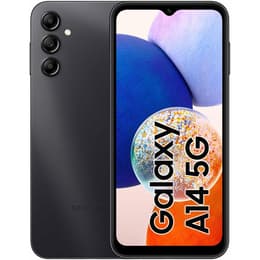
Galaxy A14
Starting at

Refurbished price:A$182.00

Versus A$390.00 new

See options
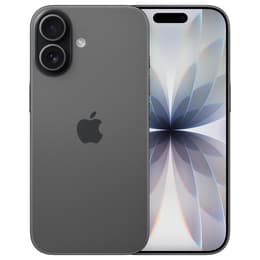
iPhone 17
Starting at

Refurbished price:A$1,503.05

Versus A$1,549.00 new

See options

Differences at a glance

The Samsung Galaxy A14 (2023) and the Apple iPhone 17 (2025) represent entirely different tiers and release eras within the modern smartphone landscape. Running on Android and iOS respectively, these devices cater to vastly distinct user expectations regarding technology generation, everyday capabilities, and system architecture.

While both smartphones provide reliable communication and essential daily app access, they differ fundamentally in processing capability, display sophistication, and overall build sophistication.

Available Models

Colour

Storage (GB)

Scores

Durability

When examining longevity, these two devices reflect distinct generation timelines, software support policies, and physical resilience standards.

  • Software Support: The iPhone 17 benefits from Apple's extended update timeline, receiving operating system upgrades and security patches for many years, whereas the Galaxy A14 operates on a more modest software lifecycle typical of entry-level categories.
  • Build Resilience: The iPhone 17 incorporates advanced front glass protection and high-grade water resistance ratings, while the Galaxy A14 utilizes standard plastic construction and basic moisture protection suitable for careful everyday handling.
  • Expected Lifespan: Users seeking long-term hardware endurance and multi-year software relevance will find the iPhone 17 well-equipped to remain current, whereas the Galaxy A14 suits shorter upgrade cycles or straightforward secondary device needs.

Release year

2023

2025

Compatible with latest Update

No

Yes

Operating system

Android

iOS

Foldable

No

No

Performance

Underneath the surface, these two smartphones handle everyday multitasking, storage expansion, and power management through contrasting hardware configurations.

  • System Responsiveness: The iPhone 17 handles demanding applications, high-end mobile gaming, and complex multitasking smoothly with its advanced current-generation processor, while the Galaxy A14 manages routine messaging, web browsing, and light media streaming at a more measured pace.
  • Memory and Storage: The iPhone 17 starts with generous baseline storage paired with high-speed memory architecture, whereas the Galaxy A14 relies on smaller storage tiers supplemented by microSD card expansion for media files.
  • Battery Behavior: Both devices manage daily energy efficiently, though the Galaxy A14's large battery capacity pairs with slower charging speeds, whereas the iPhone 17 supports rapid wired and wireless replenishment for faster turnaround times.

Screen quality

Visual output and screen interactions differ notably due to the contrasting panel technologies and refresh rate implementations utilized by each manufacturer.

  • Display Technology: The iPhone 17 features an advanced OLED screen delivering deep contrast levels and high peak outdoor brightness, while the Galaxy A14 utilizes an entry-level LCD panel with standard color reproduction and contrast.
  • Motion Smoothness: The iPhone 17 supports a high refresh rate for fluid scrolling and responsive animations, whereas the Galaxy A14 offers a standard or moderate refresh rate depending on the exact regional sub-model.
  • Viewing Clarity: Both models offer sharp text rendering for reading and messaging, but the iPhone 17 provides superior outdoor legibility under direct sunlight thanks to its significantly higher luminance output.

Audiovisual

Media creation and audio playback capabilities highlight a distinct divergence in hardware sophistication between these two mobile devices.

  • Camera Systems: The iPhone 17 equips multi-lens high-resolution sensors with advanced computational photography features for detailed low-light shots, whereas the Galaxy A14 provides a functional multi-lens setup focused on straightforward daytime snapshots.
  • Video and Audio Output: The iPhone 17 records stable, high-definition video accompanied by balanced stereo speakers, while the Galaxy A14 delivers adequate mono or basic stereo sound suitable for casual media viewing and standard voice calls.
  • Microphone Performance: Users recording voice notes or participating in video calls will experience clear audio capture on both units, with the iPhone 17 offering advanced background noise reduction in busy environments.

Front camera

13 megapixels

18 megapixels

Miscellaneous

Practical daily usability is shaped by connectivity standards, physical dimensions, and security authentication methods integrated into each chassis.

  • Connectivity Standards: The iPhone 17 supports cutting-edge wireless standards including advanced Wi-Fi and rapid cellular connectivity, whereas the Galaxy A14 provides standard 4G or entry-level 5G connectivity depending on the specific variant chosen.
  • Physical Handling: The Galaxy A14 carries a heavier and thicker plastic profile, while the iPhone 17 offers a more balanced, slender ergonomic footprint that rests comfortably in one hand.
  • Security and Ports: The iPhone 17 relies on facial recognition and a universal USB-C port, while the Galaxy A14 utilizes a side-mounted fingerprint scanner alongside traditional connection ports.

Weight

201 oz

177 oz

Screen size (in)

6.6

6.3

Network

4G

5G

SIM card

Physical SIM

Physical SIM + eSIM

Carrier compatibility

Unlocked

Unlocked

What the community thinks

Choosing between these two smartphones depends heavily on individual usage patterns and functional priorities. Users prioritizing high-end gaming, advanced photography, and long-term software updates will find the iPhone 17 well-suited to their needs. Conversely, users seeking a straightforward, reliable communication tool for basic daily tasks may lean toward the Galaxy A14. When considering an upgrade, exploring a quality-assured refurbished option provides an eco-friendly alternative that extends device life cycles and supports sustainable technology consumption.


See all articles