
Compare models

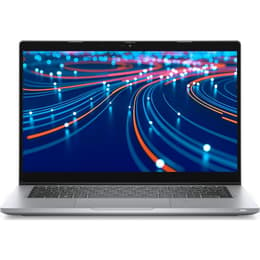
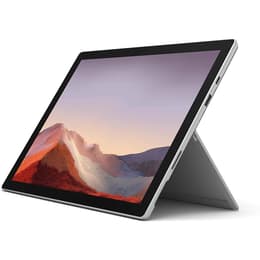
Dell Latitude 5320 13" vs Microsoft Surface Pro 7+ 12"

  • 1-year warranty
  • Free standard shipping
  • Free 30-day returns
Dell Latitude 5320 13"
Starting at

Refurbished price:A$360.00

Versus A$833.83 new

See options
Microsoft Surface Pro 7+ 12"
Starting at

Refurbished price:A$469.00

Versus A$3,046.34 new

See options

Differences at a glance

The Dell Latitude 5320 13" (2021) and the Microsoft Surface Pro 7+ 12" (2021) are portable computing devices designed for productivity, web browsing, and everyday multitasking. While both run on Windows operating systems and share a similar release era, they adopt completely different form factors, shifting between a traditional clamshell laptop design and a detachable tablet structure. These structural differences heavily influence how users interact with each device during daily work or travel.

Available Models

Storage (GB)

Processor

Memory (GB)

Scores

Durability

Both devices launched in 2021 and support modern Windows operating systems, providing a similar baseline for software longevity and security updates.

  • Software updates: Both models receive regular system updates and driver support from their respective manufacturers, ensuring compatibility with standard productivity software.
  • Repairability and build: The Dell Latitude follows a traditional notebook construction with standard internal accessibility, whereas the Surface Pro 7+ features a sealed tablet architecture that makes physical repairs more challenging.
  • Expected lifespan: Opting for a quality-assured refurbished option provides an eco-friendly alternative that extends the practical operational lifecycle of either machine for years of routine use.

Release year

2021

2021

Operating system

Windows 11

Windows 11

Performance

Performance capabilities are closely matched due to shared hardware generations, though physical design choices affect sustained workloads and configuration flexibility.

  • Multitasking and responsiveness: Both devices handle office suites, web research, and video conferencing smoothly, maintaining steady responsiveness across daily apps.
  • Storage and memory: The Dell Latitude offers traditional soldered or slotted memory configurations alongside swappable solid-state drives, while the Surface Pro 7+ includes a convenient removable solid-state drive door on select versions.
  • Thermal behavior: The traditional laptop chassis of the Dell model allows for more consistent sustained airflow during heavy tasks compared to the passive cooling limits of smaller tablet form factors.

Graphic card

Integrated Graphics

Integrated Graphics

Screen quality

Display characteristics differ significantly in aspect ratio and physical layout, catering to contrasting visual preferences for reading and media consumption.

  • Display dimensions and format: The Surface Pro 7+ uses a taller 3:2 touchscreen aspect ratio suited for viewing documents, whereas the Dell Latitude opts for a wider 16:9 widescreen layout standard for video playback.
  • Clarity and brightness: Both screens offer high-definition resolutions with sharp text rendering and sufficient indoor brightness levels for office or classroom settings.
  • Touch interaction: The Surface Pro 7+ integrates touch functionality directly into its primary tablet screen by default, while touch configurations on the Dell Latitude depend entirely on the specific build variant chosen.

Resolution

1920 x 1080

2736 x 1824

Screen type

LCD

IPS

Audiovisual

Audio and visual peripherals are tailored primarily toward remote communication, online meetings, and casual media playback rather than professional content creation.

  • Webcam performance: Both units feature front-facing cameras equipped for high-definition video calls, with the Microsoft model additionally incorporating an infrared sensor for facial recognition login.
  • Microphone clarity: Integrated multi-microphone arrays capture speech cleanly during virtual conferences while filtering out moderate background noise.
  • Speaker output: Built-in stereo speakers deliver adequate sound levels for speech clarity and casual video streaming, though external headphones remain preferable for immersive audio.

Miscellaneous

Physical connectivity and portability factors define how easily each machine adapts to mobile workspaces and travel environments.

  • Port selection: The Dell Latitude provides a wide array of built-in connections including traditional USB ports and video outputs, whereas the Surface Pro 7+ relies on a streamlined port layout requiring adapters for legacy accessories.
  • Weight and footprint: The Microsoft device functions as a lightweight tablet that expands into a laptop when paired with a detachable keyboard cover, while the Dell model provides a rigid, all-in-one clamshell frame.
  • Wireless standards: Both models support fast Wi-Fi connectivity and Bluetooth protocols for seamless pairing with wireless peripherals and accessories.

Weight

1320 oz

770 oz

Screen size

13

12

What the community thinks

User discussions across online forums indicate that people appreciate the Dell Latitude for its sturdy mechanical keyboard, comprehensive port variety, and traditional lap-friendly stability. At the same time, Surface Pro 7+ users frequently praise its ultra-portable footprint, vibrant high-resolution touch display, and flexibility as a digital notebook. Common criticisms involve the soldered components limiting future internal upgrades on the Dell side, alongside the extra cost and separate purchase requirement of the keyboard cover for the Microsoft tablet.

Users prioritizing a traditional lap-based workspace with ample built-in ports will find the Dell Latitude well-suited to their daily routine. Conversely, users prioritizing maximum portability, handwriting capability, and a versatile tablet layout may prefer the Microsoft Surface Pro 7+. Selecting a sustainable, quality-assured refurbished model from Back Market allows consumers to make an environmentally conscious choice tailored precisely to their workflow requirements.


Our recent comparisons