
Dell Latitude 7400 14" vs Microsoft Surface Pro 7+ 12"

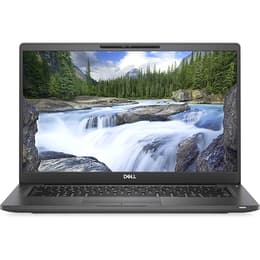
Dell Latitude 7400 14"
See options
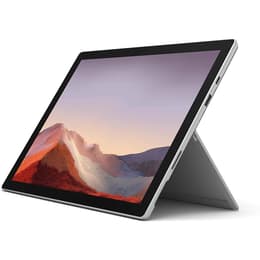
Microsoft Surface Pro 7+ 12"
Starting at

Refurbished price:A$492.00

Versus A$2,967.04 new

See options

The Dell Latitude 7400 14-inch, released in 2019, is a traditional business-oriented laptop, while the Microsoft Surface Pro 7 Plus 12-inch, launched in early 2021, is a versatile 2-in-1 detachable tablet. Both devices operate on the Windows platform, but they cater to different user preferences through their distinct form factors and core design philosophies. The Latitude prioritizes a conventional laptop experience with a larger display, whereas the Surface Pro 7 Plus offers enhanced portability and tablet functionality.

Scores

Durability

The expected practical lifespan of these devices is influenced by their release timelines and design for sustained use.

  • Release Timeline and OS Support: The Dell Latitude 7400, released in 2019, typically ships with Windows 10 Pro and is upgradeable to Windows 11, benefiting from Dell's commitment to several years of driver and security updates for its business-class Latitude series. The Microsoft Surface Pro 7 Plus, introduced in January 2021, also runs Windows 10 or 11, and as a newer device, it generally offers a longer period of direct software support from Microsoft.
  • Repairability and Build: The Dell Latitude 7400 features a sturdy build with options for aluminum or carbon fiber, and its internal components like RAM and SSD are generally accessible for upgrades or repairs, contributing to its longevity. The Surface Pro 7 Plus boasts a magnesium unibody design with Gorilla Glass protecting its screen, and notably, it includes a removable SSD, which can simplify data retention and certain repairs.
  • Durability Features: Both devices are designed for professional environments, with the Latitude 7400 being a robust laptop and the Surface Pro 7 Plus built to withstand classroom use, featuring a sturdy design and a spill-resistant keyboard (Type Cover, sold separately).

Release year

2018

2021

Last Os Compatibility

Yes

Yes

Operating system

Windows 11

Windows 11

Performance

Performance capabilities vary between these two devices, primarily due to their different processor generations and architectural designs.

  • Processing Power: The Dell Latitude 7400 is equipped with 8th Gen Intel Core i5 or i7 processors, which provide solid performance for productivity tasks and smooth multitasking, especially with configurations up to 32GB of RAM. The Microsoft Surface Pro 7 Plus, featuring 11th Gen Intel Core i3, i5, or i7 processors, offers faster speeds and improved graphics performance, making it capable of handling demanding workloads without significant lag.
  • Storage and Responsiveness: Both devices utilize NVMe PCIe SSDs, ensuring fast boot times and quick application loading. The Latitude 7400's SSDs can achieve transfer rates around 727 MBps, contributing to overall system responsiveness. The Surface Pro 7 Plus also benefits from fast SSD storage, with the added advantage of a user-swappable SSD for enhanced flexibility.
  • Multitasking and Graphics: The Latitude 7400, with its integrated Intel UHD Graphics 620, handles typical office and multimedia demands competently, supporting configurations up to 32GB of DDR4 RAM for smooth multitasking. The Surface Pro 7 Plus, with its integrated Iris Xe graphics (on i5 and i7 models), offers more capable performance for video and photo editing, though it is not designed for intensive graphical work or high-end gaming.

Memory (GB)

8 GB

8 GB

Processor

Core i5 - Gen 8 (U)

Core i5-1135G7

Graphic card

Integrated Graphics

Intel Iris Xe Graphics

Screen quality

The display experience differs significantly between the two, primarily in size, aspect ratio, and resolution density.

  • Display Technology and Resolution: The Dell Latitude 7400 offers a 14-inch display, with common configurations being Full HD (1920x1080) IPS panels, some with anti-glare properties and brightness levels around 300 nits. The Microsoft Surface Pro 7 Plus features a smaller 12.3-inch PixelSense LCD touchscreen with a higher resolution of 2736 x 1824 pixels, resulting in a sharper image with a higher pixel density.
  • Brightness and Clarity: The Latitude 7400's display provides good contrast, but its brightness levels are generally around 300 nits, which may be less ideal in very bright outdoor conditions. The Surface Pro 7 Plus's display is noted for being vibrant and bright, reaching up to 358-395 nits, making it visible outdoors under sunlight and offering excellent clarity for detailed content.
  • Aspect Ratio and Viewing Experience: The Latitude 7400 typically uses a 16:9 aspect ratio, common for laptops. The Surface Pro 7 Plus utilizes a 3:2 aspect ratio, which provides more vertical screen real estate, making it well-suited for document work, web browsing, and creative tasks, offering a more expansive viewing experience for productivity.

Resolution

1920 x 1080

2736 x 1824

Screen type

LCD

IPS

Audiovisual

Both devices incorporate camera systems and audio features suitable for communication and media consumption, with some distinctions in quality and features.

  • Camera System Capabilities: The Dell Latitude 7400 includes an HD 720p webcam, with some configurations offering an optional IR camera for facial recognition. The Microsoft Surface Pro 7 Plus features a 5.0-megapixel front-facing camera capable of 1080p HD video and an 8.0-megapixel rear-facing camera with autofocus and 1080p HD video, along with a Windows Hello face authentication camera.
  • Photography and Video Quality: The Surface Pro 7 Plus's cameras are generally considered good for video calls and presentations, capturing vivid colors and fine details, making them suitable for business and educational use. The Latitude 7400's 720p webcam is functional for standard video conferencing.
  • Audio Experience: The Latitude 7400 includes a universal audio jack and standard stereo speakers. The Surface Pro 7 Plus offers 1.6W stereo speakers with Dolby Atmos and dual far-field Studio Mics, providing a surprisingly loud and clear audio experience for media consumption and calls.

Miscellaneous

Beyond core performance and display, several practical elements differentiate these two devices in terms of connectivity, physical design, and user interaction.

  • Connectivity Options: The Dell Latitude 7400 supports Wi-Fi 5 (802.11ac) or Wi-Fi 6 (802.11ax) and Bluetooth 5.0, with optional Qualcomm LTE mobile broadband. The Surface Pro 7 Plus also features Wi-Fi 6 (802.11ax) and Bluetooth 5.0, and offers optional LTE Advanced connectivity with support for both removable SIM and eSIM.
  • Port Types: The Latitude 7400 provides a comprehensive selection of ports, including one USB-C 3.1 Gen 2 with Thunderbolt 3, two USB-A 3.1 Gen 1, an HDMI 1.4a, a universal audio jack, and a microSD card reader. The Surface Pro 7 Plus has one USB-C, one full-size USB-A, a 3.5mm headphone jack, a Surface Connect port, and a MicroSDXC card reader (on Wi-Fi models), but it lacks Thunderbolt support.
  • Physical Characteristics and Handling: The Latitude 7400 is a 14-inch laptop weighing approximately 1.35 kg to 1.535 kg, offering a traditional clamshell design. The Surface Pro 7 Plus is a lighter 12.3-inch tablet, weighing around 771.1g (tablet only), designed for portability and versatility with its built-in kickstand and detachable keyboard (sold separately). The Latitude 7400 also features optional security elements like a fingerprint reader and IR camera for Windows Hello.

Weight

1360 oz

770 oz

Screen size

14

12

User feedback for the Dell Latitude 7400 often highlights its robust build quality, comfortable keyboard, and exceptional battery life, with some users reporting it lasting through a full workday. Criticisms occasionally mention that the display brightness could be higher in some configurations and that the fan can be noticeable under heavy load. The consensus points to it being a reliable and powerful machine for business and productivity.

For the Microsoft Surface Pro 7 Plus, users frequently praise its vibrant, high-resolution display, excellent cameras for video conferencing, and its versatile 2-in-1 form factor that seamlessly transitions between tablet and laptop modes. Some common concerns include the battery life, which, while improved over its predecessor, may still require more frequent charging for heavy users compared to some competitors, and the fact that essential accessories like the Type Cover keyboard are sold separately. Users appreciate its portability and the flexibility offered by its detachable design.

Users prioritizing a traditional laptop experience with a larger screen, extensive port selection, and long battery life for sustained productivity will find the Dell Latitude 7400 well-suited to their needs. Conversely, individuals who value extreme portability, a high-resolution touchscreen for creative tasks or note-taking, and the flexibility of a tablet-laptop hybrid will likely lean towards the Microsoft Surface Pro 7 Plus. Both devices offer a quality-assured refurbished option, providing an eco-friendly alternative for those seeking reliable performance.


See all articles

Our recent comparisons