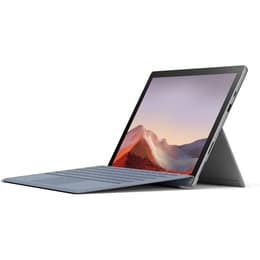
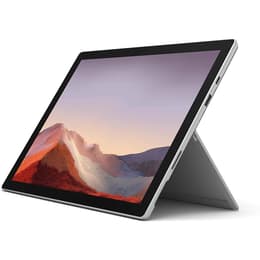

Microsoft Surface Pro 7 12" vs Microsoft Surface Pro 7+ 12"

Microsoft Surface Pro 7 12"
Starting at

Refurbished price:A$398.00

Versus A$1,680.00 new

See options
Microsoft Surface Pro 7+ 12"
Starting at

Refurbished price:A$492.00

Versus A$2,967.04 new

See options

The Microsoft Surface Pro 7 (released in October 2019) and the Surface Pro 7 Plus (introduced in January 2021) are both versatile 2-in-1 tablet-laptops designed for productivity and portability. While they share a similar external design and display, the Surface Pro 7 Plus brings internal hardware upgrades, primarily focusing on enhanced performance and improved battery efficiency. Both devices operate on the Windows ecosystem, offering a familiar experience for users.

Scores

Durability

Evaluating the practical lifespan of these devices involves considering their release timelines, operating system support, and repairability aspects.

  • Release Timeline and OS Support: The Surface Pro 7, released in late 2019, shipped with Windows 10. The Surface Pro 7 Plus, released in early 2021, also initially shipped with Windows 10 Pro but is eligible for a free upgrade to Windows 11. Official support for Windows 10 ended on October 14, 2025, meaning the Surface Pro 7 will no longer receive security updates or technical assistance from Microsoft unless enrolled in an Extended Security Updates program. The Surface Pro 7 Plus, with its newer hardware, is better positioned for longer-term Windows 11 support.
  • Repairability: The Surface Pro 7 received a low repairability score of 1 out of 10 from iFixit, primarily due to its display being difficult to remove and components like RAM, SSD, and CPU being soldered to the motherboard. The Surface Pro 7 Plus offers a notable improvement with a removable solid-state drive (SSD), which enhances data security and allows for easier storage upgrades or replacement. However, other internal components remain challenging to access or replace.
  • Expected Practical Lifespan: Users can expect the Surface Pro 7 Plus to offer a slightly longer practical lifespan due to its newer processor generation and eligibility for Windows 11, which will receive updates beyond the Windows 10 end-of-support date. Both devices are built with durable magnesium alloy.

Release year

2019

2021

Last Os Compatibility

Yes

Yes

Operating system

Windows 11

Windows 11

Performance

The core performance of these devices is largely determined by their internal processing capabilities and memory configurations.

  • Processor Capabilities: The Surface Pro 7 features 10th-generation processors, providing solid performance for everyday tasks like web browsing, document editing, and media consumption. The Surface Pro 7 Plus, however, incorporates 11th-generation processors, which deliver a noticeable boost in speed and efficiency. This translates to smoother multitasking, faster application loading, and improved responsiveness, particularly for more demanding software or creative workloads.
  • Battery Behavior: The Surface Pro 7 has a 43.2 Wh battery, with Microsoft claiming up to 10.5 hours of typical usage. In real-world scenarios, users often report around 4 to 8 hours of use. The Surface Pro 7 Plus comes with a larger 50.4 Wh battery and more efficient 11th-generation processors, leading to a claimed battery life of up to 15 hours. While independent tests show varied results, often around 6-8 hours, it generally offers better longevity on a single charge than its predecessor.
  • RAM and Storage: Both models offer various RAM configurations, with the Surface Pro 7 available up to 16GB and the Surface Pro 7 Plus extending to 32GB in some Wi-Fi-only configurations. The Surface Pro 7 Plus also introduces the advantage of a removable SSD, allowing for easier upgrades or data security management, a feature not present in the Surface Pro 7.

Memory (GB)

8 GB

8 GB

Processor

Core i5 - Gen 10 (G4)

Core i5-1135G7

Graphic card

Integrated Graphics

Intel Iris Xe Graphics

Screen quality

Both Surface Pro models offer a consistent and high-quality visual experience, maintaining the signature display characteristics of the Surface line.

  • Display Technology and Resolution: Both the Surface Pro 7 and Surface Pro 7 Plus feature a 12.3-inch PixelSense display with a resolution of 2736 x 1824 pixels, resulting in a pixel density of 267 pixels per inch (PPI). This provides sharp and clear visuals, suitable for detailed work and media consumption. The 3:2 aspect ratio offers more vertical screen space compared to traditional widescreen displays, which can be beneficial for document editing and web browsing.
  • Brightness and Clarity: The displays on both devices are known for their vibrant colors and good clarity. The Surface Pro 7 Plus's display is noted for being vivid and bright, making it suitable for use in various lighting conditions, including outdoors. The Surface Pro 7 also offers a bright display, with a typical brightness of around 400 nits.
  • Touch and Refresh Rate: Both models support 10-point multi-touch input, enabling intuitive interaction with the Windows interface and applications. The standard refresh rate for both displays is 60Hz, providing a smooth experience for general use, though not designed for high-refresh-rate gaming.

Resolution

1920 x 1280

2736 x 1824

Screen type

LED

IPS

Audiovisual

The camera systems and audio capabilities of the Surface Pro 7 and 7 Plus are designed to support common productivity and communication needs.

  • Camera System Capabilities: Both the Surface Pro 7 and Surface Pro 7 Plus are equipped with a 5.0-megapixel front-facing camera and an 8.0-megapixel rear-facing autofocus camera. Both cameras are capable of recording video in 1080p Full HD. The front-facing camera also supports Windows Hello facial authentication for secure login.
  • Photography and Video Performance: The cameras are well-suited for video conferencing, online meetings, and casual photography or document scanning. While they provide clear images and video for these purposes, they are not designed to compete with dedicated smartphone cameras for advanced photography.
  • Audio Quality: Both devices feature dual far-field Studio Mics, which are effective at capturing clear audio during calls and recordings, even from a distance. For output, the Surface Pro 7 includes 1.6W stereo speakers with Dolby Audio Premium, while the Surface Pro 7 Plus upgrades to 1.6W stereo speakers with Dolby Atmos, offering a slightly more immersive audio experience.

Miscellaneous

Beyond core performance and display, several practical elements differentiate the user experience between these two Surface Pro models.

  • Connectivity Options: Both devices support Wi-Fi 6 (802.11ax) and Bluetooth 5.0 for wireless connections. A key difference is that the Surface Pro 7 Plus offers an optional LTE Advanced model, providing cellular connectivity for users who need internet access on the go without relying on Wi-Fi hotspots.
  • Port Types: Both the Surface Pro 7 and 7 Plus include a USB-C port, a USB-A port, a 3.5mm headphone jack, a Surface Connect port for charging and docking, and a microSDXC card reader. The USB-C port on the Surface Pro 7 is USB 3.1 Gen 2, while the Surface Pro 7 Plus features a USB 3.2 Gen 2 USB-C port, offering potentially faster data transfer speeds.
  • Weight and Dimensions: The physical dimensions of both models are nearly identical, measuring 292 mm x 201 mm x 8.5 mm (11.5” x 7.9” x 0.33”). Their weights are also very similar, starting around 770 grams (1.70 pounds) for Wi-Fi models, making both highly portable.

Weight

775 oz

770 oz

Screen size

12

12

The Microsoft Surface Pro 7 and Surface Pro 7 Plus, while visually similar, cater to slightly different user priorities through their internal advancements. User feedback for the Surface Pro 7 often praises its established 2-in-1 form factor and vibrant display, making it a reliable choice for general productivity and media consumption. Criticisms sometimes point to its battery life and the lack of internal upgradeability.

The Surface Pro 7 Plus generally receives positive remarks for its improved performance, thanks to the newer processor generation, and its enhanced battery longevity. The inclusion of a removable SSD is a frequently highlighted benefit for those concerned with data security or future storage needs. The optional LTE connectivity is also a significant advantage for users requiring constant internet access. Some users, however, still note that real-world battery performance might not always match advertised figures, and the overall design remains largely unchanged from previous generations.

Users prioritizing a device for everyday tasks, web browsing, and light productivity, where maximum battery life and the latest processing power are not critical, may find the Surface Pro 7 suitable. It offers a proven design and a capable Windows experience. Conversely, users who require more robust performance for demanding applications, desire longer battery life for extended periods away from power outlets, or value the flexibility of a removable SSD and optional LTE connectivity, will find the Surface Pro 7 Plus better suited to their needs. It represents a more future-proof option, especially with its better positioning for ongoing Windows 11 support.

For those considering either model, exploring quality-assured refurbished options can provide an eco-friendly alternative, extending the life of these capable devices.


See all articles

Our recent comparisons