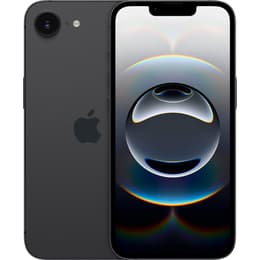

iPhone 15 Pro vs iPhone 16e

iPhone 15 Pro
iPhone 15 Pro
Starting at

Refurbished price:A$873.00

Versus A$1,849.00 new

See options
iPhone 16e
iPhone 16e
Starting at

Refurbished price:A$838.00

Versus A$999.00 new

See options

Ratings

The iPhone 15 Pro, released in September 2023, and the iPhone 16E, launched in February 2025, represent different tiers within Apple's smartphone lineup. While both devices operate on the iOS platform and support Apple Intelligence, they cater to distinct user needs through variations in their display technology, camera systems, and overall performance capabilities. The iPhone 15 Pro offers a more advanced feature set, whereas the iPhone 16E focuses on delivering a modern iPhone experience with a streamlined approach.

Scores

Durability

When considering the practical lifespan of these devices, several factors come into play, including their release timelines, software support, and repairability.

  • Release Timeline: The iPhone 15 Pro was introduced in September 2023, while the iPhone 16E followed in February 2025. This nearly 1.5-year difference means the iPhone 16E benefits from a later starting point for software updates, potentially extending its support period by a year compared to the iPhone 15 Pro.
  • Software Longevity: Both models launched with recent iOS versions and are compatible with the latest iOS 26, including Apple Intelligence features. The iPhone 15 Pro is expected to receive major software updates for a minimum of five years from its release, extending to at least 2028. The iPhone 16E, being newer, will likely receive support for an even longer duration.
  • Repairability: The iPhone 15 Pro features a redesigned internal structure that makes the back glass easier to remove, contributing to improved repairability compared to older Pro models. The iPhone 16E has shown significant advancements in repairability, scoring well in teardowns due to features like electrically released battery adhesive and the absence of parts pairing issues with original equipment manufacturer components, making DIY battery replacements more straightforward.

Release year

2023

2025

Operating system

iOS

iOS

Foldable

No

No

Performance

The performance of a smartphone is crucial for daily tasks, from app usage to demanding multimedia applications. Both the iPhone 15 Pro and iPhone 16E offer capable performance, though with different underlying hardware.

  • Processing Power: The iPhone 15 Pro is equipped with a more advanced Pro-level processor, which provides robust performance for intensive applications, complex multitasking, and high-fidelity gaming. The iPhone 16E features a newer generation processor, offering smooth operation for everyday use, social media, streaming, and casual gaming, though its graphics processing unit has fewer cores than the Pro model.
  • Multitasking and Responsiveness: Both devices come with 8GB of RAM, enabling efficient multitasking and smooth transitions between applications. Users of both models can expect a responsive experience, with apps loading quickly and system navigation feeling fluid.
  • Battery Behavior: The iPhone 15 Pro has a 3274 mAh battery, providing a full day of typical use for many users. The iPhone 16E, with a larger 4005 mAh battery, has received praise for its impressive battery life, with some users reporting it comparable to larger Pro Max models, allowing for extended usage even under heavy loads.

Memory (GB)

8 GB

8 GB

Screen quality

The display is a primary interface for smartphone interaction, and both the iPhone 15 Pro and iPhone 16E offer vibrant viewing experiences with distinct characteristics.

  • Display Technology and Clarity: Both models feature 6.1-inch OLED displays, providing deep blacks, high contrast, and vibrant colors. The iPhone 15 Pro has a resolution of 2556 by 1179 pixels, while the iPhone 16E offers a resolution of 2532 by 1170 pixels, both resulting in a sharp pixel density of approximately 460 pixels per inch.
  • Refresh Rate and Smoothness: A key differentiator is the refresh rate. The iPhone 15 Pro includes ProMotion technology, offering an adaptive refresh rate up to 120Hz, which results in noticeably smoother scrolling, animations, and a more fluid gaming experience. The iPhone 16E maintains a standard 60Hz refresh rate, which is sufficient for most daily tasks but does not offer the same level of visual fluidity as the ProMotion display.
  • Brightness and Features: The iPhone 15 Pro boasts higher peak brightness levels, reaching up to 1000 nits typical and 2000 nits peak for outdoor visibility, and includes an Always-On display and Dynamic Island for interactive notifications. The iPhone 16E offers 800 nits max brightness and 1200 nits peak HDR brightness, and features a traditional notch design for its front camera and sensors.

Resolution

1179 x 2556

2532x1170

Audiovisual

The camera systems on both the iPhone 15 Pro and iPhone 16E are designed to capture high-quality images and videos, though they differ in their versatility and advanced features.

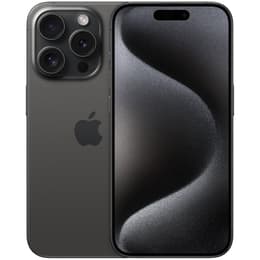
  • Rear Camera System: The iPhone 15 Pro features a versatile triple-camera setup, including a 48MP main sensor, a 12MP ultra-wide lens, and a 12MP 3x telephoto lens, offering a broad range of focal lengths and optical zoom capabilities. The iPhone 16E comes with a single 48MP main camera, which can achieve a 2x optical-quality zoom by cropping the high-resolution sensor.
  • Photography Performance: The iPhone 15 Pro excels in various lighting conditions, offering enhanced detail, improved low-light performance, and advanced features like Apple ProRAW for professional-grade photo editing. The iPhone 16E's single main camera delivers good detail and vibrant colors in daylight, with satisfactory image quality for everyday photography, though low-light performance may not match the Pro model's dedicated capabilities.
  • Video Recording and Audio: Both phones support 4K video recording at up to 60 frames per second. The iPhone 15 Pro offers additional professional video features such as Cinematic mode, Action mode, ProRes video recording, and Log video recording, making it suitable for mobile filmmakers. Both devices provide good microphone quality for calls and recording, with the iPhone 16E supporting spatial audio capture in video.

Front camera

12 megapixels

TrueDepth 12MP

Miscellaneous

Beyond core performance and display, several practical elements contribute to the overall user experience of the iPhone 15 Pro and iPhone 16E.

  • Connectivity and Ports: Both models support 5G cellular connectivity and modern Wi-Fi standards. The iPhone 15 Pro includes a USB-C port that supports faster data transfer speeds (USB 3), while the iPhone 16E also features a USB-C port, but it operates at USB 2.0 speeds. The iPhone 15 Pro supports MagSafe for magnetic accessories and wireless charging, a feature absent on the iPhone 16E.
  • Biometric Security and Interaction: Both devices utilize Face ID for secure facial recognition. The iPhone 15 Pro features the Dynamic Island, an interactive area around the front camera and sensors that adapts to display alerts and background activities. The iPhone 16E retains a traditional notch design. Both models incorporate an Action Button, which can be customized for various functions.
  • Build Materials and Handling: The iPhone 15 Pro features a lightweight yet durable titanium frame, along with a Ceramic Shield front cover. The iPhone 16E uses an aluminum frame and also has a Ceramic Shield front, offering a solid build. Both phones have a similar 6.1-inch form factor, making them comfortable for one-handed use. The iPhone 15 Pro weighs 187 grams, while the iPhone 16E is slightly lighter at 167 grams.

Weight

187 oz

167 oz

Screen size (in)

6.1

6.1

Network

5G

5G

SIM card

Physical SIM + eSIM

Physical SIM + eSIM

Carrier compatibility

Unlocked

Unlocked

Connector

USB-C (USB 3)

USB-C

The iPhone 15 Pro and iPhone 16E cater to different user priorities, each receiving specific praise and criticism from the user community.

Users frequently praise the iPhone 15 Pro for its advanced camera system, particularly its versatility with multiple lenses and professional video capabilities. Its 120Hz ProMotion display and premium titanium build are also commonly highlighted as significant advantages, contributing to a smooth and high-end user experience. Some criticisms have emerged regarding the durability of the back glass in certain bend tests, though the standard Pro model generally holds up well.

The iPhone 16E is often lauded for its impressive battery life, which many users find to be a standout feature, comparable to larger Pro Max models. Its improved repairability, with easier battery replacements and no parts pairing issues, is also a positive point for those concerned with device longevity and maintenance. However, common criticisms include the absence of MagSafe, the 60Hz display refresh rate, and the traditional notch design instead of the Dynamic Island.

For users prioritizing a cutting-edge camera system, a highly fluid display, and a premium build with advanced features like the Dynamic Island, the iPhone 15 Pro may be the more suitable choice. Its robust processing power also appeals to those who engage in demanding tasks or extensive mobile gaming. Conversely, users who value exceptional battery endurance, a modern iPhone experience without all the Pro-level extras, and enhanced repairability will find the iPhone 16E well-suited to their needs. It offers a strong core experience for everyday use and benefits from a newer release date for extended software support. Both devices represent quality-assured options, and considering a refurbished model can be an eco-friendly alternative for either choice.

See all articles

Our recent comparisons