
iPhone 15 Pro vs iPhone 16 Pro

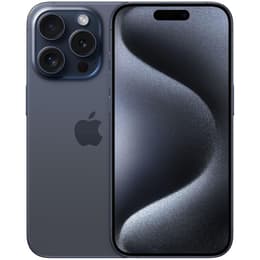
iPhone 15 Pro
iPhone 15 Pro
Starting at

Refurbished price:A$873.00

Versus A$1,849.00 new

See options
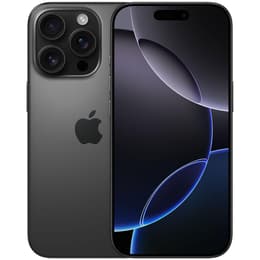
iPhone 16 Pro
iPhone 16 Pro
Starting at

Refurbished price:A$1,134.00

Versus A$1,999.00 new

See options

Ratings

The iPhone 15 Pro, released in September 2023, and the iPhone 16 Pro, launched in September 2024, represent consecutive generations of Apple's professional-grade smartphones. Both devices operate on Apple's iOS platform, offering a consistent user experience. While sharing a similar design philosophy, the iPhone 16 Pro introduces advancements in display size, processing power, and camera capabilities, building upon the foundation set by its predecessor.

Scores

Durability

When considering the longevity of these devices, several factors come into play, including their release timelines, software support, and physical durability.

  • Release Timeline and Software Support: The iPhone 15 Pro launched with iOS 17 and is compatible with iOS 26.4, while the iPhone 16 Pro launched with iOS 18 and also runs iOS 26.4. Both models are expected to receive major software updates for a minimum of five years from their respective release dates, with the iPhone 16 Pro naturally having a slightly longer support window due to its later introduction.
  • Durability Features: Both devices feature a titanium frame, contributing to a strong yet lightweight build. They also incorporate Ceramic Shield on the front, with the iPhone 16 Pro featuring a next-generation Ceramic Shield that is stated to be twice as strong as its predecessor. Both models carry an IP68 rating for dust and water resistance, indicating robust protection against environmental elements.
  • Practical Lifespan: While the iPhone 16 Pro's enhanced Ceramic Shield offers improved screen durability, its thinner bezels may make the corners more vulnerable to damage in certain drop scenarios. Users of either device can expect a practical lifespan influenced by software updates and physical care, with the newer model offering a marginally extended period of cutting-edge feature support.

Release year

2023

2024

Compatible with latest Update

Yes

Yes

Foldable

No

No

Performance

The performance of these devices is driven by their internal processors and memory configurations, impacting everything from app responsiveness to demanding tasks.

  • Processing Power: The iPhone 15 Pro is equipped with a powerful processor, capable of handling intensive applications and multitasking smoothly. The iPhone 16 Pro features a newer generation processor, which offers approximately 15% faster CPU performance and 20% faster GPU performance compared to the iPhone 15 Pro. This translates to quicker app loading times, more fluid graphics in games, and enhanced efficiency for complex computations.
  • Multitasking and Responsiveness: Both models come with 8GB of RAM, providing ample capacity for running multiple applications simultaneously without significant slowdowns. The iPhone 16 Pro's processor also benefits from 17% more memory bandwidth for its Neural Engine, which can improve the speed and efficiency of AI-related tasks and on-device machine learning features.
  • Battery Behavior: The iPhone 15 Pro has a battery capacity of approximately 3274 mAh, while the iPhone 16 Pro features a larger battery of around 3582 mAh. This increase, combined with the newer processor's efficiency, allows the iPhone 16 Pro to offer a modest but noticeable improvement in battery endurance, providing a few extra hours of typical use. Users of the iPhone 16 Pro may experience up to 27 hours of video playback, compared to up to 23 hours on the iPhone 15 Pro.

Memory (GB)

8 GB

8 GB

Screen quality

The visual experience on both iPhones is delivered through their advanced displays, though there are subtle differences in size and specific features.

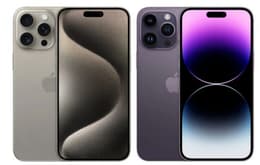
  • Display Technology and Size: Both the iPhone 15 Pro and iPhone 16 Pro feature Super Retina XDR OLED displays, known for deep blacks and vibrant colors. The iPhone 15 Pro has a 6.1-inch display, while the iPhone 16 Pro offers a slightly larger 6.3-inch display. This size increase on the iPhone 16 Pro is achieved through significantly thinner bezels, providing a more expansive viewing area without drastically increasing the phone's overall footprint.
  • Resolution and Brightness: Both displays maintain a pixel density of 460 pixels per inch (ppi), ensuring sharp and clear visuals. They offer a typical maximum brightness of 1,000 nits, peaking at 1,600 nits for HDR content and up to 2,000 nits for outdoor visibility. A notable difference is the iPhone 16 Pro's ability to achieve a minimum brightness of 1 nit, which can be beneficial for comfortable viewing in very low-light environments and potentially improve the efficiency of the always-on display.
  • Refresh Rate: Both models incorporate ProMotion technology, allowing for an adaptive refresh rate that can scale from 1Hz to 120Hz. This dynamic adjustment ensures smooth scrolling and responsive interactions while conserving power when high refresh rates are not needed.

Resolution

1179 x 2556

1206 x 2622

Screen type

LTPO Super Retina XDR OLED

LTPO Super Retina XDR OLED

Audiovisual

The camera systems on both Pro models are designed for high-quality photography and videography, with the newer generation bringing specific enhancements.

  • Main Camera System: Both the iPhone 15 Pro and iPhone 16 Pro feature a 48-megapixel main camera. The iPhone 16 Pro's main camera is referred to as a "Fusion camera" and includes a second-generation quad-pixel sensor, which contributes to faster readout speeds and reduced shutter lag for more responsive shooting.
  • Ultra-Wide and Telephoto Lenses: The iPhone 15 Pro has a 12-megapixel ultra-wide camera, whereas the iPhone 16 Pro upgrades to a 48-megapixel ultra-wide lens, offering improved detail and better performance in low-light conditions, particularly for macro shots. For telephoto capabilities, the iPhone 15 Pro features a 3x optical zoom lens. The iPhone 16 Pro enhances this with a 5x optical zoom, utilizing a Tetraprism lens, which was previously exclusive to the larger Pro Max models.
  • Video Recording and Additional Features: While the iPhone 15 Pro supports 4K video recording at up to 60 frames per second, the iPhone 16 Pro introduces 4K Dolby Vision video recording at up to 120 frames per second, allowing for smoother motion and more detailed slow-motion effects. The iPhone 16 Pro also upgrades its front camera to support 4K Dolby Vision recording across all frame rates. A new physical "Camera Control" button is present on the iPhone 16 Pro, offering dedicated tactile control for photography.

Main camera

48 megapixels

48 megapixels

Front camera

12 megapixels

12 megapixels

Miscellaneous

Beyond core performance and display, several practical elements differentiate these two professional-grade smartphones.

  • Connectivity: The iPhone 15 Pro supports Wi-Fi 6E, providing fast wireless internet speeds. The iPhone 16 Pro advances to Wi-Fi 7, offering even faster and more efficient wireless connectivity. Both models include 5G cellular capabilities and Bluetooth for wireless accessories.
  • Ports and Biometrics: Both devices have transitioned to a USB-C port, supporting USB 3.0 data transfer speeds, which is significantly faster than previous Lightning connectors. For secure authentication, both phones rely on Face ID.
  • Design and Handling: The iPhone 15 Pro measures 146.6 x 70.6 x 8.25mm and weighs 187 grams. The iPhone 16 Pro is slightly larger and heavier at 149.6 x 71.5 x 8.25mm and 199 grams. Both feature a premium titanium frame, though the iPhone 16 Pro introduces a new blasted titanium finish. The slightly increased size of the iPhone 16 Pro, while accommodating a larger screen, means the iPhone 15 Pro remains the more compact option for users who prefer a smaller device.

Weight

187 oz

199 oz

Screen size (in)

6.1

6.3

Network

5G

5G

SIM card

Physical SIM + eSIM

Physical SIM + eSIM

Carrier compatibility

Unlocked

Unlocked

Connector

USB-C (USB 3)

USB-C (USB 3)

User sentiment for the iPhone 15 Pro, while generally positive for its titanium build and camera capabilities, noted criticisms regarding its initial battery life and some overheating concerns, which were largely addressed through software updates. Some users also found the color options less vibrant than expected. The iPhone 16 Pro, upon its release, experienced lower-than-expected demand in some regions, partly attributed to the staggered rollout of Apple Intelligence features.

However, users who have adopted the iPhone 16 Pro generally praise its larger display with thinner bezels, improved battery life, and more versatile camera system. The new Camera Control button has also been highlighted as a useful addition for photography enthusiasts.

Users prioritizing a more compact form factor and who find the 3x optical zoom sufficient for their photography needs may prefer the iPhone 15 Pro. Its performance remains robust for everyday tasks and demanding applications. Conversely, users who value a larger display, extended battery life, enhanced camera flexibility (especially the 5x optical zoom and 48MP ultrawide), and the latest connectivity standards like Wi-Fi 7 will find the iPhone 16 Pro better suited to their requirements. The iPhone 16 Pro also offers a slightly more future-proof experience, particularly for emerging AI capabilities. Both models, whether new or as a quality-assured refurbished option, provide a premium smartphone experience.

See all articles

Our recent comparisons