
Compare models
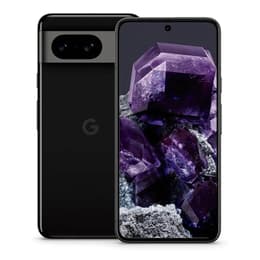
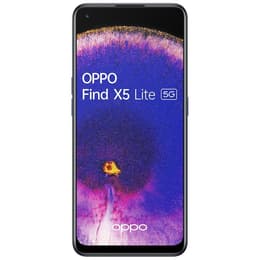
Google Pixel 8 vs Oppo Find X5 Lite
- 1-year warranty
- Free standard shipping
- Free 30-day returns
Differences at a glance
The Google Pixel 8 (2023) and the Oppo Find X5 Lite (2022) represent two different approaches to the mid-range smartphone category. While both devices run on the Android operating system, they diverge significantly in their release timelines, software update commitments, and hardware architecture. Users navigating these choices will find distinct balances between long-term software support and everyday hardware handling.
Available Models
Colour
Storage
Scores
Durability
Software lifespan and physical durability differ notably between these two models, driven primarily by their release years and manufacturer support policies.
- Software support lifecycle: The Google Pixel 8 provides a multi-year update commitment extending through the end of the decade, whereas the Oppo Find X5 Lite operates on a standard update schedule that concludes sooner due to its earlier release year.
- Repairability and physical longevity: Both smartphones utilize glass and metal or composite materials, requiring careful handling, though the Pixel 8 benefits from more modern protective glass panels designed to resist scratching during daily use.
- Expected practical lifespan: Users seeking extended software relevance will find the Pixel 8 well-equipped for long-term usage, while the Find X5 Lite suits shorter-term deployment cycles.
Release year
2023
2022
Compatible with latest Update
Yes
No
Operating system
Android
Android
Foldable
No
No
Performance
Everyday execution and multitasking capabilities vary across these devices depending on the demands placed on the internal system components.
- Multitasking and app switching: Both models handle standard messaging, web browsing, and social media smoothly, though the Pixel 8 offers additional processing headroom for demanding applications and sustained workloads.
- Storage capacity configurations: Internal storage options vary by region, with both devices offering sufficient space for standard application suites and media libraries without expandable storage slots.
- Battery behavior and energy management: Battery longevity varies under heavy use conditions, with the Pixel 8 managing background tasks efficiently, while the Find X5 Lite supports rapid wired charging speeds to minimize time tethered to a wall outlet.
Screen quality
Visual output and display responsiveness differ slightly in technology implementation and outdoor usability.
- Display panel technology: Both devices employ vibrant OLED display panels that deliver deep black levels and high contrast ratios for media consumption and text readability.
- Refresh rate and smoothness: The Pixel 8 incorporates a high refresh rate panel for fluid scrolling through menus and web pages, whereas the Find X5 Lite utilizes a standard refresh rate configuration.
- Outdoor brightness and clarity: Peak brightness capabilities on the Pixel 8 allow for improved legibility under direct sunlight compared to the Find X5 Lite display.
Resolution
1080 x 2400
1080 x 2400
Screen type
OLED
AMOLED
Audiovisual
Imaging hardware and audio output cater differently to photography enthusiasts and media consumers.
- Camera system configuration: The Pixel 8 utilizes advanced computational photography algorithms to process images from its main and ultra-wide lenses, while the Find X5 Lite offers a versatile multi-lens array suited for casual everyday snapshots.
- Low-light and video performance: Google's image processing yields detailed low-light photos and stable video recording, whereas the Oppo alternative handles standard lighting conditions reliably.
- Audio and media output: Both devices feature single or stereo speaker arrangements capable of handling hands-free calls and casual video viewing, though external headphones or speakers provide an enhanced audio experience.
Main camera
50 megapixels
64 megapixels
Front camera
10.5 megapixels
32 megapixels
Miscellaneous
Physical dimensions, connectivity standards, and daily ergonomics define the practical handling of each smartphone.
- Connectivity and networks: Both models support modern 5G cellular networks, Wi-Fi standards, and Bluetooth pairing for wireless accessories.
- Physical dimensions and weight: The Pixel 8 features a compact form factor that sits comfortably in one hand, while the Find X5 Lite presents a lightweight profile with slim physical dimensions.
- Security and authentication: Biometric security is handled via under-display fingerprint sensors and facial recognition features on both handsets for quick device unlocking.
Weight
187 oz
173 oz
Screen size (in)
6.2
6,43
Network
5G
5G
SIM card
Physical SIM + eSIM
Physical SIM
Carrier compatibility
Unlocked
Unlocked
Connector
USB-C
USB-C + Jack 3.5mm
What the community thinks
When deciding between these two smartphones, user priorities regarding software longevity and hardware features will guide the choice. Users who prioritize extended software update commitments, high display brightness, and advanced computational photography will find the Google Pixel 8 well-suited to their needs. Conversely, users who value rapid charging capabilities and a lightweight physical profile may lean toward the Oppo Find X5 Lite.
Community discussions on platforms like Reddit often highlight the Pixel 8 for its long-term software support and camera reliability, while the Find X5 Lite receives praise for its swift charging speeds and comfortable handling in daily use. Choosing a quality-assured refurbished option through platforms like Back Market offers an eco-friendly alternative that extends the lifecycle of these electronic devices. Both models present distinct practical advantages depending on individual usage habits and expectations.