iPhone 14 vs Oppo Find X5 Pro

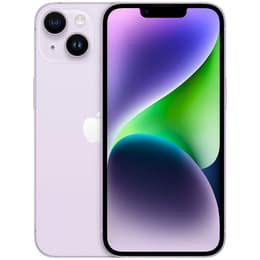
iPhone 14
iPhone 14
Starting at

Refurbished price:A$468.00

Versus A$1,049.00 new

See options
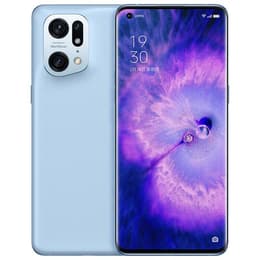
Oppo Find X5 Pro
Oppo Find X5 Pro
Starting at

Refurbished price:A$641.00

Versus A$1,769.00 new

See options

Ratings

The iPhone 14, released in September 2022, and the Oppo Find X5 Pro, launched in February 2022, are both advanced smartphones offering distinct user experiences. While the iPhone 14 operates on Apple's iOS ecosystem, the Oppo Find X5 Pro runs on Android with Oppo's ColorOS overlay. Key differentiators between these two devices include their display technologies, camera systems, and overall design philosophies, catering to different user preferences.

Scores

Durability

When considering the long-term usability of a smartphone, factors like software support and physical resilience are important. The iPhone 14 and Oppo Find X5 Pro offer different approaches to durability and longevity.

  • Software Longevity: The iPhone 14, running on iOS, typically receives major software updates for approximately five to six years from its release, offering extended access to new features and security patches. The Oppo Find X5 Pro, an Android device, generally receives three to four years of major Android version updates and an additional year of security updates, providing a solid, though typically shorter, support window.
  • Physical Durability: The iPhone 14 features a Ceramic Shield front cover and an aluminum frame, contributing to its drop resistance. It also carries an IP68 rating for water and dust resistance, allowing submersion up to 6 meters for 30 minutes. The Oppo Find X5 Pro utilizes Gorilla Glass Victus for screen protection and a ceramic back, offering a premium feel and robust scratch resistance. It also boasts an IP68 rating, protecting against dust and water immersion up to 1.5 meters for 30 minutes.
  • Repairability Considerations: The iPhone 14 initially received a favorable repairability assessment due to its internal redesign allowing easier access to components. However, this score was later adjusted downwards due to Apple's parts pairing requirements, which can complicate independent repairs. Information on the Oppo Find X5 Pro's repairability is less widely publicized, but Android devices generally face similar challenges with proprietary parts and software authentication for repairs.

Release year

2022

2022

Compatible with latest Update

Yes

Yes

Operating system

iOS

Android

Foldable

No

No

Performance

Both the iPhone 14 and Oppo Find X5 Pro are designed to deliver smooth performance for daily tasks and demanding applications, though they achieve this through different hardware configurations.

  • Processing Power: The iPhone 14 is equipped with a powerful processor that handles demanding apps and multitasking smoothly, ensuring a responsive user experience across the iOS ecosystem. The Oppo Find X5 Pro features a high-end Android processor, providing robust performance for gaming, video editing, and heavy multitasking within the Android environment.
  • Multitasking and Storage: The iPhone 14 offers storage options up to 512GB, which is suitable for most users, though it does not feature expandable storage. The Oppo Find X5 Pro typically comes with 8GB or 12GB of RAM, with some configurations offering up to 16GB, facilitating extensive multitasking. It provides storage options up to 512GB, also without expandable storage.
  • Battery Performance: The iPhone 14's battery is optimized for a full day of typical use, with testing indicating around 9 hours and 28 minutes of web browsing. The Oppo Find X5 Pro houses a larger battery capacity, often providing over a day of use for many users, and supports rapid wired and wireless charging technologies for quick power replenishment.

Memory (GB)

6 GB

12 GB

Screen quality

The visual experience on both devices is a highlight, with each offering a high-quality display tailored to different preferences in size and technology.

  • Display Technology and Clarity: The iPhone 14 features a 6.1-inch Super Retina XDR OLED display, known for its deep blacks, vibrant colors, and excellent contrast. It offers a resolution of 2532x1170 pixels, resulting in a sharp 460 pixels per inch. The Oppo Find X5 Pro boasts a larger 6.7-inch LTPO2 AMOLED display with a higher resolution of 3216x1440 pixels, providing a very high pixel density of approximately 525 ppi, which translates to exceptional clarity.
  • Brightness and Refresh Rate: Both devices offer strong brightness levels, with the iPhone 14 reaching 800 nits typical and 1200 nits peak brightness for HDR content, ensuring good visibility in various lighting conditions. The Oppo Find X5 Pro matches this with 500 nits typical and 1300 nits peak brightness. A key difference is the refresh rate: the iPhone 14 has a standard 60Hz refresh rate, while the Oppo Find X5 Pro features an adaptive 1-120Hz refresh rate, allowing for smoother scrolling and more fluid animations, while also conserving battery life by scaling down when static.
  • Viewing Experience: The iPhone 14's display provides a compact yet immersive viewing experience, ideal for one-handed use and media consumption. The Oppo Find X5 Pro's larger screen and higher adaptive refresh rate offer an expansive and fluid visual experience, particularly beneficial for gaming and detailed content viewing.

Resolution

1170 x 2532

1440 x 3216

Screen type

Super Retina XDR OLED

LTPO2 AMOLED

Audiovisual

Both smartphones offer advanced camera systems, but they approach photography and videography with distinct strengths and features.

  • Rear Camera Systems: The iPhone 14 features a dual 12MP camera system, including a main wide-angle lens with a wide aperture and sensor-shift optical image stabilization, alongside an ultrawide lens. This setup is praised for its consistent image quality and excellent low-light performance, enhanced by Apple's Photonic Engine. The Oppo Find X5 Pro comes with a versatile triple-camera array, featuring a 50MP main sensor, a 50MP ultrawide sensor, and a 13MP telephoto lens with 2x optical zoom. It leverages a dedicated imaging neural processing unit (NPU) and a collaboration with Hasselblad for color science, excelling in detailed shots and low-light conditions.
  • Front Camera and Video Capabilities: The iPhone 14 includes a 12MP front camera with autofocus, delivering sharp selfies and improved video calls. Its video recording capabilities include 4K Cinematic Mode and Action Mode for stabilized footage. The Oppo Find X5 Pro features a higher-resolution 32MP front camera, which captures detailed selfies and offers good dynamic range. For video, it supports 4K recording and includes a 4K Night Video mode, though some users note that its video stabilization might not always match the smoothness of the iPhone in very dynamic scenarios.
  • Photography Focus: The iPhone 14 emphasizes natural color reproduction and computational photography for consistent results across various lighting. The Oppo Find X5 Pro focuses on high-resolution sensors and specialized processing for detailed images, particularly in challenging light, and offers more versatility with its telephoto lens.

Main camera

12 megapixels

50 megapixels

Front camera

12 megapixels

32 megapixels

Miscellaneous

Beyond core performance and display, several practical features and design elements differentiate the iPhone 14 and Oppo Find X5 Pro, impacting daily usability.

  • Connectivity and Ports: Both devices support 5G connectivity and Wi-Fi 6 for fast wireless speeds. The iPhone 14 uses a Lightning port for charging and data transfer, while the Oppo Find X5 Pro features a USB-C 3.1 port, offering broader compatibility with modern accessories. The Oppo Find X5 Pro also supports Bluetooth 5.2, while the iPhone 14 features Bluetooth 5.3.
  • Biometric Security and Sensors: The iPhone 14 relies on Face ID for secure facial recognition. The Oppo Find X5 Pro offers both an in-display fingerprint sensor and face unlock for biometric authentication. The iPhone 14 also includes advanced safety features like Emergency SOS via satellite and Crash Detection.
  • Design and Handling: The iPhone 14 has a compact design, measuring 146.7 x 71.5 x 7.80 mm and weighing 172 grams, making it comfortable for one-handed use. The Oppo Find X5 Pro is a larger and heavier device at 163.7 x 73.9 x 8.5 mm and 218 grams, offering a more expansive screen but requiring a two-handed grip for many users. Its ceramic back provides a distinct tactile experience.

Weight

172 oz

218 oz

Screen size (in)

6,1

6.7

Network

5G

5G

SIM card

Physical SIM + eSIM

Physical SIM + eSIM

Carrier compatibility

Unlocked

Unlocked

Connector

Lightning

USB-C

The iPhone 14 and Oppo Find X5 Pro cater to different user priorities, each excelling in specific areas. Users often praise the iPhone 14 for its seamless software experience, consistent camera performance, and robust ecosystem. Common criticisms sometimes point to its 60Hz display and the continued use of the Lightning port. The Oppo Find X5 Pro is frequently lauded for its stunning high-resolution, high-refresh-rate display, rapid charging capabilities, and versatile camera system, particularly its ultrawide lens. Some users have noted that its telephoto zoom is not as extensive as some competitors, and software updates can be less frequent compared to iOS.

Users prioritizing a compact device with a highly optimized software experience, strong privacy features, and reliable camera performance in various conditions may find the iPhone 14 well-suited to their needs. Its long-term software support and integrated safety features also appeal to those seeking a dependable device for several years. Conversely, users who value a large, high-resolution display with a fluid adaptive refresh rate, faster charging speeds, and a more customizable Android operating system might lean towards the Oppo Find X5 Pro. Its advanced camera hardware, especially the ultrawide, makes it a strong contender for photography enthusiasts.

Ultimately, the choice depends on individual preferences for operating system, screen size, camera versatility, and charging speed. Both devices represent quality options in the smartphone market, and considering a quality-assured refurbished option for either model can be a sustainable choice for consumers.

See all articles

Our recent comparisons