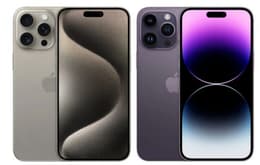
iPhone 14 vs iPhone 14 Pro

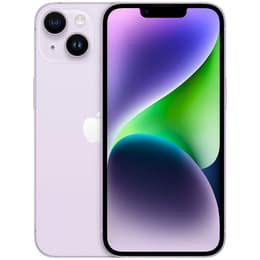
iPhone 14
iPhone 14
Starting at

Refurbished price:A$467.00

Versus A$1,049.00 new

See options
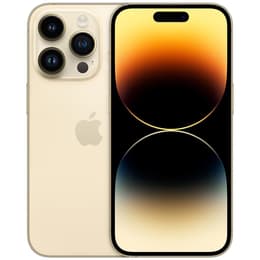
iPhone 14 Pro
iPhone 14 Pro
Starting at

Refurbished price:A$617.00

Versus A$1,749.00 new

See options

Ratings

The iPhone 14 and iPhone 14 Pro, both released in September 2022, represent distinct tiers within Apple's smartphone lineup. While they share the same operating system and core functionalities, the iPhone 14 Pro introduces several advanced features in its camera system, display technology, and internal processing. This comparison will highlight the practical differences to help users determine which device best suits their needs, also considering quality-assured refurbished options as a sustainable choice.

Scores

Durability

The longevity of a smartphone is influenced by its build quality, software support, and repairability. Both the iPhone 14 and iPhone 14 Pro offer robust construction and are part of the same generation, ensuring comparable software support for several years.

  • Release Timeline: Both devices were launched in September 2022, meaning they will receive iOS updates for a similar duration, typically extending for five to six years from their release date.
  • Build Materials: The iPhone 14 features an aerospace-grade aluminum frame with a Ceramic Shield front cover and a glass back. The iPhone 14 Pro, however, utilizes a surgical-grade stainless steel frame, which generally offers enhanced resistance to drops and impacts, alongside the Ceramic Shield front.
  • Repairability: The iPhone 14 introduced an internal redesign that makes it more straightforward to repair, particularly the back glass. The iPhone 14 Pro retains the previous internal design, which can make certain repairs more complex.

Release year

2022

2022

Compatible with latest Update

Yes

Yes

Operating system

iOS

iOS

Foldable

No

No

Performance

Performance is a key differentiator, impacting how smoothly applications run and how efficiently the device handles demanding tasks. Both models offer capable performance for everyday use, but the Pro model features a more advanced processor.

  • Processing Power: The iPhone 14 is equipped with a powerful processor that delivers smooth performance for daily applications, multitasking, and most mobile games. The iPhone 14 Pro features a newer, more advanced processor, providing a noticeable boost in speed and efficiency, particularly for intensive tasks like high-end gaming, professional video editing, and complex augmented reality applications.
  • Multitasking Capability: Both devices come with 6GB of RAM, allowing for efficient multitasking and smooth transitions between open applications.
  • Storage Options: Both models are available with 128GB, 256GB, and 512GB of internal storage. The iPhone 14 Pro also offers an additional 1TB storage option, catering to users who require extensive space for high-resolution media and large applications.

Memory (GB)

6 GB

6 GB

Screen quality

The display is a primary interface for user interaction, and there are notable differences in the visual experience offered by these two models.

  • Display Technology: Both devices feature a 6.1-inch Super Retina XDR OLED display, providing vibrant colors and deep blacks.
  • Refresh Rate and Smoothness: The iPhone 14 has a standard 60Hz refresh rate, offering a consistent visual experience. The iPhone 14 Pro includes ProMotion technology, which provides an adaptive refresh rate that can scale from 1Hz to 120Hz. This results in noticeably smoother scrolling, more fluid animations, and a more responsive feel, especially during gaming or fast-paced content consumption.
  • Brightness and Features: The iPhone 14 offers a typical maximum brightness of 800 nits and a peak HDR brightness of 1200 nits. The iPhone 14 Pro significantly increases these figures, with a typical brightness of 1000 nits, a peak HDR brightness of 1600 nits, and an impressive peak outdoor brightness of 2000 nits, enhancing visibility in bright sunlight. Additionally, the iPhone 14 Pro introduces the Dynamic Island, an interactive area that replaces the traditional notch, and an Always-On display feature.

Resolution

1170 x 2532

1179 x 2556

Screen type

Super Retina XDR OLED

LTPO Super Retina XDR OLED

Audiovisual

The camera systems present some of the most significant distinctions between the iPhone 14 and iPhone 14 Pro, catering to different levels of photographic ambition.

  • Rear Camera System: The iPhone 14 features a dual-camera setup with a 12MP Main camera (f/1.5 aperture) and a 12MP Ultra Wide camera (f/2.4 aperture). The iPhone 14 Pro boasts a more versatile triple-camera system, including a 48MP Main camera (f/1.78 aperture) with a quad-pixel sensor, a 12MP Ultra Wide camera (f/2.2 aperture) with macro capabilities, and a 12MP Telephoto camera (f/2.8 aperture) offering 3x optical zoom.
  • Photography Features: Both models benefit from improved low-light performance and features like Cinematic mode and Action mode for video. The iPhone 14 Pro further enhances image quality with its larger main sensor, Photonic Engine for advanced computational photography, and the ability to capture ProRAW photos at 48MP, providing greater detail and flexibility for editing. It also offers macro photography and improved night mode portraits thanks to its LiDAR scanner.
  • Front Camera: Both devices include a 12MP front-facing camera with autofocus and a f/1.9 aperture, delivering sharp selfies and clear video calls. The iPhone 14 Pro's front camera benefits from additional software enhancements for improved dynamic range and detail.

Main camera

12 megapixels

48 megapixels

Front camera

12 megapixels

12 megapixels

Miscellaneous

Beyond the core features, several practical elements contribute to the overall user experience and differentiate these two smartphones.

  • Connectivity and Safety: Both the iPhone 14 and iPhone 14 Pro support 5G cellular connectivity, Wi-Fi 6, and Bluetooth 5.3. They also include advanced safety features such as Emergency SOS via Satellite and Crash Detection.
  • Physical Design and Handling: The iPhone 14 weighs 172 grams and measures 146.7 x 71.5 x 7.80 mm. The iPhone 14 Pro is slightly heavier at 206 grams and marginally thicker at 147.5 x 71.5 x 7.85 mm, which can impact one-handed use for some individuals.
  • Charging Port: Both models utilize the Lightning port for charging and data transfer. For users in the US, both the iPhone 14 and iPhone 14 Pro are eSIM-only, meaning they do not support physical SIM cards.

Weight

172 oz

206 oz

Screen size (in)

6,1

6,1

Network

5G

5G

SIM card

Physical SIM + eSIM

Physical SIM + eSIM

Carrier compatibility

Unlocked

Unlocked

Connector

Lightning

Lightning

The iPhone 14 and iPhone 14 Pro, while sharing a release year and core operating system, cater to different user priorities. The iPhone 14 is often praised for its significant camera improvements over previous non-Pro models, solid performance for everyday tasks, and reliable battery life, making it a capable device for general use. Some users note its design similarity to its predecessor and the standard 60Hz display as areas where it doesn't push boundaries.

Conversely, the iPhone 14 Pro receives acclaim for its substantial camera upgrades, including a high-resolution main sensor, telephoto lens, and macro capabilities, appealing to photography and videography enthusiasts. Its ProMotion display with an adaptive refresh rate, the interactive Dynamic Island, and the Always-On display are frequently highlighted as premium features that enhance the user experience. The more powerful processor also ensures top-tier performance for demanding applications. However, some users have noted its increased weight and, in some cases, a perceived faster degradation of battery health, though overall battery life remains strong.

Users prioritizing a dependable smartphone for daily communication, social media, and good quality photos and videos without needing the absolute latest technological advancements may find the iPhone 14 well-suited to their needs. Those who value a slightly lighter device might also lean towards the standard model. On the other hand, individuals who require advanced photography and videography tools, a more fluid and interactive display, and the highest performance for professional or intensive use cases will likely prefer the iPhone 14 Pro. When considering either model, exploring quality-assured refurbished options can provide an eco-friendly alternative for acquiring these devices.

See all articles

Our recent comparisons