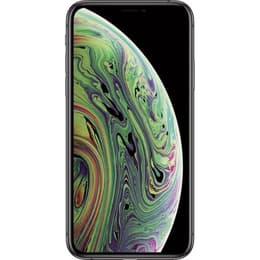

iPhone 12 Pro vs iPhone XS

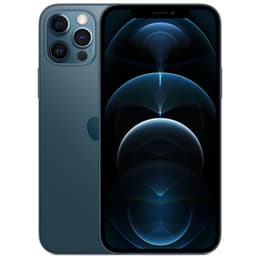
iPhone 12 Pro
iPhone 12 Pro
Starting at

Refurbished price:A$430.00

Versus A$1,119.00 new

See options
iPhone XS
iPhone XS
Starting at

Refurbished price:A$226.00

Versus A$1,199.00 new

See options

Ratings

The iPhone 12 Pro, released in October 2020, and the iPhone Xs, launched in September 2018, represent different generations of Apple's premium smartphone lineup. While both devices offer a consistent iOS experience, the iPhone 12 Pro introduces a refreshed design, enhanced camera capabilities, and updated internal components that distinguish it from its predecessor. Understanding these differences is key for users evaluating which device best suits their needs.

Scores

Durability

The age difference between these two models significantly impacts their expected lifespan and software compatibility.

  • Software Support: The iPhone 12 Pro, being two years newer, is anticipated to receive major iOS updates for a longer period, likely until approximately 2028-2030. In contrast, the iPhone Xs received its final major iOS update in September 2025 (iOS 18) and is expected to continue receiving security updates through late 2026.
  • Physical Resilience: The iPhone 12 Pro features a Ceramic Shield front cover, designed to offer improved drop performance compared to the standard glass on the iPhone Xs. Both models carry an IP68 water resistance rating, though the iPhone 12 Pro is rated for deeper submersion (6 meters for 30 minutes) than the iPhone Xs (2 meters for 30 minutes).
  • Repairability: Both devices generally offer a moderate level of repairability, with the iPhone 12 Pro receiving a repairability score of 6 out of 10 from iFixit, similar to its predecessors. This indicates that common components like the display and battery are designed to be accessible for replacement.

Release year

2020

2018

Compatible with latest Update

Yes

Yes

Operating system

iOS

iOS

Foldable

No

No

Performance

Everyday responsiveness and the ability to handle demanding tasks differ between these two generations due to advancements in internal hardware.

  • System Speed: The iPhone 12 Pro handles demanding applications and multitasking more smoothly, thanks to its more advanced internal processor. This results in quicker app loading times and a more fluid user experience, especially with graphically intensive games or video editing.
  • Multitasking Capability: With 6GB of RAM, the iPhone 12 Pro offers more memory for running multiple applications simultaneously without needing to reload them as frequently. The iPhone Xs, with 4GB of RAM, capably handles most daily tasks but may show more hesitation when switching between a large number of active applications.
  • Battery Performance: The iPhone 12 Pro features a 2815 mAh battery, a slight increase over the iPhone Xs's 2658 mAh battery. Coupled with a more power-efficient processor, the iPhone 12 Pro generally provides a modest but noticeable improvement in battery life, particularly for video playback, often lasting longer through a day of mixed use. However, heavy use of 5G on the 12 Pro can impact battery duration.

Memory

6 GB

4 GB

Screen quality

Both smartphones utilize OLED technology for deep blacks and high contrast, but the viewing experience has evolved between the two models.

  • Display Technology and Clarity: The iPhone 12 Pro features a 6.1-inch Super Retina XDR OLED display, offering enhanced brightness and contrast compared to the 5.8-inch Super Retina OLED display on the iPhone Xs. Both provide excellent clarity with resolutions of 2532 x 1170 pixels (12 Pro) and 2436 x 1125 pixels (Xs), resulting in similar pixel densities.
  • Brightness and Outdoor Visibility: The iPhone 12 Pro offers a higher typical maximum brightness of 800 nits and a peak HDR brightness of 1200 nits, making it significantly easier to view content outdoors in bright sunlight. The iPhone Xs has a maximum brightness of 625 nits.
  • Screen Size and Experience: The iPhone 12 Pro's larger 6.1-inch display provides more screen real estate for media consumption and productivity, while maintaining a manageable form factor due to thinner bezels. Both displays operate at a standard 60Hz refresh rate.

Resolution

1170 x 2532

1125 x 2436

Screen type

Super Retina XDR OLED

Super Retina OLED

Audiovisual

The camera systems represent a significant area of differentiation, with the iPhone 12 Pro offering more advanced capabilities.

  • Rear Camera System: The iPhone 12 Pro boasts a triple 12MP camera setup, including Wide, Ultra Wide, and Telephoto lenses, along with a LiDAR Scanner. The iPhone Xs features a dual 12MP camera system with Wide and Telephoto lenses. The addition of the Ultra Wide lens on the 12 Pro allows for capturing broader scenes.
  • Low-Light Performance and Features: A major advantage of the iPhone 12 Pro is its Night mode, available on all cameras, which significantly improves photo quality in dim environments. The iPhone Xs lacks Night mode and may struggle with graininess or loss of detail in low-light conditions. The 12 Pro also benefits from Deep Fusion and Smart HDR 3 for enhanced detail and dynamic range.
  • Video Recording and Front Camera: Both devices can record 4K video at up to 60 frames per second. However, the iPhone 12 Pro supports Dolby Vision HDR video recording, offering superior dynamic range and color. The front-facing camera on the iPhone 12 Pro is a 12MP TrueDepth sensor, an upgrade from the 7MP TrueDepth camera on the iPhone Xs, providing higher resolution selfies and improved low-light performance for video calls.

Main camera

12 megapixels

12 megapixels

Front camera

12 megapixels

7 megapixels

Miscellaneous

Beyond core features, several practical elements distinguish these two iPhone models.

  • Connectivity: The iPhone 12 Pro supports 5G cellular connectivity, offering faster download and upload speeds in areas with 5G network coverage. The iPhone Xs is limited to 4G LTE connectivity. Both support modern Wi-Fi standards and Bluetooth 5.0.
  • Charging and Ports: Both devices utilize the Lightning port for charging and data transfer. They also support Qi wireless charging. The iPhone 12 Pro introduces MagSafe, a magnetic system for wireless charging and accessories, which is not present on the iPhone Xs.
  • Design and Handling: The iPhone 12 Pro features a flat-edged design with a stainless steel frame, while the iPhone Xs retains the classic rounded stainless steel frame. The 12 Pro is slightly larger and heavier at 146.7 x 71.5 x 7.4 mm and 189g, compared to the Xs's 143.6 x 70.9 x 7.7 mm and 177g. Both rely on Face ID for secure authentication.

Weight

187 oz

177 oz

Screen size (in)

6.1

5.8

Network

5G

4G

SIM card

Physical SIM + eSIM

Physical SIM + eSIM

Carrier compatibility

Unlocked

Unlocked

Connector

Lightning

Lightning

User feedback often highlights the iPhone 12 Pro's versatile camera system, particularly its low-light capabilities and the addition of the Ultra Wide lens, as a significant upgrade. Users also appreciate the noticeable speed improvements and the larger, brighter display. Some users, however, find the flat-edged design of the 12 Pro less comfortable to hold than the rounded edges of older models like the Xs. For the iPhone Xs, common praise points include its still-capable performance for everyday tasks and its more compact, comfortable form factor. Criticisms often revolve around its aging camera technology, especially in challenging lighting, and its shorter remaining software support window.

Users prioritizing advanced photography and videography features, a larger and brighter display, and longer software longevity will find the iPhone 12 Pro well-suited to their needs. Its 5G connectivity also offers a more future-proof experience. Conversely, users who prefer a more compact device, primarily use their phone for standard daily tasks like messaging and browsing, and do not require the latest camera innovations may find the iPhone Xs to be a suitable option. Both models are available as quality-assured refurbished options, providing an eco-friendly alternative for consumers.
See all articles

Our recent comparisons