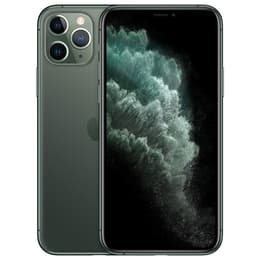
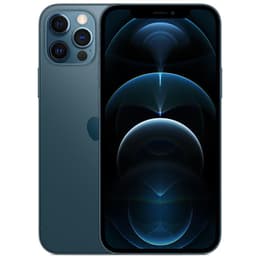

iPhone 11 Pro vs iPhone 12 Pro

iPhone 11 Pro
iPhone 11 Pro
Starting at

Refurbished price:A$325.00

Versus A$1,029.00 new

See options
iPhone 12 Pro
iPhone 12 Pro
Starting at

Refurbished price:A$430.00

Versus A$1,119.00 new

See options

Ratings

The iPhone 11 Pro, released in September 2019, and the iPhone 12 Pro, launched in October 2020, are both premium smartphones from Apple's "Pro" series. While they share the same core operating system, iOS, the iPhone 12 Pro introduced a refreshed design, enhanced durability features, and next-generation connectivity, alongside camera and performance improvements over its predecessor.

Scores

Durability

The iPhone 11 Pro, released in September 2019, and the iPhone 12 Pro, launched in October 2020, offer different timelines for software support and physical resilience. The iPhone 12 Pro, being a year newer, is expected to receive major iOS updates for approximately one year longer than the iPhone 11 Pro, extending its software longevity.

  • Software Longevity: The iPhone 11 Pro is anticipated to receive major iOS updates until around 2025 or 2026, while the iPhone 12 Pro is likely to continue receiving updates until 2026 or 2027, offering a longer period of access to new features and security patches.
  • Physical Resilience: Both models feature a stainless steel frame and an IP68 rating for water and dust resistance. The iPhone 11 Pro can withstand submersion up to 4 meters for 30 minutes, while the iPhone 12 Pro improves upon this, rated for up to 6 meters for 30 minutes. The iPhone 12 Pro also introduced a Ceramic Shield front cover, which Apple stated offers improved drop performance compared to the iPhone 11 Pro's glass.
  • Expected Lifespan: Users generally report that both devices maintain good performance and usability for several years, with the primary limiting factor often being battery degradation or the eventual cessation of software updates.

Release year

2019

2020

Compatible with latest Update

Yes

Yes

Operating system

iOS

iOS

Foldable

No

No

Performance

Both the iPhone 11 Pro and iPhone 12 Pro deliver responsive performance for daily tasks, though the newer model offers a generational leap in processing capabilities.

  • Processing Power: The iPhone 12 Pro features a newer generation processor, which translates to faster app loading times, smoother multitasking, and more efficient handling of demanding applications and graphics-intensive games compared to the iPhone 11 Pro. Users engaging in heavy video editing or advanced gaming may notice the difference in sustained performance.
  • Multitasking and Storage: The iPhone 12 Pro comes with 6GB of RAM, an increase from the iPhone 11 Pro's 4GB, which can lead to better retention of apps in memory and a smoother experience when switching between multiple applications. Storage options for the iPhone 11 Pro started at 64GB, while the iPhone 12 Pro begins at 128GB.
  • Battery Behavior: User experiences suggest the iPhone 11 Pro generally offers slightly longer battery life for typical usage, particularly for video playback, despite the iPhone 12 Pro's more efficient processor. This difference can be attributed to the iPhone 11 Pro having a larger battery capacity.

Memory

4 GB

6 GB

Screen quality

Both devices feature Apple's Super Retina XDR OLED display technology, offering deep blacks and vibrant colors, but there are subtle differences in size and protection.

  • Display Technology and Clarity: Both the iPhone 11 Pro and iPhone 12 Pro utilize Super Retina XDR OLED displays, providing excellent contrast and color accuracy. The resolution is sharp on both, with the iPhone 11 Pro at 2436 x 1125 pixels (458 ppi) and the iPhone 12 Pro at 2532 x 1170 pixels (460 ppi), meaning pixel density is nearly identical.
  • Size and Brightness: The iPhone 11 Pro has a 5.8-inch display, while the iPhone 12 Pro offers a slightly larger 6.1-inch screen within a similar physical footprint due to reduced bezels. Both screens achieve a typical brightness of 800 nits and a peak HDR brightness of 1200 nits, ensuring good visibility in various lighting conditions.
  • Durability and Refresh Rate: The iPhone 12 Pro introduced the Ceramic Shield front cover, which is designed to offer improved drop resistance compared to the glass on the iPhone 11 Pro. Both models feature a standard 60Hz refresh rate.

Resolution

1125 x 2436

1170 x 2532

Screen type

Super Retina XDR OLED

Super Retina XDR OLED

Audiovisual

Both the iPhone 11 Pro and iPhone 12 Pro feature a versatile triple 12-megapixel camera system, but the newer model brings notable enhancements, especially in low-light performance and video capabilities.

  • Still Photography: The iPhone 11 Pro introduced Night Mode, significantly improving low-light photos. The iPhone 12 Pro builds on this with a wider aperture on its main lens (f/1.6 vs f/1.8), allowing more light capture, and extends Night Mode to the ultra-wide camera. The iPhone 12 Pro also benefits from Smart HDR 3 and a LiDAR scanner, which aids in faster autofocus in low light and improved portrait mode.
  • Video Recording: Both phones record 4K video at up to 60 frames per second with good stabilization. The iPhone 12 Pro further enhances video with the ability to record in Dolby Vision HDR, offering a wider dynamic range and more vibrant colors for compatible displays.
  • Audio and Selfies: Both devices provide clear microphone quality for calls and recordings, and deliver a good media consumption experience through their stereo speakers. The front-facing 12-megapixel camera on both models supports Night Mode on the iPhone 12 Pro, enhancing selfie quality in dim conditions.

Main camera

12 megapixels

12 megapixels

Front camera

12 megapixels

12 megapixels

Miscellaneous

Beyond core features, several practical elements differentiate the iPhone 11 Pro and iPhone 12 Pro, impacting daily usability and future-proofing.

  • Connectivity: A key distinction is the iPhone 12 Pro's support for 5G cellular networks, offering potentially faster download and upload speeds in areas with 5G coverage, which the iPhone 11 Pro lacks, being limited to 4G LTE. Both support Wi-Fi 6 and Bluetooth 5.0.
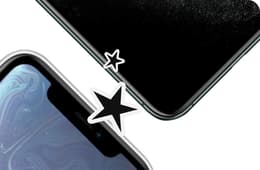
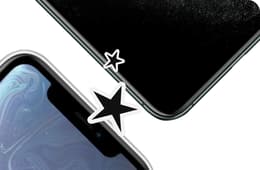
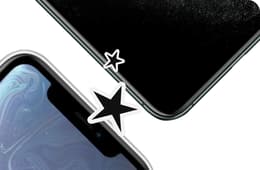
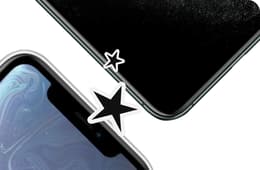
  • Design and Handling: The iPhone 11 Pro features a design with rounded stainless steel edges, while the iPhone 12 Pro adopts a flat-edged stainless steel design, reminiscent of older iPhone models. The iPhone 12 Pro is slightly taller and thinner than the 11 Pro, but also marginally heavier. The iPhone 12 Pro also introduced MagSafe technology, allowing for magnetic attachment of accessories and faster wireless charging with compatible MagSafe chargers.
  • Additional Sensors: The iPhone 12 Pro includes a LiDAR scanner on its rear camera module, which enhances augmented reality experiences and improves autofocus in low-light conditions. Both devices rely on Face ID for secure authentication.

Weight

188 oz

187 oz

Screen size (in)

5.8

6.1

Network

4G

5G

SIM card

Physical SIM + eSIM

Physical SIM + eSIM

Carrier compatibility

Unlocked

Unlocked

Connector

Lightning

Lightning

User feedback often highlights the iPhone 11 Pro's strong battery life as a significant advantage, with many finding its performance still sufficient for everyday tasks. Some users appreciate its more rounded design for comfortable handling. Criticisms sometimes point to its lack of 5G connectivity and the absence of the Ceramic Shield display.

The iPhone 12 Pro is frequently praised for its improved camera capabilities, particularly in low light, and the inclusion of 5G connectivity, which offers a degree of future-proofing. Its flat-edged design is a matter of personal preference, with some finding it stylish and others noting it can feel less comfortable or heavier than its predecessor. Some users have observed that its battery life, while still good, might not quite match the longevity of the iPhone 11 Pro.

Users prioritizing extended battery life and a slightly more ergonomic, rounded design may find the iPhone 11 Pro well-suited to their needs. Those who value cutting-edge camera features, especially for low-light photography and advanced video recording, along with the benefits of 5G connectivity and enhanced display durability, might lean towards the iPhone 12 Pro. Both models remain capable devices, and opting for a quality-assured refurbished option can be a sustainable choice for either.

See all articles

Our recent comparisons