
Compare models

iPhone 12 mini vs iPhone 12 Pro

  • 1-year warranty
  • Free standard shipping
  • Free 30-day returns
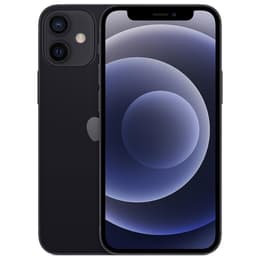
iPhone 12 mini
iPhone 12 mini
Starting at

Refurbished price:A$236.00

Versus A$929.00 new

See options
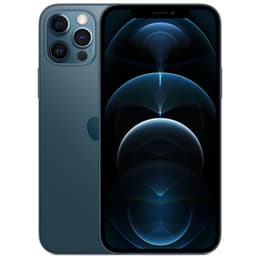
iPhone 12 Pro
iPhone 12 Pro
Starting at

Refurbished price:A$391.00

Versus A$1,119.00 new

See options

Differences at a glance

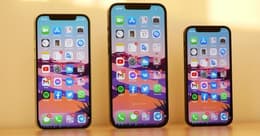
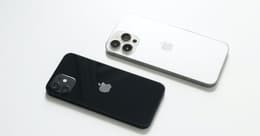
The iPhone 12 Mini and iPhone 12 Pro, both released in late 2020, represent different approaches within Apple's smartphone lineup. While they share a common design language and core processing power, the iPhone 12 Mini prioritizes a compact form factor, whereas the iPhone 12 Pro offers enhanced camera capabilities and a more robust build for users seeking advanced features.

Scores

Durability

Both the iPhone 12 Mini and iPhone 12 Pro were launched in 2020, meaning they benefit from Apple's consistent software update policy, typically extending for several years from their release. This ensures continued access to new features and security enhancements for a practical lifespan.

  • Software Longevity: Both devices launched with iOS 14 and are expected to receive major iOS updates for approximately 5-6 years from their release, providing a similar duration of software support.
  • Repairability: Independent assessments indicate that both the iPhone 12 Mini and iPhone 12 Pro received a repairability score of 6 out of 10, suggesting that many key components are modular and accessible for repair, though proprietary screws and increased waterproofing can present challenges.
  • Physical Durability: Both models feature Apple's Ceramic Shield front cover, designed to offer improved drop performance compared to previous generations. The iPhone 12 Pro, however, utilizes a stainless steel frame, which is generally more resistant to bending and scratches than the aluminum frame found on the iPhone 12 Mini.

Release year

2020

2020

Compatible with latest Update

Yes

Yes

Operating system

iOS

iOS

Foldable

No

No

Performance

Both the iPhone 12 Mini and iPhone 12 Pro are equipped with the same advanced processor, ensuring a high level of performance across various tasks. However, differences in RAM and battery capacity can influence their behavior under specific usage patterns.

  • Processing Power: Both devices feature a powerful current-generation processor, enabling smooth operation for demanding applications, multitasking, and graphic-intensive games without noticeable lag.
  • Multitasking Capability: The iPhone 12 Pro includes 6GB of RAM, offering a slight advantage in managing numerous open applications simultaneously compared to the iPhone 12 Mini's 4GB of RAM.
  • Battery Behavior: The iPhone 12 Pro, with its larger physical size, accommodates a higher capacity battery (2815 mAh) compared to the iPhone 12 Mini (2227 mAh). This generally translates to longer usage times for the Pro model, especially under heavy use or prolonged media consumption, while the Mini may require more frequent charging for power users.

Memory (GB)

4 GB

6 GB

Screen quality

Both iPhone models feature high-quality displays, offering vibrant visuals and sharp details, though their physical dimensions cater to different user preferences.

  • Display Technology: Both the iPhone 12 Mini and iPhone 12 Pro utilize Super Retina XDR OLED displays, providing deep blacks, high contrast ratios, and vibrant color reproduction for an immersive viewing experience.
  • Size and Clarity: The iPhone 12 Mini features a 5.4-inch display with a resolution of 2340x1080 pixels at 476 pixels per inch (ppi), offering a very sharp image in a compact form. The iPhone 12 Pro has a larger 6.1-inch display with a resolution of 2532x1170 pixels at 460 ppi, providing a more expansive viewing area with comparable clarity.
  • Brightness and Refresh Rate: Both displays offer a typical maximum brightness of 625 nits, peaking at 1200 nits for HDR content, ensuring good visibility in various lighting conditions. Both devices feature a standard 60Hz refresh rate.

Resolution

1080 x 2340

1170 x 2532

Screen type

Super Retina XDR OLED

Super Retina XDR OLED

Audiovisual

The camera systems on the iPhone 12 Mini and iPhone 12 Pro offer excellent photography and videography capabilities, with the Pro model providing additional features for more advanced users.

  • Core Camera System: Both devices feature a dual 12-megapixel camera system, including a wide lens with an f/1.6 aperture and an ultra-wide lens with a 120-degree field of view. This setup delivers strong performance in various lighting conditions, including improved low-light photography with Night Mode.
  • Pro-level Enhancements: The iPhone 12 Pro adds a third 12-megapixel telephoto lens, enabling 2x optical zoom in and 2x optical zoom out, providing a 4x optical zoom range. It also includes a LiDAR scanner, which enhances autofocus in low light and enables Night Mode portraits.
  • Video Recording: Both models support 4K video recording at up to 60 frames per second and HDR video recording with Dolby Vision. The iPhone 12 Pro offers HDR video recording with Dolby Vision at up to 60 frames per second, while the iPhone 12 Mini supports it up to 30 frames per second. Both devices feature stereo sound recording and stereo speakers for media consumption.

Main camera

12 megapixels

12 megapixels

Front camera

12 megapixels

12 megapixels

Miscellaneous

Beyond core performance and display, several practical elements differentiate the user experience between these two iPhone models.

  • Connectivity and Ports: Both the iPhone 12 Mini and iPhone 12 Pro support 5G cellular connectivity, Wi-Fi 6, and Bluetooth 5.0, ensuring fast and reliable wireless communication. Both devices utilize the Lightning port for charging and data transfer.
  • Biometric Security and Sensors: Both models feature Face ID for secure facial recognition. The iPhone 12 Pro uniquely includes a LiDAR scanner, which improves augmented reality experiences and assists with camera functions.
  • Physical Characteristics: The iPhone 12 Mini is significantly smaller and lighter, weighing 135 grams with dimensions of 131.5 x 64.2 x 7.4 mm, making it highly portable and suitable for one-handed use. The iPhone 12 Pro is larger and heavier at 189 grams and 146.7 x 71.5 x 7.4 mm, offering a more substantial feel and a larger screen area. The iPhone 12 Mini has an aluminum frame, while the iPhone 12 Pro features a stainless steel frame.

Weight

135 oz

187 oz

Screen size (in)

5.4

6.1

Network

5G

5G

SIM card

Physical SIM + eSIM

Physical SIM + eSIM

Carrier compatibility

Unlocked

Unlocked

Connector

Lightning

Lightning

What the community thinks

The iPhone 12 Mini and iPhone 12 Pro, while part of the same generation, cater to distinct user preferences. User feedback often praises the iPhone 12 Mini for its exceptionally compact size and ease of one-handed use, making it a preferred choice for those who value portability above all else. However, its smaller battery capacity is a frequent point of concern, with many users reporting the need for more frequent charging, especially with heavy usage.

Conversely, the iPhone 12 Pro is lauded for its more advanced camera system, particularly the addition of the telephoto lens and LiDAR scanner, which enhance photography and augmented reality experiences. Its larger display and extended battery life are also commonly cited advantages. Some users, however, find its size and weight less convenient for single-handed operation compared to the Mini.

Users prioritizing a highly portable device that fits comfortably in smaller hands and pockets, and who have moderate usage patterns or are accustomed to charging frequently, may find the iPhone 12 Mini well-suited to their needs. Those who prioritize advanced photography features, a larger display for media consumption or productivity, and longer battery life, and who are comfortable with a more substantial device, will likely lean towards the iPhone 12 Pro. Both models offer a robust and capable smartphone experience, and choosing a quality-assured refurbished option can be an eco-friendly alternative for either device.