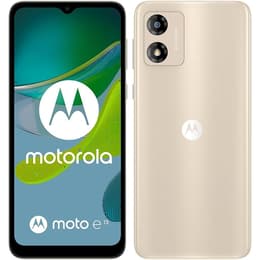

Google Pixel 9 vs Motorola Moto E13

Google Pixel 9
Google Pixel 9
Starting at

Refurbished price:A$717.00

Versus A$1,349.00 new

See options
Motorola Moto E13
Motorola Moto E13
Starting at

Refurbished price:A$121.29

Versus A$244.00 new

See options

Ratings

The Google Pixel 9, released in August 2024, represents a flagship offering in the smartphone market, while the Motorola Moto E13, launched in February 2023, is positioned as an entry-level device. These two phones cater to vastly different user needs, with the Pixel 9 focusing on advanced computational photography, robust performance, and extended software support, and the Moto E13 prioritizing essential smartphone functions and extended battery life for everyday communication. Both devices operate on the Android platform, though the Pixel 9 runs a full version of Android with Google's custom interface, while the Moto E13 utilizes Android 13 Go Edition, optimized for devices with more modest hardware.

Scores

Durability

The expected practical lifespan and software support differ significantly between these two devices, reflecting their respective market segments.

  • Software Longevity: The Google Pixel 9 offers an extensive commitment of seven years of OS and security updates, ensuring support until at least August 2031. This provides a long-term software experience with continuous feature enhancements and security patches. In contrast, the Motorola Moto E13, running Android 13 Go Edition, typically receives fewer and less frequent software updates, meaning its software longevity will be considerably shorter.
  • Physical Durability: The Pixel 9 features an IP68 rating for dust and water resistance, along with Gorilla Glass Victus 2 on both the front and back, and an aluminum frame, contributing to its overall resilience against daily wear and tear. Google also indicates improved drop test performance compared to its predecessor. The Moto E13 has an IP52 rating for dust and splash resistance and a plastic body, offering basic protection against minor environmental elements.
  • Build Materials: The Pixel 9 incorporates more premium materials, including glass and aluminum, which contribute to a more robust feel and potentially better long-term physical integrity. The Moto E13's plastic construction is lightweight and functional, suitable for its intended use.

Release year

2024

2023

Compatible with latest Update

Yes

No

Operating system

Android

Android

Foldable

No

No

Performance

The performance capabilities of the Pixel 9 and Moto E13 are tailored to different user expectations and workloads.

  • Processing Power: The Google Pixel 9 is powered by a current-generation processor designed to handle demanding applications, intensive multitasking, and advanced AI features smoothly. Users can expect a fluid and responsive experience across various tasks, including gaming and content creation. The Motorola Moto E13 features a processor suitable for essential daily tasks such as messaging, browsing, and light app usage. Some users may experience occasional delays when loading apps or navigating the interface, particularly with the lower RAM variants.
  • Multitasking and Storage: The Pixel 9 comes with 12GB of RAM and offers storage options of 128GB or 256GB, utilizing UFS 3.1 for faster data access, which supports seamless multitasking and efficient app management. The Moto E13 is available with 2GB, 4GB, or 8GB of RAM and storage options up to 128GB, with expandable storage via microSDXC. The 2GB RAM variant may struggle with multiple applications running simultaneously.
  • Battery Performance: The Pixel 9 is equipped with a 4700mAh battery, providing reliable power for a full day of typical usage, with some reports indicating over 13 hours of screen-on time in various tests. It supports 27W wired and 15W wireless charging. The Moto E13 features a larger 5000mAh battery, which, combined with its less demanding hardware and Android Go Edition, can deliver extended usage, often lasting more than a day with moderate use. It supports 10W wired charging.

Memory (GB)

12 GB

4 GB

Screen quality

The visual experience offered by each device's display technology caters to different viewing preferences and usage scenarios.

  • Display Technology and Clarity: The Google Pixel 9 features a 6.3-inch OLED display with a 1080 x 2424 (FHD+) resolution and 422 pixels per inch, providing vibrant colors, deep blacks, and sharp image clarity. The Motorola Moto E13 has a 6.5-inch IPS LCD display with a 720 x 1600 (HD+) resolution and 270 pixels per inch. This display is suitable for general viewing, though content may appear less sharp compared to higher-resolution screens.
  • Brightness and Refresh Rate: The Pixel 9's OLED panel offers a 120Hz refresh rate for smooth scrolling and responsive interactions, along with high brightness levels, reaching up to 1800 nits HDR and 2700 nits peak brightness, ensuring good visibility in various lighting conditions. The Moto E13's IPS LCD display has a standard 60Hz refresh rate and may present challenges with visibility under direct sunlight.
  • Advanced Features: The Pixel 9 incorporates adaptive brightness and HDR capabilities for enhanced visual impact, along with an Adaptive Touch feature that adjusts sensitivity for wet fingers or screen protectors. The Moto E13 provides a functional display for everyday media consumption.

Resolution

1080 x 2424

720 x 1600

Screen type

OLED

IPS LCD

Audiovisual

The camera systems of the Pixel 9 and Moto E13 are designed for different levels of photographic ambition and capability.

  • Rear Camera System: The Google Pixel 9 is equipped with a dual-lens rear camera setup, including a 50MP main sensor with optical and electronic image stabilization and a 48MP ultra-wide lens with a 123-degree field of view. It offers advanced features like Macro Focus, Night Sight, Astrophotography, and various AI-powered enhancements for detailed and versatile photography in diverse conditions. The Motorola Moto E13 features a single 13MP rear camera with PDAF, capable of capturing decent photos in good lighting conditions and acceptable images at night for its category. However, users have noted that the camera app can be slow to launch and process shots.
  • Video Recording: The Pixel 9 supports 10-bit HDR video, Cinematic blur, and various stabilization modes, with Video Boost enhancing quality through AI. It can record high-resolution video with advanced features. The Moto E13 records video at 1080p at 30 frames per second for both its rear and front cameras, suitable for basic video capture.
  • Front Camera: For selfies and video calls, the Pixel 9 includes a 10.5MP front camera with a wide field of view. The Moto E13 has a 5MP front camera that captures good details and color balance for its segment.

Main camera

50 megapixels

13 megapixels

Front camera

10.5 megapixels

5 megapixels

Miscellaneous

Beyond core features, several practical elements differentiate the user experience of these two smartphones.

  • Connectivity and Ports: The Google Pixel 9 supports 5G networks, along with modern Wi-Fi and Bluetooth standards, ensuring fast and reliable wireless connectivity. It features a USB Type-C port and supports reverse wireless charging. The Motorola Moto E13 supports 4G LTE connectivity and includes dual-band Wi-Fi and Bluetooth 5.0. It also features a USB Type-C port and a 3.5mm headphone jack, which is a convenient inclusion for wired audio.
  • Biometric Security: The Pixel 9 incorporates an ultrasonic in-display fingerprint sensor for secure and fast unlocking, an upgrade from previous models. It also offers face recognition. The Moto E13 relies on traditional PIN/pattern unlocking and an less secure face unlock feature, lacking a fingerprint sensor.
  • Design and Handling: The Pixel 9 has dimensions of 152.8 x 72.0 x 8.5mm and weighs 198g, featuring an aluminum frame and glass construction. The Moto E13 measures 164.2 x 75 x 8.5 mm and weighs 179g, with a plastic build that makes it lightweight. The Moto E13's design includes noticeable bezels and a teardrop notch for the front camera.

Weight

198 oz

179 oz

Screen size (in)

6.3

6.5

Network

5G

4G

SIM card

Physical SIM + eSIM

Dual Physical SIM

Carrier compatibility

Unlocked

Unlocked

The Google Pixel 9 and Motorola Moto E13 serve distinct segments of the smartphone market, each excelling in its intended purpose. Users frequently praise the Pixel 9 for its exceptional camera capabilities, smooth performance, and the promise of long-term software support, making it a compelling choice for those who prioritize advanced features and a premium Android experience. Common praise points for the Moto E13 include its impressive battery life and its ability to handle basic smartphone functions reliably, making it a practical option for users with straightforward needs.

Conversely, some users have noted that while the Pixel 9's battery life is significantly improved, its charging speed, though adequate, might not be as rapid as some competitors. For the Moto E13, criticisms often revolve around its camera's slow operation and the display's average quality, particularly in bright outdoor conditions.

Users prioritizing a cutting-edge camera system, robust performance for demanding applications, and extended software longevity will find the Google Pixel 9 well-suited to their needs. Its advanced AI features and premium build quality cater to those seeking a comprehensive smartphone experience. On the other hand, users who primarily need a device for communication, basic browsing, and media consumption, and who value extended battery life in a straightforward package, may prefer the Motorola Moto E13. Both devices are available as quality-assured refurbished options, providing an eco-friendly alternative for consumers looking to make a sustainable choice.

See all articles

Our recent comparisons