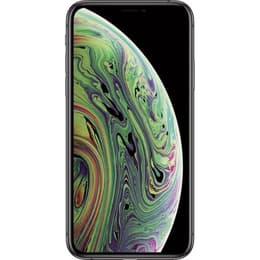

iPhone 12 vs iPhone XS

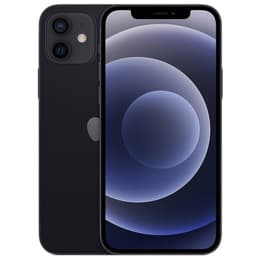
iPhone 12
iPhone 12
Starting at

Refurbished price:A$304.00

Versus A$1,129.00 new

See options
iPhone XS
iPhone XS
Starting at

Refurbished price:A$287.00

Versus A$1,379.00 new

See options

Ratings

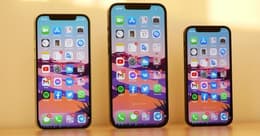
The iPhone 12, released in October 2020, and the iPhone Xs, launched in September 2018, represent two distinct generations of Apple's smartphone lineup. While both devices operate on the iOS ecosystem, the iPhone 12 introduced a refreshed design, enhanced connectivity, and updated internal components, setting it apart from its predecessor. This comparison aims to highlight the practical differences in their features and capabilities to assist in making an informed decision.

Scores

Durability

The two-year difference in release dates significantly impacts the expected software support and overall practical lifespan of these devices.

  • Software Longevity: The iPhone 12 is anticipated to receive major iOS updates for a longer duration, likely through 2027 and potentially security updates beyond that, ensuring access to newer features and security patches for an extended period. The iPhone Xs is expected to receive updates until approximately 2026.
  • Physical Resilience: The iPhone 12 features a Ceramic Shield front cover, designed to offer improved drop performance compared to the standard glass on the iPhone Xs. Both models are rated for water and dust resistance, with the iPhone 12 having an IP68 rating for a maximum depth of 6 meters for up to 30 minutes, while the iPhone Xs has an IP68 rating for up to 2 meters for 30 minutes.
  • Repairability: Both devices are generally well-supported for repairs, with components like batteries and screens being widely available. This makes both models viable for long-term use, especially when considering a quality-assured refurbished option.

Release year

2020

2018

Compatible with latest Update

Yes

Yes

Operating system

iOS

iOS

Foldable

No

No

Performance

While both smartphones capably handle everyday tasks, the internal hardware differences contribute to varying levels of responsiveness for more demanding activities.

  • System Responsiveness: The iPhone 12 features a more advanced processor, which translates to faster app launches and smoother multitasking. Users engaging in graphics-intensive applications or mobile gaming will likely experience a more fluid performance compared to the iPhone Xs.
  • Battery Behavior: In typical daily use, the iPhone 12 generally offers longer battery life on a single charge due to a larger battery capacity (2815 mAh vs 2658 mAh) and more efficient internal components. The iPhone 12 is rated for up to 17 hours of video playback, while the iPhone Xs offers up to 14 hours.
  • Storage Options: Both models offer various internal storage capacities, typically ranging from 64GB to 256GB or 512GB, catering to different user needs from light usage to extensive media storage.

Memory (GB)

4 GB

4 GB

Screen quality

Both devices feature high-quality OLED displays, providing deep blacks and vibrant colors, though there are distinctions in size, resolution, and brightness.

  • Display Technology: Both phones utilise OLED panels, offering excellent contrast and color accuracy. The iPhone 12 features a 6.1-inch Super Retina XDR display, while the iPhone Xs has a 5.8-inch Super Retina HD display. The iPhone 12's display has slightly thinner borders, contributing to a more immersive viewing experience.
  • Resolution and Clarity: The iPhone 12 offers a resolution of 2532 x 1170 pixels at 460 ppi, providing sharp text and detailed images. The iPhone Xs has a resolution of 2436 x 1125 pixels at 458 ppi, also delivering clear visuals.
  • Brightness Levels: The iPhone 12 has a higher peak brightness of 1200 nits for HDR content and 625 nits typical, making it easier to view in bright outdoor conditions. The iPhone Xs offers a typical maximum brightness of 625 nits.

Resolution

1170 x 2532

1125 x 2436

Screen type

Super Retina XDR OLED

Super Retina OLED

Audiovisual

The camera systems on these two models offer different photographic strengths and features, particularly in lens configuration and low-light performance.

  • Lens Configuration: The iPhone 12 includes a dual 12MP camera system with a wide and an ultra-wide lens, suitable for capturing expansive landscapes and group shots. The iPhone Xs also features a dual 12MP camera system, but with a wide and a telephoto lens, which provides optical zoom capabilities and can be beneficial for portraits.
  • Low-Light Photography: The iPhone 12 introduces a dedicated Night Mode and Deep Fusion, significantly improving the clarity and brightness of photos taken in dark environments. The iPhone Xs lacks these specific features, meaning its low-light performance is less advanced.
  • Video Recording and Front Camera: The iPhone 12 supports HDR video recording with Dolby Vision up to 4K at 30 fps and features a 12MP front camera with Night Mode. The iPhone Xs records 4K video at 60 fps and has a 7MP front camera.

Main camera

12 megapixels

12 megapixels

Front camera

12 megapixels

7 megapixels

Miscellaneous

Several practical elements differentiate these devices, impacting daily usability and connectivity.

  • Connectivity Options: The iPhone 12 is compatible with 5G networks, offering faster data speeds in areas where infrastructure is available. The iPhone Xs is limited to 4G LTE. Both support Wi-Fi and Bluetooth, with the iPhone 12 featuring Wi-Fi 6 for potentially faster and more stable wireless connections.
  • Physical Design and Handling: The iPhone 12 features a flat-edge design and an aluminum frame, weighing 164 grams. The iPhone Xs has a more classic rounded-edge design with a stainless steel frame, weighing 177 grams. The iPhone Xs's slightly smaller frame may feel more comfortable for one-handed use for some users.
  • Security and Ports: Both devices utilize Face ID for secure facial authentication. Both models feature a Lightning port for charging and data transfer.

Weight

164 oz

177 oz

Screen size (in)

6.1

5.8

SIM card

Physical SIM + eSIM

Physical SIM + eSIM

Carrier compatibility

Unlocked

Unlocked

Connector

Lightning

Lightning

User feedback often praises the iPhone 12 for its modern design, improved camera capabilities, and the inclusion of 5G connectivity. Many users appreciate the enhanced low-light photography and the brighter, larger display. Some common criticisms for the iPhone 12, particularly the standard model, have sometimes revolved around its battery life not being a significant leap over its direct predecessor, though it is an improvement over the iPhone Xs.

The iPhone Xs is frequently lauded for its premium build quality, compact size, and still-capable performance for everyday tasks. Users often highlight its telephoto lens as a valuable asset for photography. A frequent concern for the iPhone Xs, especially in recent years, is its aging battery and the eventual cessation of major iOS updates.

Users prioritizing the latest connectivity speeds, a more advanced camera system with Night Mode, and a device that will receive software updates for the longest possible time will find the iPhone 12 to be a well-suited choice. On the other hand, users who prefer a slightly more compact device with a premium feel, and who value a telephoto lens for photography, may lean toward the iPhone Xs. Both models remain capable smartphones for the modern user, and choosing a quality-assured refurbished option is an excellent way to acquire these technologies while making a sustainable choice.
See all articles

Our recent comparisons