Galaxy A14 vs Galaxy S25

Galaxy A14
Galaxy A14
Starting at

Refurbished price:A$216.00

Versus A$390.00 new

See options
Galaxy S25
Galaxy S25
Starting at

Refurbished price:A$852.00

Versus A$1,399.00 new

See options

Ratings

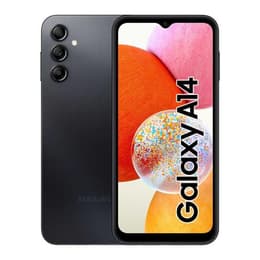
The Samsung Galaxy A14, released in early 2023, and the Samsung Galaxy S25, launched in early 2025, represent distinct tiers within Samsung's smartphone lineup. The Galaxy A14 is positioned as an accessible device, while the Galaxy S25 is a flagship offering. These two Android smartphones differ significantly in their core specifications, build quality, and overall user experience, catering to different user priorities and needs.

Scores

Durability

The expected practical lifespan and software support differ considerably between these two devices, primarily due to their release timelines and market positioning.

  • Release Timeline: The Galaxy A14 was released in early 2023, making it a two-year-old device at the time of the Galaxy S25's launch in early 2025. This age difference inherently means the A14 has already received a portion of its software support, while the S25 is at the beginning of its support cycle.
  • Software Longevity: The Galaxy S25 launched with Android 15 and One UI 7, and Samsung has committed to providing seven years of operating system and security updates, extending its support well into the future. The Galaxy A14, which launched with Android 13, has a shorter update commitment, typically receiving fewer major OS updates and security patches compared to flagship models.
  • Build and Durability: The Galaxy S25 features premium materials like Gorilla Glass Victus 2 on the front and an Armor Aluminum frame, along with an IP68 rating for significant water and dust resistance. In contrast, the Galaxy A14 utilizes a plastic back and sides with an unspecified glass front, and it lacks an official IP rating, indicating it has not been certified for water or dust resistance. This difference in construction suggests the S25 is designed for greater resilience against environmental factors and accidental exposure.

Release year

2023

2025

Operating system

Android

Android

Foldable

No

No

Performance

The performance capabilities of the Galaxy A14 and Galaxy S25 cater to vastly different user demands, reflecting their respective hardware and optimization levels.

  • Processing Power: The Galaxy S25 is equipped with a current-generation flagship processor, the Snapdragon 8 Elite for Galaxy, manufactured on a 3nm process. This enables it to handle demanding applications, intensive multitasking, and graphically rich games with smooth and responsive performance. The Galaxy A14, depending on the region and version, uses entry-level to mid-range processors, which provide adequate performance for everyday tasks but may exhibit lags and stutters with more intensive applications or animations.
  • Multitasking and Responsiveness: With 12GB of RAM as standard, the Galaxy S25 offers substantial capacity for keeping numerous applications open in the background and switching between them seamlessly. The Galaxy A14 typically comes with 4GB or 6GB of RAM, which is sufficient for basic multitasking but may require more frequent app reloading when managing multiple demanding applications.
  • Storage Options: The Galaxy S25 offers internal storage options starting from 128GB, with higher tiers available, but it does not support expandable storage. The Galaxy A14 provides 64GB or 128GB of internal storage and includes a microSD card slot for storage expansion, offering flexibility for users who need more space for media and files.

Memory (GB)

4 GB

12 GB

Screen quality

The visual experience offered by these two devices is a significant point of differentiation, stemming from their display technologies and specifications.

  • Display Technology and Clarity: The Galaxy S25 features a 6.2-inch Dynamic LTPO AMOLED 2X display with FHD+ resolution, delivering vibrant colors, deep blacks, and excellent contrast. The Galaxy A14 comes with a 6.6-inch PLS LCD panel, also with FHD+ resolution, which provides clear visuals but cannot match the color depth and contrast of an AMOLED screen.
  • Refresh Rate and Smoothness: The Galaxy S25 boasts an adaptive refresh rate of 1Hz to 120Hz, allowing for exceptionally smooth scrolling and fluid animations while also conserving battery life by adjusting to static content. The Galaxy A14 5G model offers a 90Hz refresh rate, providing a smoother experience than standard 60Hz displays, which is found on the 4G model.
  • Brightness and Outdoor Visibility: The Galaxy S25's display can reach a peak brightness of up to 2600 nits, ensuring excellent visibility even in bright outdoor conditions. The Galaxy A14's LCD display is generally less bright, which can make outdoor viewing more challenging.

Resolution

1080 x 2408

1080x2340

Audiovisual

The camera systems on the Galaxy A14 and Galaxy S25 are designed for different levels of photographic capability and versatility.

  • Rear Camera System: The Galaxy S25 features a versatile triple-camera setup, including a 50MP wide-angle main sensor, a 12MP ultrawide lens, and a 10MP telephoto lens with 3x optical zoom. This configuration allows for a wide range of photographic scenarios, from expansive landscapes to detailed close-ups. The Galaxy A14 typically includes a 50MP main camera, a 5MP ultrawide (on the 4G model) or 2MP depth sensor (on the 5G model), and a 2MP macro lens.
  • Photography Performance: The Galaxy S25 excels in various lighting conditions, offering advanced computational photography features for improved image quality, particularly in challenging environments. The Galaxy A14's main camera performs well in good daylight conditions and captures decent selfies, but its low-light performance is a common area of concern, and it lacks a dedicated night mode on some versions.
  • Video Recording and Audio: The Galaxy S25 supports high-resolution video recording, including 8K at 30 frames per second, along with advanced audio capabilities. The Galaxy A14 is limited to 1080p video recording at 30 frames per second from both its front and rear cameras. The S25 also offers stereo speakers with clear and loud output, enhancing the media consumption experience.

Miscellaneous

Beyond the core specifications, several practical features and design elements distinguish the Galaxy A14 and Galaxy S25.

  • Connectivity and Ports: The Galaxy S25 supports advanced connectivity standards, including 5G, Wi-Fi 7, and Bluetooth 5.4, ensuring fast and reliable wireless communication. It features a USB Type-C port for charging and data transfer but omits a 3.5mm headphone jack. The Galaxy A14 also offers 5G connectivity (on its 5G model), Wi-Fi 5, and Bluetooth 5.1 or 5.2. It retains the 3.5mm headphone jack, which can be a convenience for users with wired audio accessories, alongside its USB-C port.
  • Biometric Security: For secure unlocking, the Galaxy S25 incorporates an ultrasonic in-screen fingerprint sensor. The Galaxy A14 features a side-mounted fingerprint sensor, integrated into the power button.
  • Design and Handling: The Galaxy S25 is designed with a sleek profile and premium build materials, contributing to a comfortable in-hand feel and a lighter weight for its category. The Galaxy A14 has a more utilitarian design with a plastic construction, which contributes to its overall weight and dimensions.

Weight

201 oz

162 oz

Screen size (in)

6.6

6.2

Network

4G

5G

SIM card

Physical SIM

Physical SIM + eSIM

Carrier compatibility

Unlocked

Unlocked

The Samsung Galaxy A14 and Galaxy S25 cater to distinct user profiles, with each device offering a set of strengths that align with different priorities. User feedback for the Galaxy A14 frequently praises its extended battery life, often lasting up to two days on a single charge, and its capable main camera performance in well-lit conditions. However, common criticisms include its performance, which can exhibit lags with demanding applications, and its display's limited brightness for outdoor use.

For the Galaxy S25, users consistently highlight its exceptional performance, smooth operation across applications, and the vibrant, bright display. Its advanced camera system and long-term software support are also frequently cited as significant advantages. Some users, however, note that while the battery life is generally good for a full day, heavy usage might necessitate a midday charge, and the camera system, while capable, may not represent a substantial generational leap for those upgrading from very recent flagships.

Users prioritizing extended software support, top-tier performance for demanding tasks, and a premium display experience will find the Galaxy S25 well-suited to their needs. Its robust build and advanced camera features also appeal to those seeking a comprehensive flagship experience. Conversely, users who prioritize exceptional battery longevity, expandable storage, and a more accessible device for everyday communication and media consumption may lean toward the Galaxy A14. For those considering either device, exploring quality-assured refurbished options can provide an eco-friendly alternative, offering a sustainable choice for acquiring technology.


See all articles

Our recent comparisons