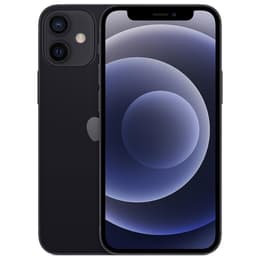
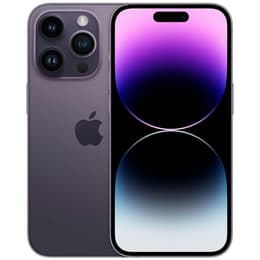

iPhone 12 mini vs iPhone 14 Pro

iPhone 12 mini
iPhone 12 mini
Starting at

Refurbished price:A$277.00

Versus A$929.00 new

See options
iPhone 14 Pro
iPhone 14 Pro
Starting at

Refurbished price:A$622.00

Versus A$1,749.00 new

See options

Ratings

The iPhone 12 Mini, released in late 2020, and the iPhone 14 Pro, launched in late 2022, represent distinct offerings within Apple's smartphone lineup. While both operate on Apple's iOS ecosystem, they cater to different user preferences, primarily distinguished by their physical size, display technology, and camera capabilities. The 12 Mini focuses on a compact form factor, whereas the 14 Pro emphasizes advanced features and a more robust user experience.

Scores

Durability

When considering the longevity of these devices, several factors come into play, including their release timelines, software support, and physical resilience.

  • Release Timeline and Software Support: The iPhone 12 Mini was released in November 2020, while the iPhone 14 Pro followed in September 2022. This difference in launch dates means the iPhone 14 Pro will likely receive software updates for a longer period, extending its functional lifespan by approximately two years compared to the 12 Mini. The 12 Mini launched with iOS 14, and the 14 Pro with iOS 16.
  • Physical Durability: Both models feature a Ceramic Shield front cover, designed to offer enhanced drop performance. They also share an IP68 rating for water and dust resistance, allowing submersion up to 6 meters for 30 minutes. The iPhone 14 Pro incorporates a stainless steel frame, contributing to its overall structural integrity, while the 12 Mini uses an aluminum frame.
  • Repairability: The iPhone 12 Mini received a repairability score of 6 out of 10 from iFixit, noting that major components like the display and battery are relatively accessible for replacement. Information regarding the 14 Pro's repairability suggests a similar approach to modularity for common repairs. However, the glass back on both models is noted as fragile and can be challenging to replace independently.

Release year

2020

2022

Compatible with latest Update

Yes

Yes

Operating system

iOS

iOS

Foldable

No

No

Performance

The performance of these two iPhones varies significantly due to the generational gap in their internal components, impacting everything from app responsiveness to demanding computational tasks.

  • Processing Power: The iPhone 12 Mini is equipped with a capable processor that handles everyday applications and multitasking smoothly. The iPhone 14 Pro, being a newer model, features a more advanced processor, providing faster CPU and GPU speeds. This translates to quicker app loading times, more fluid multitasking, and enhanced performance in graphically intensive games and professional applications.
  • Storage and RAM: Both devices offer various internal storage options, with the iPhone 14 Pro extending to higher capacities. The iPhone 12 Mini typically comes with 4GB of RAM, which is sufficient for most daily usage. The iPhone 14 Pro includes 6GB of RAM, allowing for more applications to remain active in the background and improving overall system responsiveness, particularly during heavy usage.
  • Battery Behavior: The iPhone 12 Mini has a smaller battery capacity, which user experiences indicate often requires charging before the end of a full day, especially with moderate to heavy use. The iPhone 14 Pro generally offers solid all-day battery life for most users, though intensive tasks or prolonged outdoor use at peak brightness can lead to more frequent charging.

Memory (GB)

4 GB

6 GB

Screen quality

The display is a primary point of differentiation, with the iPhone 14 Pro introducing several advanced features that enhance the visual experience compared to the iPhone 12 Mini.

  • Display Technology and Size: Both phones feature Super Retina XDR OLED displays, offering deep blacks and vibrant colors. The iPhone 12 Mini has a compact 5.4-inch display, ideal for one-handed use. The iPhone 14 Pro features a larger 6.1-inch display, providing more screen real estate for content consumption and productivity.
  • Brightness and Clarity: The 12 Mini offers a typical brightness of 625 nits and a peak HDR brightness of 1200 nits, providing good visibility in various lighting conditions. The 14 Pro significantly boosts this with a typical brightness of 1000 nits, a peak HDR brightness of 1600 nits, and an impressive 2000 nits for outdoor peak brightness, ensuring excellent legibility even in direct sunlight.
  • Advanced Display Features: The iPhone 14 Pro introduces ProMotion technology, offering adaptive refresh rates up to 120Hz for smoother scrolling and more responsive interactions. It also features an Always-On display and the Dynamic Island, an interactive area around the front camera and sensors that displays alerts and background activities. The 12 Mini has a standard 60Hz refresh rate and a traditional notch.

Resolution

1080 x 2340

1179 x 2556

Screen type

Super Retina XDR OLED

LTPO Super Retina XDR OLED

Audiovisual

The camera systems on these two iPhones reflect their different positions in Apple's product hierarchy, with the iPhone 14 Pro offering a more advanced and versatile setup.

  • Rear Camera System: The iPhone 12 Mini features a dual 12MP camera system, including a wide and an ultra-wide lens, capable of capturing good quality photos in various conditions, with Night mode available on all cameras. The iPhone 14 Pro boasts a triple-lens Pro camera system, highlighted by a 48MP main sensor, a 12MP ultra-wide, and two 12MP telephoto lenses (2x and 3x optical zoom). This allows for greater detail, more flexible framing, and enhanced low-light performance through features like the Photonic Engine.
  • Zoom Capabilities: The 12 Mini offers 2x optical zoom out and up to 5x digital zoom. The 14 Pro provides a 3x optical zoom in, 2x optical zoom out, resulting in a 6x optical zoom range, and up to 15x digital zoom, offering significantly more versatility for capturing distant subjects.
  • Video Recording and Features: Both models support 4K video recording up to 60 frames per second. The 12 Mini can record HDR video with Dolby Vision at up to 4K at 30fps. The 14 Pro enhances video capabilities with improved HDR recording, Cinematic mode for shallow depth-of-field video, and Action mode for smoother handheld footage. User feedback for the 14 Pro indicates strong low-light video performance.

Main camera

12 megapixels

48 megapixels

Front camera

12 megapixels

12 megapixels

Miscellaneous

Beyond core performance and display, several other practical elements differentiate the iPhone 12 Mini and iPhone 14 Pro, influencing daily usability and connectivity.

  • Connectivity Standards: Both devices support 5G cellular connectivity, enabling faster mobile data speeds. They also feature Wi-Fi 6 for efficient wireless networking and Bluetooth for accessory connections.
  • Ports and Charging: Both the iPhone 12 Mini and iPhone 14 Pro utilize the Lightning port for charging and data transfer. Both support MagSafe wireless charging, though the 12 Mini charges at a slightly slower 12W compared to the 14 Pro's 15W.
  • Sensors and Biometrics: Both models rely on Face ID for secure facial recognition. The iPhone 14 Pro includes additional sensors like a LiDAR scanner, which enhances augmented reality experiences and improves autofocus in low-light photography.
  • Physical Characteristics: The iPhone 12 Mini is notably compact and lightweight, measuring 131.5 x 64.2 x 7.4mm and weighing 135 grams, making it highly pocketable and easy for one-handed use. The iPhone 14 Pro is larger and heavier at 147.5 x 71.5 x 7.85mm and 206 grams, offering a more substantial feel in hand, partly due to its stainless steel frame.

Weight

133 oz

206 oz

Screen size (in)

5.4

6,1

Network

5G

5G

SIM card

Physical SIM + eSIM

Physical SIM + eSIM

Carrier compatibility

Unlocked

Unlocked

Connector

Lightning

Lightning

The iPhone 12 Mini and iPhone 14 Pro cater to distinct user needs, as reflected in user feedback and their core specifications. The 12 Mini is frequently praised for its exceptionally compact size, making it comfortable for one-handed operation and easy portability. Users appreciate its ability to deliver a full iPhone experience in a small form factor. However, a common criticism revolves around its battery life, which many users find insufficient for heavy daily use, often requiring mid-day charging. Some also note that the smaller screen can feel cramped for extensive media consumption or detailed work.

Conversely, the iPhone 14 Pro receives significant acclaim for its advanced display, particularly the ProMotion 120Hz refresh rate, Always-On display, and the interactive Dynamic Island. Its camera system is widely lauded for its versatility, low-light performance, and professional-grade features. Users generally report solid all-day battery life, though some heavy users or those engaging in intensive tasks like prolonged video recording or gaming might observe faster drain. A frequent point of discussion is its weight and more substantial feel, which some users find premium while others perceive it as heavy. Some users have also noted the device can become warm during demanding camera usage.

Users prioritizing a highly portable and lightweight device that excels in one-handed use may find the iPhone 12 Mini well-suited to their needs. It offers a capable experience for essential smartphone functions. Those who prioritize cutting-edge display technology, a highly versatile and advanced camera system, and robust performance for demanding applications will likely lean towards the iPhone 14 Pro. Its larger screen and enhanced features are beneficial for content creation, gaming, and productivity. Both models are available as quality-assured refurbished options, providing an eco-friendly alternative for consumers.
See all articles

Our recent comparisons