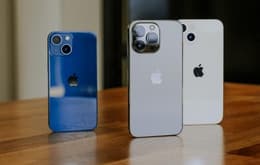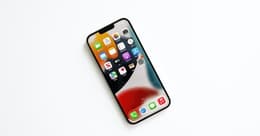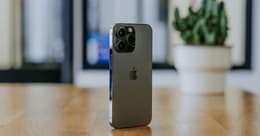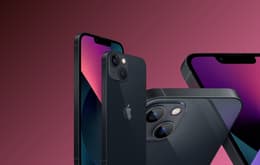
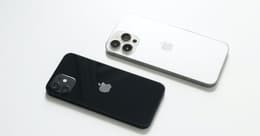
iPhone 12 mini vs iPhone 13 mini

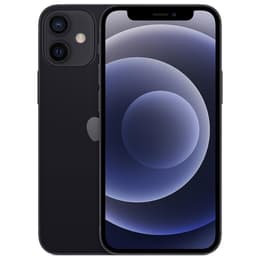
iPhone 12 mini
iPhone 12 mini
Starting at

Refurbished price:A$236.00

Versus A$929.00 new

See options
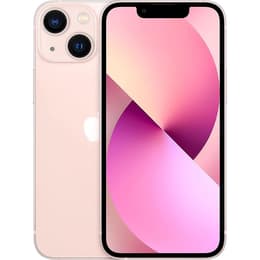
iPhone 13 mini
iPhone 13 mini
Starting at

Refurbished price:A$383.68

Versus A$1,049.00 new

See options

Ratings

The iPhone 12 Mini, released in November 2020, and the iPhone 13 Mini, launched in September 2021, represent Apple's commitment to compact smartphone design. Both devices offer a full iOS experience in a small form factor, appealing to users who prefer a more pocket-friendly device. While they share a similar aesthetic, the iPhone 13 Mini introduces notable enhancements in battery longevity, camera capabilities, and overall system efficiency, building upon its predecessor's foundation.

Scores

Durability

When considering the long-term usability of these compact smartphones, several factors come into play, including their release timelines, software support, and physical resilience.

  • Release Timeline: The iPhone 12 Mini was released in November 2020, making it approximately one year older than the iPhone 13 Mini, which launched in September 2021. This difference in release date impacts their expected software support duration.
  • Software Longevity: Apple typically provides major iOS updates for 5-6 years from a device's release. Given this pattern, the iPhone 13 Mini is expected to receive software support for approximately one year longer than the iPhone 12 Mini, ensuring access to the latest features and security updates for an extended period. The iPhone 12 Mini is expected to be supported up to iOS 18, and potentially iOS 19, while the iPhone 13 Mini is also compatible with iOS 18 and potentially future versions.
  • Physical Durability & Repairability: Both models feature a Ceramic Shield front cover, designed to offer enhanced drop performance, and carry an IP68 rating for water and dust resistance, meaning they can withstand submersion in up to 6 meters of water for 30 minutes. The iPhone 13 Mini is marginally thicker and heavier, which some users might perceive as a slightly more robust build. In terms of repairability, the iPhone 12 Mini received an iFixit score of 6 out of 10, praised for its modular design for display and battery replacements. The iPhone 13 Mini initially scored 5/10, but this was later adjusted to 6/10 after an iOS update addressed issues with Face ID functionality post-screen replacement. Both devices, however, share the common challenge of a fragile glass back that is impractical to replace independently.

Release year

2020

2021

Compatible with latest Update

Yes

Yes

Operating system

iOS

iOS

Foldable

No

No

Performance

The performance of a smartphone is crucial for daily tasks, from launching applications to managing multiple processes simultaneously. Both mini models deliver a responsive user experience, though the newer iteration offers refinements.

  • Processor Capabilities: The iPhone 12 Mini is powered by a capable processor, providing smooth operation for everyday applications and moderate multitasking. The iPhone 13 Mini features an updated processor that offers improved efficiency and faster processing speeds. This translates to quicker app loading times, more fluid navigation, and enhanced performance in demanding applications or games.
  • System Responsiveness & Multitasking: While both devices handle multitasking and demanding applications effectively, the iPhone 13 Mini's updated internal hardware provides more performance headroom. This means it can maintain high levels of responsiveness even with more intensive usage over time. Both models come with 4GB of RAM, which is sufficient for typical smartphone usage.
  • Storage Options: The iPhone 12 Mini was available with base storage starting at 64GB, with options up to 256GB. The iPhone 13 Mini doubles the entry-level storage to 128GB, with configurations extending to 512GB. This increased base storage on the 13 Mini provides more room for high-resolution photos, videos, and applications, reducing the need for immediate cloud storage reliance for many users.

Memory (GB)

4 GB

4 GB

Screen quality

The visual experience on a compact device is heavily influenced by its display quality. Both mini iPhones feature high-quality screens, with the iPhone 13 Mini offering a brighter viewing experience.

  • Display Technology & Resolution: Both the iPhone 12 Mini and iPhone 13 Mini are equipped with 5.4-inch Super Retina XDR OLED displays. This technology delivers deep blacks, high contrast, and vibrant colors, contributing to an immersive visual experience. Both devices also share the same resolution of 2340 x 1080 pixels at 476 pixels per inch, ensuring sharp text and detailed images.
  • Brightness Levels: A key difference lies in brightness. The iPhone 13 Mini offers a higher typical maximum brightness of 800 nits, compared to the 625 nits on the iPhone 12 Mini. Both can reach a peak brightness of 1200 nits when viewing HDR content. This increased typical brightness on the 13 Mini can significantly improve screen visibility in bright outdoor conditions.
  • Refresh Rate & Viewing Experience: Both models feature a standard 60Hz refresh rate. While this provides a smooth experience for most users, it does not offer the ultra-smooth scrolling found on devices with higher refresh rates. The iPhone 13 Mini also features a slightly smaller notch at the top of the display, which provides a marginally larger active screen area for content consumption.

Resolution

1080 x 2340

1080 x 2340

Screen type

Super Retina XDR OLED

Super Retina XDR OLED

Audiovisual

The camera systems on both mini iPhones are designed to capture high-quality images and videos, with the iPhone 13 Mini introducing several advancements for improved photographic results.

  • Main Camera System: Both devices feature a dual 12-megapixel camera system, comprising a wide and an ultra-wide lens. The iPhone 13 Mini, however, incorporates a larger primary sensor that is capable of capturing approximately 47% more light than its predecessor. This enhancement significantly improves low-light performance, resulting in clearer and more detailed photos in dim environments.
  • Image Stabilization & Video Features: A notable upgrade in the iPhone 13 Mini is the inclusion of sensor-shift optical image stabilization for the wide camera, a technology previously found in Pro models. This provides superior stability for both photos and videos, reducing blur, especially in challenging conditions. The iPhone 13 Mini also introduces new software features like Cinematic Mode for video recording and Photographic Styles, offering more creative control.
  • Overall Photography Performance: In well-lit conditions, both the iPhone 12 Mini and iPhone 13 Mini produce excellent photos with accurate colors and good dynamic range. However, the iPhone 13 Mini shows a noticeable advantage in low-light scenarios, delivering images with less noise and better detail. The ultra-wide camera on the 13 Mini also sees improvements in low-light performance. The front camera on the 13 Mini also offers better dynamic range for selfies.

Main camera

12 megapixels

12 megapixels

Front camera

12 megapixels

12 megapixels

Miscellaneous

Beyond core performance and display, several practical elements differentiate these two compact devices, impacting daily convenience and user interaction.

  • Connectivity & Ports: Both the iPhone 12 Mini and iPhone 13 Mini support 5G cellular connectivity, Wi-Fi 6, and Bluetooth 5.0, ensuring fast and reliable wireless communication. A minor distinction is that the iPhone 13 Mini supports two eSIMs simultaneously, whereas the iPhone 12 Mini supports one physical nano-SIM and one eSIM. Both devices utilize the Lightning connector for charging and data transfer.
  • Battery Behavior: The iPhone 13 Mini features a larger battery capacity (2,438mAh compared to the 12 Mini's 2,227mAh) and a more power-efficient processor. This combination results in significantly improved battery life for the 13 Mini, offering approximately 1.5 to 3 hours more runtime during typical usage. Users of the 12 Mini often report needing to charge mid-day with heavy use, while the 13 Mini is more likely to last a full day.
  • Physical Characteristics: The iPhone 12 Mini measures 131.5 x 64.2 x 7.4 mm and weighs 135 grams. The iPhone 13 Mini has almost identical dimensions at 131.5 x 64.2 x 7.65 mm but is slightly heavier at 141 grams. Both offer a comfortable one-handed grip due to their compact size. Both devices also feature Face ID for secure authentication.

Weight

135 oz

140 oz

Screen size (in)

5.4

5,4

Network

5G

5G

SIM card

Physical SIM + eSIM

Physical SIM + eSIM

Carrier compatibility

Unlocked

Unlocked

Connector

Lightning

Lightning

The iPhone 12 Mini and iPhone 13 Mini both cater to users who appreciate a powerful smartphone in a compact design. User feedback often praises the 12 Mini for its groundbreaking small form factor and capable performance for its size. However, a frequent criticism of the 12 Mini revolves around its battery life, which many heavy users found insufficient for a full day without recharging.

The iPhone 13 Mini, on the other hand, is widely lauded for addressing some of its predecessor's shortcomings. Users consistently highlight its significantly improved battery endurance, enhanced low-light camera performance, and brighter display as key advantages. While some users express a preference for the 12 Mini's notch design or its camera's processing style, the consensus points to the 13 Mini offering a more refined and capable experience.

Users prioritizing a highly compact device for moderate daily use, who may not require the absolute latest camera advancements or extended battery life, will find the iPhone 12 Mini a capable option. It delivers a premium experience in a small package. Conversely, users seeking a compact smartphone with improved battery endurance, better low-light photography, a brighter display for outdoor visibility, and more base storage will find the iPhone 13 Mini better suited to their needs. It offers a more polished version of the small-form-factor concept, making it a strong choice for those who value a small device without significant compromises in key areas.

For those considering either model, exploring quality-assured refurbished options can provide an eco-friendly alternative, extending the life cycle of these devices and offering a sustainable choice for consumers.