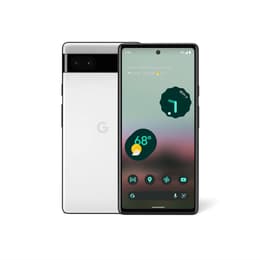
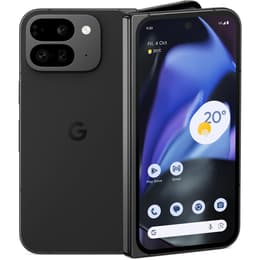

Google Pixel 6a vs Google Pixel 9 Pro Fold

Google Pixel 6a
Google Pixel 6a
Starting at

Refurbished price:A$236.00

Versus A$569.00 new

See options
Google Pixel 9 Pro Fold
See options

Ratings

The Google Pixel 6A, released in July 2022, is a compact smartphone designed for everyday use, offering a streamlined Android experience. In contrast, the Google Pixel 9 Pro Fold, launched in late 2024, represents Google's advanced foldable technology, featuring a dual-screen design that transforms from a traditional smartphone into a larger tablet-like display. The primary differences lie in their form factor, display technology, and overall processing power, catering to distinct user preferences and needs.

Scores

Durability

When considering the longevity of these devices, their release timelines and Google's software support policies are key factors. The Pixel 6A, released in July 2022, benefits from Google's commitment to software updates, including security patches and Android version upgrades. The Pixel 9 Pro Fold, being a newer device from late 2024, is expected to receive an extended period of support, aligning with Google's more recent policy of providing longer update cycles for its flagship devices.

  • Software Support: The Pixel 6A was launched with Android 12 and has received updates, with Google typically providing around five years of security updates for its A-series phones [1, 3, 5]. The Pixel 9 Pro Fold, released with Android 14 and upgraded to Android 15, is designed for a longer lifespan, offering seven years of software and security support [18].
  • Physical Durability: The Pixel 6A features an IP67 rating for dust and water resistance, providing protection against splashes and submersion in shallow water [1]. The Pixel 9 Pro Fold, as a foldable device, incorporates a redesigned hinge and is expected to feature an IP68 rating, indicating enhanced resistance to dust and water ingress, along with a more robust build for its folding mechanism [17, 18].
  • Practical Lifespan: Users can expect the Pixel 6A to remain functional and secure for several years, suitable for general tasks and app usage. The Pixel 9 Pro Fold, with its extended software support and more advanced components, is built to offer a longer practical lifespan, particularly for users who value cutting-edge features and sustained performance over many years.

Release year

2022

2024

Compatible with latest Update

Yes

Yes

Foldable

No

Yes

Performance

The performance capabilities of the Pixel 6A and Pixel 9 Pro Fold reflect their different market segments and release generations. The Pixel 6A is equipped with Google's Tensor processor, which delivers efficient performance for daily tasks and moderate gaming. The Pixel 9 Pro Fold, featuring a newer generation Tensor G4 processor, offers significantly enhanced processing power and efficiency.

  • Everyday Responsiveness: The Pixel 6A handles common applications, web browsing, and multitasking smoothly, providing a responsive user experience for most activities [1]. The Pixel 9 Pro Fold, with its advanced processor, offers faster app loading, seamless transitions between applications, and a more fluid overall system responsiveness, especially when managing multiple demanding tasks across its dual displays [18, 22].
  • Demanding Applications: For intensive tasks such as high-fidelity gaming or complex photo and video editing, the Pixel 6A performs adequately but may show limitations compared to more powerful devices. The Pixel 9 Pro Fold is engineered to excel in these areas, providing ample processing headroom for demanding applications and ensuring a consistently smooth experience [22].
  • Multitasking Capabilities: The Pixel 6A's 6GB of RAM supports efficient multitasking for a typical number of open applications [1, 5]. The Pixel 9 Pro Fold, with its rumored 12GB or 16GB of RAM, is designed for extensive multitasking, allowing users to run numerous applications simultaneously and utilize its larger screen real estate for enhanced productivity without performance degradation [10, 22].

Memory (GB)

6 GB

16 GB

Screen quality

The display experience is a major differentiator between these two Google smartphones, with the Pixel 6A offering a traditional flat screen and the Pixel 9 Pro Fold featuring a versatile foldable design.

  • Display Technology and Size: The Pixel 6A features a 6.1-inch OLED display, providing deep blacks and vibrant colors suitable for media consumption and daily interactions [1, 5]. The Pixel 9 Pro Fold offers a dual-screen setup: a 6.3-inch cover display and an expansive 8-inch foldable OLED inner display, providing a significantly larger viewing area when unfolded [18].
  • Resolution and Clarity: Both devices offer high-resolution displays. The Pixel 6A has an FHD+ (2400 x 1080 pixels) resolution, ensuring sharp text and clear images on its compact screen [1, 5]. The Pixel 9 Pro Fold's displays are also high-resolution, with the inner foldable screen providing an immersive and detailed visual experience across its larger surface [11].
  • Refresh Rate and Brightness: The Pixel 6A's display operates at a standard 60Hz refresh rate, which is adequate for most users [1, 5]. The Pixel 9 Pro Fold is expected to feature higher refresh rates, likely 120Hz, on both its cover and inner displays, resulting in smoother scrolling and more fluid animations [4, 22]. The Pixel 9 Pro Fold's displays are also anticipated to offer higher brightness levels for improved outdoor visibility [4].

Resolution

1080 x 2400

2076 x 2152

Screen type

OLED

Foldable LTPO OLED

Audiovisual

Google Pixel phones are known for their camera capabilities, and both the Pixel 6A and Pixel 9 Pro Fold leverage computational photography to deliver quality images, though with different hardware configurations.

  • Rear Camera System: The Pixel 6A features a dual-camera setup with a 12.2-megapixel main sensor and a 12-megapixel ultrawide sensor, capable of producing detailed and color-accurate photos in various conditions [1, 6]. The Pixel 9 Pro Fold elevates this with a triple-camera system, including a 48-megapixel main sensor, a 10.5-megapixel ultrawide, and a 10.8-megapixel telephoto lens with 5x optical zoom, offering greater versatility and detail capture [17, 20].
  • Photography Performance: Both devices benefit from Google's advanced image processing, which enhances dynamic range and color reproduction. The Pixel 6A excels in everyday photography and low-light conditions, thanks to features like Night Sight [1, 8]. The Pixel 9 Pro Fold, with its larger sensors and dedicated telephoto lens, is expected to offer superior low-light performance, more detailed zoomed-in shots, and enhanced overall image quality [17, 23].
  • Video Recording and Audio: The Pixel 6A supports 4K video recording at up to 60 frames per second [1]. The Pixel 9 Pro Fold is also expected to offer high-quality video recording, potentially with additional features and improved stabilization, leveraging its more powerful processor. Both devices provide clear microphone quality for calls and recordings, and their speaker outputs are suitable for media consumption [8, 9].

Main camera

12.2 megapixels

48 megapixels

Front camera

8 megapixels

10 megapixels

Miscellaneous

Beyond core specifications, several practical elements contribute to the overall user experience of the Pixel 6A and Pixel 9 Pro Fold.

  • Connectivity and Ports: The Pixel 6A supports 5G connectivity, Wi-Fi, and Bluetooth, and charges via a USB-C port, though it lacks a headphone jack [1, 9]. The Pixel 9 Pro Fold also offers comprehensive connectivity options, including advanced Wi-Fi standards and Bluetooth, and utilizes a USB-C port for charging and data transfer.
  • Biometric Security: Both devices feature an in-display fingerprint sensor for secure unlocking and authentication [1, 8]. The Pixel 9 Pro Fold may also incorporate advanced facial recognition technology, offering additional biometric security options.
  • Design and Handling: The Pixel 6A is a compact and lightweight device, making it comfortable for one-handed use [9]. The Pixel 9 Pro Fold, while offering a larger screen when unfolded, features a redesigned hinge and a slimmer profile compared to its predecessor, aiming for a more comfortable in-hand feel when folded and a less bulky experience overall [17, 18, 23]. Its build materials are expected to be premium, contributing to a solid feel [18].

Weight

250 oz

257 oz

Screen size (in)

6.1

8.0

SIM card

Physical SIM + eSIM

Physical SIM + eSIM

Carrier compatibility

Unlocked

Unlocked

The Google Pixel 6A and Google Pixel 9 Pro Fold cater to different user needs, reflecting their distinct designs and capabilities. The Pixel 6A is often praised for its reliable camera performance, consistent software experience, and compact form factor, making it a strong choice for users seeking a straightforward and capable smartphone for daily tasks [8, 9, 14]. Some users have noted its 60Hz display and lack of wireless charging as areas where it doesn't match more premium devices [1, 8].

The Pixel 9 Pro Fold, on the other hand, is lauded for its innovative foldable design, offering the versatility of a large tablet screen in a pocketable form factor. Users appreciate its enhanced multitasking capabilities, powerful processor, and advanced camera system with optical zoom [17, 20, 22]. Common discussions around foldables often touch on their thickness when folded and the durability of the folding screen, though the Pixel 9 Pro Fold aims to address these with a slimmer design and improved hinge [17, 18, 23].

Users prioritizing a compact, traditional smartphone experience with a strong camera and consistent software will find the Pixel 6A well-suited to their needs. Conversely, individuals who require a larger screen for productivity, media consumption, or advanced multitasking, and who appreciate cutting-edge technology, may lean towards the Pixel 9 Pro Fold. Both devices offer the core Google Pixel experience, including regular software updates and AI-powered features. For those considering an eco-friendly alternative, quality-assured refurbished options for both models can provide a sustainable choice.


See all articles

Our recent comparisons