
Google Pixel 8 vs iPhone 14 Pro Max

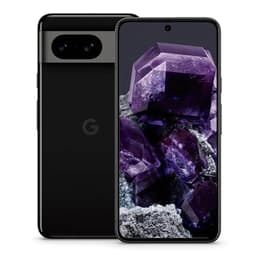
Google Pixel 8
Google Pixel 8
Starting at

Refurbished price:A$465.00

Versus A$1,245.00 new

See options
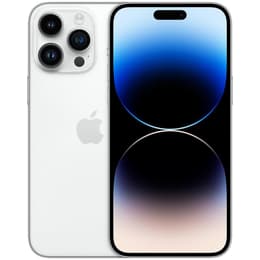
iPhone 14 Pro Max
iPhone 14 Pro Max
Starting at

Refurbished price:A$726.00

Versus A$1,899.00 new

See options

Ratings

The Google Pixel 8 (released in October 2023) and the iPhone 14 Pro Max (released in September 2022) represent distinct philosophies in the premium smartphone market. While the Pixel 8 emphasizes a compact design and advanced AI-driven software features, the iPhone 14 Pro Max offers a larger display and a deeply integrated ecosystem. Both devices operate on their respective proprietary operating systems, Android and iOS, providing users with different interfaces and application experiences. The choice between them often depends on preferences for device size, software environment, and specific hardware capabilities.

Scores

Durability

The longevity of a smartphone is influenced by its software support, physical durability, and ease of repair. These two devices offer different approaches to long-term usability.

  • Software Support: The Google Pixel 8 stands out with a commitment to seven years of operating system and security updates, extending its functional life until at least October 2030. In contrast, the iPhone 14 Pro Max typically receives major iOS updates for approximately five to six years from its release, with security updates often continuing for a few additional years.
  • Build Quality: The iPhone 14 Pro Max features a stainless steel frame and Ceramic Shield glass on the front, contributing to its robust feel and enhanced drop protection. The Pixel 8 uses an aluminum frame and Gorilla Glass Victus on both the front and back. Both devices carry an IP68 rating for dust and water resistance, though the iPhone 14 Pro Max is rated for submersion up to 6 meters for 30 minutes, compared to the Pixel 8's 1.5 meters for the same duration.
  • Repairability: The Pixel 8 has been noted for its improved internal design, making some repairs more accessible, with some assessments giving it a repairability score of 7 out of 10. The iPhone 14 Pro Max, while sharing a similar repairability score to its predecessor, presents challenges for unauthorized repairs due to software locks that can limit functionality if non-Apple-approved parts are used.

Release year

2023

2022

Compatible with latest Update

Yes

Yes

Operating system

Android

iOS

Foldable

No

No

Performance

Both smartphones deliver strong performance for daily tasks, but their underlying architectures and optimization strategies cater to different user demands.

  • System Responsiveness: The iPhone 14 Pro Max is engineered for demanding applications and intensive multitasking, allowing users to switch between complex apps and engage in high-end gaming without significant slowdowns. The Pixel 8 provides a smooth and intuitive experience for everyday interactions, excelling in smart software features and efficient navigation.
  • Multitasking and Gaming: With 6GB of RAM, the iPhone 14 Pro Max handles multiple applications and graphically intensive games with consistent fluidity. The Pixel 8, equipped with 8GB of RAM, offers ample capacity for running numerous apps simultaneously and managing various computational tasks.
  • Battery Behavior: The iPhone 14 Pro Max features a larger battery capacity, often providing all-day power even for heavy users. The Pixel 8, while having a slightly smaller battery, offers efficient power management and adaptive battery features that learn user habits to optimize longevity, with many users reporting good battery life after an initial learning period.

Memory (GB)

8 GB

6 GB

Screen quality

The display experience is a key differentiator between these two devices, primarily due to their physical dimensions and specific display technologies.

  • Display Technology and Size: Both phones feature vibrant OLED displays, offering deep blacks and rich colors. The iPhone 14 Pro Max boasts a larger 6.7-inch Super Retina XDR OLED display, providing an expansive viewing area. The Pixel 8 features a more compact 6.2-inch Actua OLED display, which is suitable for one-handed use.
  • Brightness and Clarity: Both displays offer high brightness levels, with the Pixel 8 reaching a peak of 2000 nits and the iPhone 14 Pro Max also achieving 2000 nits peak brightness, ensuring good visibility in bright outdoor conditions. The iPhone 14 Pro Max has a resolution of 1290 x 2796 pixels (~460 ppi), while the Pixel 8 offers 1080 x 2400 pixels (~428 ppi), both delivering sharp and clear visuals.
  • Refresh Rate and Features: Both devices support a smooth 120Hz refresh rate, which makes scrolling and animations appear fluid. The iPhone 14 Pro Max includes an Always-On display and the Dynamic Island, which integrates notifications and activities into a dynamic area around the front camera. The Pixel 8 also features an Always-On display.

Resolution

1080 x 2400

1290 x 2796

Screen type

OLED

LTPO Super Retina XDR OLED

Audiovisual

Both smartphones offer advanced camera systems, but they excel in different aspects of photography and videography, catering to varied user preferences.

  • Rear Camera System: The iPhone 14 Pro Max features a versatile triple-camera setup, including a 48 MP main sensor, a 12 MP ultrawide lens, and a 12 MP telephoto lens with 3x optical zoom. The Google Pixel 8 comes with a dual-camera system, comprising a 50 MP wide main sensor and a 12 MP ultrawide lens.
  • Photography Performance: The iPhone 14 Pro Max is praised for its excellent overall camera performance, particularly in low-light conditions and for its detailed, sharp images. The Pixel 8 leverages its computational photography capabilities to produce impressive photos, with features like Pixel Shift and Ultra HDR, though some users note its reliance on AI post-processing.
  • Video Recording and Features: The iPhone 14 Pro Max offers extensive video capabilities, including 4K recording at up to 60fps, 10-bit HDR, Dolby Vision HDR, ProRes video, and Cinematic mode for depth-of-field effects. The Pixel 8 also supports 4K video recording at up to 60fps, with features like gyro-EIS and OIS for stable footage. Both devices provide stereo sound recording.

Main camera

50 megapixels

48 megapixels

Front camera

10.5 megapixels

12 megapixels

Miscellaneous

Beyond the core features, several practical elements contribute to the overall user experience and daily functionality of these devices.

  • Connectivity and Ports: The Google Pixel 8 supports the latest Wi-Fi 7 standard, along with Bluetooth 5.3 and USB Type-C 3.2 for charging and data transfer. The iPhone 14 Pro Max supports Wi-Fi 6 and Bluetooth 5.3, utilizing Apple's proprietary Lightning port.
  • Biometric Security: The iPhone 14 Pro Max relies on Face ID for secure facial recognition. The Pixel 8 features an under-display optical fingerprint sensor and also offers face unlock functionality.
  • Dimensions and Handling: The Pixel 8 is a more compact device, measuring 150.5 x 70.8 x 8.9 mm and weighing 187 g, making it easier for one-handed use. The iPhone 14 Pro Max is a larger and heavier device at 160.7 x 77.6 x 7.85 mm and 240 g, which some users find substantial.

Weight

187 oz

120 oz

Screen size (in)

6.2

6.7

SIM card

Physical SIM + eSIM

Physical SIM + eSIM

Carrier compatibility

Unlocked

Unlocked

Connector

USB-C

Lightning

User feedback for the Google Pixel 8 often highlights its snappy performance, excellent camera capabilities in various lighting conditions, and the benefit of extended software support. Some users have noted concerns regarding potential paint chipping, occasional software bugs, or average battery life, though many report battery performance improving over time with adaptive learning. The iPhone 14 Pro Max receives consistent praise for its robust hardware, vibrant display, exceptional battery life that often lasts a full day even for heavy users, and its powerful camera system, particularly for video. Common criticisms include the device's substantial weight and size, and some users express a desire for USB-C connectivity instead of the Lightning port.

Users prioritizing a compact form factor, a long software support timeline, and advanced AI-driven camera features may find the Google Pixel 8 well-suited to their needs. Its focus on computational photography and a pure Android experience appeals to those who value Google's software innovations. Conversely, users who prioritize a large, immersive display, industry-leading video capabilities, and consistently strong battery performance, along with a robust ecosystem, may lean toward the iPhone 14 Pro Max. Its larger size and premium build are often favored by those who consume a lot of media or require a device for demanding tasks. Both devices offer compelling experiences, and considering a quality-assured refurbished option for either model can be an eco-friendly alternative for making an informed choice.
See all articles

Our recent comparisons