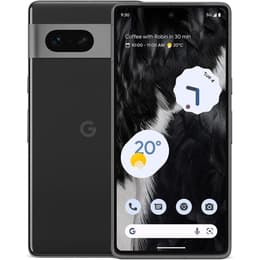
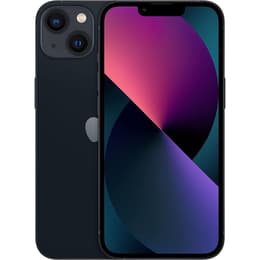

Google Pixel 7 vs iPhone 13

Google Pixel 7
Google Pixel 7
Starting at

Refurbished price:A$348.00

Versus A$879.00 new

See options
iPhone 13
iPhone 13
Starting at

Refurbished price:A$415.00

Versus A$1,099.00 new

See options

Ratings

The Google Pixel 7 (released October 2022) and the iPhone 13 (released September 2021) are both capable smartphones from their respective manufacturers. While the Pixel 7 operates on Android, and the iPhone 13 runs on iOS, they both offer robust features for everyday use. Key differentiators include their camera philosophies, display technologies, and overall design approaches.

Scores

Durability

When considering the long-term usability of these devices, several factors come into play, including their release timelines, software support, and physical durability.

  • Release Timeline: The iPhone 13 was released in September 2021, making it approximately a year older than the Google Pixel 7, which launched in October 2022. This difference in age can influence the remaining period of official software support.
  • Software Longevity: Apple typically provides iOS updates for about five to six years from an iPhone's release. The iPhone 13, launched with iOS 15, is compatible with iOS 18 and is expected to receive updates for a few more years. Google promises three major OS updates and five years of security patches for the Pixel 7, which launched with Android 13 and is upgradable to Android 15. This means both devices offer a substantial period of software relevance.
  • Repairability: The iPhone 13 initially received a repairability score of 5/10 from iFixit, which later improved to 6/10 with an iOS update that addressed Face ID issues after screen replacements. The Google Pixel 7 generally scores around 6/10 for repairability, with screen replacements being relatively straightforward, though battery removal can be challenging due to strong adhesive, and the charging port is soldered to the motherboard. Both devices feature IP68 water and dust resistance, contributing to their overall durability.

Release year

2022

2021

Compatible with latest Update

Yes

Yes

Foldable

No

No

Performance

Both the Google Pixel 7 and the iPhone 13 deliver smooth performance for daily tasks, but they approach processing power and battery management with distinct strategies.

  • Everyday Responsiveness: The iPhone 13, powered by its custom-designed chip, offers a highly responsive user experience, handling demanding applications and multitasking with ease. The Google Pixel 7, featuring its own custom-designed processor, also provides robust performance, particularly excelling in machine learning tasks and efficient handling of its advanced camera features.
  • Battery Behavior: The iPhone 13 features a battery capacity that allows for extended usage, with users often reporting it lasting through a full day of moderate to heavy use, and up to 19 hours of video playback. The Pixel 7, equipped with a larger battery, also offers refined battery life through smart optimization, ensuring reliable power throughout the day.
  • Storage Options: The iPhone 13 is available with 128GB, 256GB, or 512GB of internal storage. The Google Pixel 7 offers 128GB or 256GB storage configurations. Neither device supports expandable storage.

Memory (GB)

8 GB

4 GB

Screen quality

The visual experience on both devices is a highlight, though they differ in display technology and refresh rates.

  • Display Technology and Clarity: The iPhone 13 features a 6.1-inch Super Retina XDR OLED display, known for its deep blacks, vibrant colors, and sharp resolution of 1170 x 2532 pixels (460 ppi). The Google Pixel 7 comes with a slightly larger 6.3-inch OLED display, offering a resolution of 1080 x 2400 pixels (416 ppi). Both displays provide excellent clarity for viewing content.
  • Brightness and Outdoor Visibility: The iPhone 13's display reaches a typical maximum brightness of 800 nits and a peak of 1200 nits for HDR content, ensuring good visibility in various lighting conditions. The Pixel 7's display also offers strong brightness, with a peak of 1400 nits, which contributes to comfortable viewing outdoors.
  • Refresh Rate: A notable difference is the refresh rate; the iPhone 13 has a standard 60 Hz refresh rate. The Google Pixel 7, however, features a smoother 90 Hz refresh rate, which can result in a more fluid scrolling experience and more responsive interactions.

Resolution

1080 x 2400

1170 x 2532

Screen type

AMOLED

Super Retina XDR OLED

Audiovisual

Both smartphones offer advanced camera systems, but they excel in different areas, catering to varying photography preferences.

  • Rear Camera Systems: The iPhone 13 features a dual 12MP camera system, comprising a wide-angle lens with sensor-shift optical image stabilization (OIS) and an ultrawide lens. The Google Pixel 7 boasts a dual-camera setup with a 50MP wide-angle main sensor (with OIS, PDAF, and Laser AF) and a 12MP ultrawide lens. The Pixel 7's larger main sensor allows for more detailed images, especially in challenging lighting.
  • Photography Features and Performance: The iPhone 13 introduces Cinematic mode for video and Photographic Styles, enhancing creative control and video storytelling. It also offers improved low-light performance compared to its predecessors. The Pixel 7 is renowned for its computational photography, including features like Night Sight, Astrophotography, and a 2x Super Res Zoom that crops from the 50MP sensor to deliver high-quality zoomed images. Users often praise the Pixel 7 for its consistent image quality and excellent low-light capabilities.
  • Video Recording and Front Camera: Both devices are capable of recording 4K video at 30/60 frames per second. For selfies, the iPhone 13 has a 12MP front camera, while the Pixel 7 features a 10.8MP ultrawide front camera.

Main camera

50 megapixels

12 megapixels

Front camera

10.8 megapixels

12 megapixels

Miscellaneous

Beyond core specifications, several practical elements contribute to the overall user experience of these devices.

  • Connectivity: Both the iPhone 13 and Google Pixel 7 support 5G connectivity for fast mobile data speeds. The iPhone 13 uses Wi-Fi 6 and Bluetooth 5.0, while the Pixel 7 features the newer Wi-Fi 6e and Bluetooth 5.2, offering potentially faster and more stable wireless connections. Both include NFC for contactless payments.
  • Ports and Biometrics: The iPhone 13 utilizes Apple's proprietary Lightning port for charging and data transfer. The Google Pixel 7 uses a USB-C port, a more widely adopted standard. For security, the iPhone 13 relies on Face ID for facial recognition. The Pixel 7 features an under-display fingerprint sensor for biometric authentication.
  • Design and Handling: The iPhone 13 has a compact design, weighing 174g with dimensions of 146.7 x 71.5 x 7.65 mm. It features a Ceramic Shield front cover for enhanced durability. The Google Pixel 7 is slightly larger and heavier at 197g and measures 155.6 x 73.2 x 8.7 mm, and is protected by Gorilla Glass Victus.

Weight

212 oz

173 oz

Screen size (in)

6.3

6,1

SIM card

Physical SIM + eSIM

Physical SIM + eSIM

Carrier compatibility

Unlocked

Unlocked

The Google Pixel 7 and iPhone 13 each offer a compelling smartphone experience, tailored to different user preferences. User feedback often highlights the Pixel 7's exceptional camera capabilities, particularly its computational photography features like Night Sight and Super Res Zoom, which consistently produce high-quality images, even in challenging conditions. Some users appreciate its unique Android experience and the fluidity of its 90 Hz display. Criticisms sometimes point to its repairability challenges, especially regarding the soldered charging port and difficult-to-remove battery.

The iPhone 13 is frequently praised for its consistent performance, robust ecosystem, and reliable battery life that often lasts a full day. Its Super Retina XDR OLED display is noted for its vibrant colors and deep blacks. While its 60 Hz refresh rate is a point of comparison with newer devices, many users find the overall iOS experience smooth and intuitive. Early concerns about its repairability have been partially addressed through software updates.

Users prioritizing advanced computational photography, a higher refresh rate display, and the Android ecosystem may find the Google Pixel 7 well-suited to their needs. Conversely, users who value a highly integrated ecosystem, a slightly more compact design, and a proven track record of long-term software support might lean towards the iPhone 13. Both devices represent solid choices, and considering a quality-assured refurbished option for either model can be a sustainable way to acquire these capable smartphones.
See all articles

Our recent comparisons