
Google Pixel 7 vs Google Pixel 9 Pro Fold

Google Pixel 7
Google Pixel 7
Starting at

Refurbished price:A$348.00

Versus A$879.00 new

See options
Google Pixel 9 Pro Fold
See options

Ratings

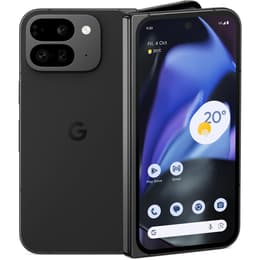
The Google Pixel 7, released in October 2022, is a traditional slab-style smartphone, offering a streamlined Android experience. In contrast, the Google Pixel 9 Pro Fold, launched in September 2024, represents Google's advanced foldable technology, providing a versatile dual-screen form factor. These devices cater to different user preferences, with the Pixel 7 focusing on a conventional smartphone experience and the Pixel 9 Pro Fold offering an expansive, adaptable display for enhanced productivity and media consumption.

Scores

Durability

When considering the longevity of these devices, their release timelines and Google's software support policies are key differentiators.

  • Release Timeline: The Pixel 7 was released in October 2022, making it an earlier generation device compared to the Pixel 9 Pro Fold, which launched in September 2024. This difference in release date directly impacts their expected support lifespans.
  • Software Support: The Pixel 7 is guaranteed five years of OS and security updates from its release, extending its support until 2027. The Pixel 9 Pro Fold, being a newer device, benefits from Google's extended support policy, promising seven years of OS and security updates, meaning it will be supported until 2031.
  • Physical Durability: Both devices offer robust build quality. The Pixel 7 features Gorilla Glass Victus for screen protection and an IP68 rating for dust and water resistance. The Pixel 9 Pro Fold, while also featuring an IPX8 water resistance rating, incorporates Gorilla Glass Victus 2 on its cover and back, along with a durable stainless steel hinge and aerospace-grade aluminum cover designed for the demands of a foldable form factor.

Release year

2022

2024

Compatible with latest Update

Yes

Yes

Foldable

No

Yes

Performance

The performance capabilities of the Pixel 7 and Pixel 9 Pro Fold reflect their respective generations of Google's custom silicon and design philosophies.

  • Processing Power: The Pixel 7 is powered by the Google Tensor G2 processor, which capably handles daily tasks, app loading, and multitasking with smoothness. The Pixel 9 Pro Fold, featuring the newer Google Tensor G4 processor, offers enhanced capabilities for more demanding applications, advanced AI features, and seamless transitions between multiple tasks, benefiting from its more recent architecture.
  • Multitasking and Responsiveness: The Pixel 7 comes with 8 GB of RAM, providing a responsive experience for typical smartphone usage. The Pixel 9 Pro Fold elevates this with 16 GB of RAM, which is particularly advantageous for managing numerous applications simultaneously, running complex AI models, and ensuring a fluid experience across its expansive display configurations.
  • Storage Options: Both devices offer ample storage for applications, media, and files. The Pixel 7 is available with 128 GB or 256 GB of internal storage. The Pixel 9 Pro Fold provides options for 256 GB or 512 GB of storage, catering to users who require more space for larger files or extensive app libraries.

Memory (GB)

8 GB

16 GB

Screen quality

The display experience is a primary distinguishing factor between these two Pixel devices, owing to their fundamental form factor differences.

  • Display Technology and Clarity: The Pixel 7 features a 6.3-inch AMOLED display, offering vibrant colors and deep blacks with a Full HD+ resolution (2400x1080 pixels) and a pixel density of 416 ppi, providing clear and sharp visuals for everyday use. The Pixel 9 Pro Fold, as a foldable, offers two OLED displays. Its cover display measures 6.3 inches with a 1080 x 2424 resolution and 422 ppi, while the internal, unfolded display is a larger 8.0-inch panel with a 2076 x 2152 resolution and 373 ppi, providing an expansive canvas for content.
  • Refresh Rate and Smoothness: The Pixel 7's display has a 90 Hz refresh rate, contributing to smoother scrolling and a more fluid visual experience compared to standard 60 Hz screens. The Pixel 9 Pro Fold features a more adaptive refresh rate on both its displays, ranging from 60 Hz to 120 Hz on the cover screen and an even more dynamic 1 Hz to 120 Hz on the internal display. This allows for very smooth motion when needed and power efficiency during static content viewing.
  • Brightness and Viewing Experience: Both devices support HDR for enhanced contrast and color. The Pixel 7 offers good brightness for various lighting conditions. The Pixel 9 Pro Fold's displays boast a significantly higher peak brightness of 2700 nits, ensuring excellent visibility even in bright outdoor environments.

Resolution

1080 x 2400

2076 x 2152

Screen type

AMOLED

Foldable LTPO OLED

Audiovisual

Both the Pixel 7 and Pixel 9 Pro Fold leverage Google's computational photography strengths, though with differences in hardware and capabilities.

  • Rear Camera System: The Pixel 7 is equipped with a dual-camera system on the rear, featuring a 50 MP wide-angle lens with optical image stabilization (OIS) and a 12 MP ultrawide lens with a 114˚ field of view. The Pixel 9 Pro Fold offers a triple-camera setup, including a 48 MP wide-angle lens with OIS, a 10.5 MP ultrawide lens with a wider 127˚ field of view, and a 10.8 MP telephoto lens capable of 5x optical zoom and up to 20x Super Res Zoom, also with OIS.
  • Photography Performance: The Pixel 7 is known for its consistent image quality, natural colors, and strong low-light performance, making it a reliable choice for everyday photography. The Pixel 9 Pro Fold builds upon this foundation with its more versatile hardware, offering enhanced zoom capabilities and potentially improved detail capture due to its newer sensor technology and advanced image processing.
  • Front-Facing Cameras and Video: The Pixel 7 features a 10.8 MP front camera suitable for selfies and video calls. The Pixel 9 Pro Fold includes two front-facing cameras: a 10 MP sensor on the cover display and another 10 MP sensor on the internal display, providing flexibility for video calls and selfies in both folded and unfolded states. Both devices are capable of recording 4K video at 30 or 60 frames per second.

Main camera

50 megapixels

48 megapixels

Front camera

10.8 megapixels

10 megapixels

Miscellaneous

Beyond core specifications, several practical elements contribute to the overall user experience of these two Google Pixel devices.

  • Connectivity and Ports: Both the Pixel 7 and Pixel 9 Pro Fold support 5G connectivity for fast mobile data. The Pixel 7 includes Wi-Fi 6 and Bluetooth 5.2. The Pixel 9 Pro Fold features more advanced connectivity with Wi-Fi 7 and Bluetooth 5.3, offering potentially faster and more stable wireless connections. Both devices utilize a USB-C port for charging and data transfer. The Pixel 9 Pro Fold also introduces satellite connectivity for emergency services, a feature not present on the Pixel 7.
  • Biometric Security: The Pixel 7 uses an under-display optical fingerprint scanner for secure unlocking. The Pixel 9 Pro Fold also incorporates a fingerprint sensor, likely side-mounted for accessibility in both folded and unfolded modes, and may offer enhanced face recognition capabilities.
  • Design and Handling: The Pixel 7 is a compact slab phone, measuring 155.6 x 73.2 x 8.7 mm and weighing 197 g, making it comfortable for one-handed use. The Pixel 9 Pro Fold, while heavier at 257 g, offers a transformative experience. When folded, it is 10.5 mm thick, and when unfolded, it is remarkably thin at 5.1 mm, providing a large tablet-like display in a portable form factor.

Weight

212 oz

257 oz

Screen size (in)

6.3

8.0

SIM card

Physical SIM + eSIM

Physical SIM + eSIM

Carrier compatibility

Unlocked

Unlocked

The Google Pixel 7 and Google Pixel 9 Pro Fold offer distinct experiences tailored to different user needs. Users often praise the Pixel 7 for its straightforward, reliable performance, excellent camera capabilities, and consistent software experience. Common feedback highlights its balanced size and robust build as practical advantages for daily use. Some users, however, might find its 90 Hz display and Tensor G2 processor, while capable, not as cutting-edge as newer flagships.

The Pixel 9 Pro Fold, on the other hand, receives acclaim for its innovative foldable design, offering an expansive internal display that enhances productivity and media consumption. Users appreciate the versatility of having both a traditional smartphone and a small tablet in one device, along with its extended software support and advanced processing power. Criticisms often revolve around the inherent trade-offs of foldable technology, such as its weight and thickness compared to traditional smartphones, though the Pixel 9 Pro Fold has made strides in reducing these.

Users prioritizing a compact, traditional smartphone form factor with a strong camera and reliable performance will find the Pixel 7 well-suited to their needs. Those who value a larger, adaptable screen for multitasking, content creation, or immersive media viewing, and who are willing to embrace the foldable form factor, will likely lean towards the Pixel 9 Pro Fold. Both devices represent Google's commitment to a clean Android experience and strong camera performance. For those considering these options, exploring quality-assured refurbished alternatives can be an eco-friendly way to access these technologies.


See all articles

Our recent comparisons