Compare models
Google Pixel 6a vs iPhone 17
- 1-year warranty
- Free standard shipping
- Free 30-day returns
Differences at a glance
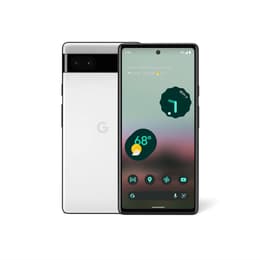
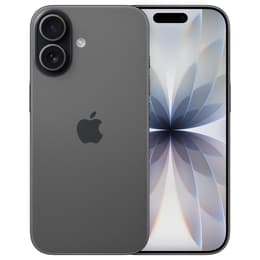
The Google Pixel 6a (2022) and the iPhone 17 (2025) represent different generations and distinct operating ecosystem philosophies within the smartphone market. While the Pixel 6a focuses on streamlined everyday utility running Android, the iPhone 17 introduces modern hardware advancements and runs on iOS. These devices cater to distinct user expectations regarding technology generation and platform preference.
Available Models
Colour
Storage
Scores
Durability
Lifecycle expectations differ significantly due to the release timeline gap, influencing software longevity and structural resilience.
- Software longevity: The iPhone 17 benefits from an extended multi-year support window starting from its recent launch, whereas the Pixel 6a approaches the latter stages of its primary software update cycle.
- Build durability: The iPhone 17 incorporates advanced scratch-resistant front glass protection, while the Pixel 6a relies on traditional reinforced glass and an aluminum frame combined with a plastic back.
- Practical lifespan: Users selecting the iPhone 17 can anticipate longer hardware relevance, whereas the Pixel 6a serves as a quality-assured refurbished option for those needing functional short-term reliability.
Release year
2022
2025
Compatible with latest Update
Yes
Yes
Foldable
No
No
Performance
Processing capabilities and day-to-day operation reflect the multi-year technological gap between these two models.
- Multitasking and responsiveness: The iPhone 17 handles demanding applications and heavy multitasking with high thermal efficiency, while the Pixel 6a manages routine daily tasks like web browsing and messaging smoothly.
- Storage capacity: The iPhone 17 starts with higher baseline internal storage options, whereas the Pixel 6a typically offers a standard fixed storage tier suited for basic media libraries.
- Battery behavior: The iPhone 17 optimizes power efficiency for extended daily use, while the Pixel 6a's battery capacity requires standard daily recharging for active users.
Screen quality
Visual output and display responsiveness vary notably in refresh rates, brightness levels, and panel sizes.
- Display smoothness: The iPhone 17 features an adaptive high refresh rate display technology for fluid scrolling, compared to the standard refresh rate panel found on the Pixel 6a.
- Outdoor visibility: The iPhone 17 achieves significantly higher peak outdoor brightness levels, whereas the Pixel 6a provides adequate visibility under standard daylight conditions.
- Panel dimensions: The iPhone 17 offers a slightly larger viewing area with narrow bezels, while the Pixel 6a maintains a more compact, pocket-friendly form factor.
Audiovisual
Imaging hardware and media capture configurations cater to different photography styles and video recording requirements.
- Camera versatility: The iPhone 17 utilizes dual high-resolution sensors across its main and ultra-wide lenses, whereas the Pixel 6a employs a reliable dual-camera layout tuned through computational photography.
- Low-light performance: Both devices capture clear low-light imagery, though the newer sensor architecture on the iPhone 17 resolves fine details with enhanced clarity in dim environments.
- Video and audio output: The iPhone 17 supports high-resolution video stabilization formats and detailed stereo recording, compared to standard multi-microphone capture and recording on the Pixel 6a.
Front camera
8 megapixels
18 megapixels
Miscellaneous
Physical dimensions, connectivity standards, and daily handling characteristics differ across both form factors.
- Connectivity standards: The iPhone 17 supports advanced wireless networking protocols and modern cellular bands, while the Pixel 6a accommodates standard 5G and Wi-Fi configurations.
- Physical dimensions: The Pixel 6a is noticeably lighter and narrower for single-handed use, whereas the iPhone 17 carries a slightly heavier build to accommodate its larger screen and internal components.
- Authentication methods: The iPhone 17 relies on secure facial recognition, while the Pixel 6a features an under-display fingerprint sensor.
Weight
250 oz
177 oz
Screen size (in)
6.1
6.3
SIM card
Physical SIM + eSIM
Physical SIM + eSIM
Carrier compatibility
Unlocked
Unlocked
What the community thinks
User discussions across community forums highlight distinct preferences for each device based on everyday requirements. Owners of the Google Pixel 6a frequently praise its clean software interface, reliable everyday snapshot camera, and compact footprint that makes it comfortable to hold. On the other hand, common criticisms involve its standard refresh rate screen and battery life that diminishes more quickly under intensive workloads. Users of the iPhone 17 often highlight the fluidity of the high refresh rate display, robust build quality, and reliable longevity as major strengths, though some note the heavier physical weight compared to older models.
When deciding between these options, specific user priorities serve as helpful guides. Users prioritizing a lightweight form factor, a straightforward operating system, and a compact design suited for basic tasks will find the Pixel 6a well-suited to their needs. Conversely, users prioritizing modern display technologies, extended software support windows, and advanced multimedia capabilities will lean toward the iPhone 17. Evaluating these distinct attributes helps consumers choose the device that aligns with their practical routine.