
Galaxy S22 Ultra 5G vs iPhone 12

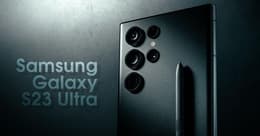
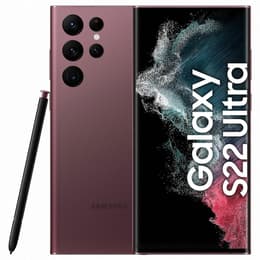
Galaxy S22 Ultra 5G
Galaxy S22 Ultra 5G
Starting at

Refurbished price:A$459.00

Versus A$2,405.00 new

See options
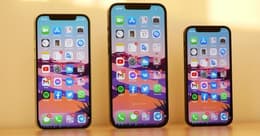
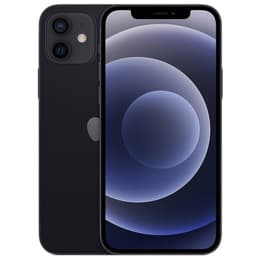
iPhone 12
iPhone 12
Starting at

Refurbished price:A$303.00

Versus A$1,129.00 new

See options

Ratings

The Samsung Galaxy S22 Ultra 5G, released in February 2022, and the Apple iPhone 12, launched in October 2020, represent distinct approaches to high-end smartphone design and functionality. While both offer robust performance and advanced camera systems, they differ significantly in their operating systems, display technology, and integrated features. The Galaxy S22 Ultra 5G emphasizes a large, versatile display with stylus integration, whereas the iPhone 12 focuses on a streamlined user experience within the Apple ecosystem.

Scores

Durability

When considering the long-term usability of these devices, their release timelines and software support policies are key factors. The Galaxy S22 Ultra 5G is a more recent device, offering a longer expected period of major software updates compared to the iPhone 12.

  • Software Support: The Samsung Galaxy S22 Ultra 5G launched with Android 12 and is expected to receive four years of major Android operating system updates and five years of security updates from its release. This suggests major OS updates will likely continue until Android 16 (around 2026), with security patches extending into 2027. The iPhone 12, released earlier, typically receives major iOS updates for approximately five to six years from its launch, with security support often extending beyond that. This means its major iOS updates are likely to continue until around 2027-2030.
  • Repairability: The iPhone 12 received an iFixit repairability score of 6 out of 10, indicating that while some components are modular, repairs can be challenging due to software locks for certain parts, such as the camera and screen, requiring proprietary tools for full functionality. Specific repairability scores for the Galaxy S22 Ultra 5G are not as widely published, but generally, Android flagships can present varying degrees of repair complexity.
  • Practical Lifespan: Both devices are built to last, but the Galaxy S22 Ultra 5G's newer release date and longer guaranteed software update policy may offer a slightly extended period of receiving the latest features and security enhancements. Users prioritizing the absolute longest software longevity might find the S22 Ultra 5G to be a more current option.

Release year

2022

2020

Compatible with latest Update

Yes

Yes

Operating system

Android

iOS

Foldable

No

No

Performance

The performance of both the Galaxy S22 Ultra 5G and the iPhone 12 is robust, designed to handle demanding applications and multitasking. However, differences in their internal architectures and available memory configurations can influence their real-world responsiveness.

  • Processing Power: The Galaxy S22 Ultra 5G is powered by a current-generation processor, either the Qualcomm Snapdragon 8 Gen 1 or the Exynos 2200, depending on the region. This hardware enables smooth operation for intensive tasks, including advanced gaming and complex productivity applications. The iPhone 12 features the A14 Bionic processor, which was noted at its release for delivering significant performance gains and strong capabilities in handling demanding apps and multitasking.
  • Multitasking and RAM: The Galaxy S22 Ultra 5G offers more generous RAM configurations, with 8GB for the 128GB storage model and 12GB for higher storage variants (256GB, 512GB, 1TB). This larger RAM capacity can benefit users who frequently switch between many applications or run several memory-intensive processes simultaneously, allowing more apps to remain active in the background. The iPhone 12 comes with 4GB of RAM, which, combined with iOS's efficient memory management, provides a fluid user experience for most daily tasks and multitasking scenarios.
  • Storage Options: The Galaxy S22 Ultra 5G provides a wider range of internal storage options, starting from 128GB and going up to 1TB, catering to users with extensive storage needs for media, applications, and large files. The iPhone 12 is available with 64GB, 128GB, or 256GB of internal storage, which is fixed and cannot be expanded via external cards.

Memory (GB)

12 GB

4 GB

Screen quality

Both devices offer high-quality displays, but they differ in size, technology, and refresh rates, impacting the visual experience for various uses.

  • Display Technology and Size: The Samsung Galaxy S22 Ultra 5G features a large 6.8-inch Dynamic AMOLED 2X display, providing vibrant colors, deep blacks, and excellent contrast. The iPhone 12 has a 6.1-inch Super Retina XDR OLED display, also known for its vibrant colors and deep blacks. The larger screen of the S22 Ultra 5G offers more screen real estate for media consumption and productivity.
  • Resolution and Clarity: The Galaxy S22 Ultra 5G boasts a high resolution of 1440 x 3088 pixels (WQHD+), resulting in a very sharp and detailed image. The iPhone 12 offers a resolution of 2532 x 1170 pixels, which provides clear and crisp visuals for its screen size.
  • Refresh Rate and Brightness: The Galaxy S22 Ultra 5G includes an adaptive 120Hz refresh rate, which contributes to smoother scrolling and more fluid animations, enhancing the overall user interaction and gaming experience. It also features a bright display with Vision Booster for improved outdoor visibility. The iPhone 12 has a standard 60Hz refresh rate, which is sufficient for most daily tasks but does not offer the same level of smoothness as a higher refresh rate display. Both displays offer good brightness levels for various lighting conditions.

Resolution

1440 x 3088

1170 x 2532

Screen type

Dynamic AMOLED 2X

Super Retina XDR OLED

Audiovisual

Both smartphones are equipped with advanced camera systems capable of capturing high-quality photos and videos, though their configurations and specific strengths vary.

  • Rear Camera System: The Samsung Galaxy S22 Ultra 5G features a versatile quad-camera setup, including a 108MP main sensor, a 12MP ultra-wide lens, and two 10MP telephoto lenses offering 3x and 10x optical zoom, alongside a 100x Space Zoom feature. This allows for significant flexibility in capturing subjects at various distances. The iPhone 12 comes with a dual 12MP camera system, comprising a wide lens with a brighter ƒ/1.6 aperture and an ultra-wide lens.
  • Low-Light Photography and Video: The Galaxy S22 Ultra 5G includes a dedicated Night Mode and advanced processing for improved low-light performance. The iPhone 12 also features Night mode, Deep Fusion, and Smart HDR 3, which contribute to its strong low-light photography capabilities. For video, the iPhone 12 is notable for its HDR video recording with Dolby Vision up to 4K at 30 frames per second, and its low-light video quality was highly praised at its release. The S22 Ultra 5G supports 8K video recording and offers Super-steady Video stabilization.
  • Front Camera and Audio: The Galaxy S22 Ultra 5G is equipped with a high-resolution 40MP front camera. The iPhone 12 features a 12MP TrueDepth front camera with Night mode. Both devices offer good microphone quality for calls and recording, and stereo speakers for media consumption.

Main camera

108 megapixels

12 megapixels

Front camera

40 megapixels

12 megapixels

Miscellaneous

Beyond core performance and imaging, several practical features and design elements differentiate these two smartphones, influencing daily usability and overall experience.

  • Connectivity: Both devices support 5G connectivity, enabling faster mobile data speeds where available. The Galaxy S22 Ultra 5G supports Wi-Fi 6E and Bluetooth 5.2, offering advanced wireless performance. The iPhone 12 supports Wi-Fi 6 and Bluetooth 5.0.
  • Ports and Biometrics: The Galaxy S22 Ultra 5G typically uses a USB-C port for charging and data transfer, and features an under-display fingerprint sensor for secure unlocking. The iPhone 12 utilizes Apple's proprietary Lightning connector and relies on Face ID for biometric authentication.
  • Design and Handling: The Galaxy S22 Ultra 5G has a larger form factor, measuring 163.3 x 77.9 x 8.9 mm, which contributes to its expansive display but also results in a heavier feel. The iPhone 12, at 146.7 x 71.5 x 7.4 mm, is more compact and features a flat-edged design. The S22 Ultra 5G also integrates a built-in S Pen, offering enhanced productivity and creative input. The iPhone 12 features a Ceramic Shield front cover for enhanced durability.

Weight

228 oz

164 oz

Screen size (in)

6.8

6.1

Network

5G

5G

SIM card

Physical SIM + eSIM

Physical SIM + eSIM

Carrier compatibility

Unlocked

Unlocked

User feedback for the Samsung Galaxy S22 Ultra 5G frequently highlights its stunning display, versatile and powerful camera system with extensive zoom capabilities, and the integrated S Pen as significant advantages. The long-lasting battery life is also a common praise point, supporting extended usage throughout the day. Some users, however, note its large size and weight as a factor in handling. For the iPhone 12, users often commend its strong overall performance, the quality of its OLED display, and its impressive video recording capabilities, particularly in low light. Criticisms sometimes revolve around its battery life, especially when actively using 5G connectivity, which can lead to more frequent charging for heavy users.

Users prioritizing a large, expansive display for media consumption, detailed photography with extensive zoom, and the added functionality of a built-in stylus for productivity and creative tasks may find the Samsung Galaxy S22 Ultra 5G well-suited to their needs. Its more recent release also offers a longer window for major software updates. Conversely, individuals who prefer a more compact device, a streamlined operating system experience, and excellent video recording capabilities, particularly in challenging lighting conditions, may lean towards the iPhone 12. Both devices offer robust performance for everyday use and demanding applications.

For those considering either of these capable smartphones, exploring quality-assured refurbished options can provide an eco-friendly alternative, extending the life cycle of these devices and contributing to sustainable consumption.


See all articles

Our recent comparisons