Galaxy A51 vs iPhone 12

Galaxy A51
Galaxy A51
Starting at

Refurbished price:A$196.16

Versus A$592.00 new

See options
iPhone 12
iPhone 12
Starting at

Refurbished price:A$303.00

Versus A$1,129.00 new

See options

Ratings

The Samsung Galaxy A51, released in late 2019 and early 2020 with its 5G variants, and the iPhone 12, launched in October 2020, represent different approaches to smartphone design and functionality. While the Galaxy A51 offers a versatile camera system and expandable storage within the Android ecosystem, the iPhone 12 focuses on a powerful processor, advanced display technology, and robust build quality within Apple's iOS platform.

Scores

Durability

When considering the long-term usability of these devices, several factors come into play, including their release timelines, software support, and repairability.

  • Release Timeline: The Samsung Galaxy A51 first arrived in December 2019, with its 5G versions following in April and August 2020. The iPhone 12 was released later, in October 2020. This difference in launch dates means the iPhone 12 benefits from a slightly more recent starting point for software updates and component longevity.
  • Software Longevity: The Galaxy A51 launched with Android 10 and is upgradable to Android 13. Apple typically provides longer software support for its devices; the iPhone 12, which launched with iOS 14, is compatible with iOS 26 as of the current date, suggesting a longer period of receiving the latest operating system features and security updates.
  • Repairability: The iPhone 12 received an initial iFixit repairability score of 6 out of 10, indicating that many components are replaceable. However, some repairs, particularly for the camera and screen, may require Apple's proprietary system configuration tools to function fully without warnings. The Galaxy A51, while not having a widely published iFixit score, generally benefits from a design that allows for more straightforward component replacement by independent repair services.

Release year

2019

2020

Compatible with latest Update

No

Yes

Operating system

Android

iOS

Foldable

No

No

Performance

The performance of a smartphone is crucial for daily tasks, from app usage to multitasking and gaming. Both devices offer distinct experiences in this regard.

  • Processor Capabilities: The iPhone 12 is equipped with a processor designed for demanding applications and efficient multitasking, resulting in smooth navigation and quick app loading times. The Galaxy A51, depending on the variant, uses an Exynos 9611 or Exynos 980/Snapdragon 765G processor, which handles everyday tasks competently but may show limitations with more intensive applications or graphically demanding games compared to the iPhone 12.
  • Storage and RAM: The iPhone 12 offers internal storage options of 64GB, 128GB, and 256GB, without the possibility of expansion. It comes with 4GB of RAM, which contributes to its fluid multitasking capabilities. The Galaxy A51 provides more flexibility with 64GB or 128GB internal storage, expandable up to 512GB via a microSD card, and RAM options ranging from 4GB to 8GB. This expandable storage is a notable advantage for users who prefer to store a large volume of media or documents directly on their device.
  • Battery Behavior: The iPhone 12 features a 2815 mAh battery, supporting up to 17 hours of video playback, and offers 20W fast charging, along with MagSafe and Qi wireless charging. The Galaxy A51 has a larger 4000 mAh battery and supports 15W fast charging, which generally provides a full day of use for many users.

Memory (GB)

6 GB

4 GB

Screen quality

The visual experience is a primary interaction point for any smartphone, and both the Galaxy A51 and iPhone 12 offer different display technologies and characteristics.

  • Display Technology and Clarity: The iPhone 12 features a 6.1-inch Super Retina XDR OLED display, providing deep blacks, high contrast, and vibrant colors, with a resolution of 2532x1170 pixels at 460 pixels per inch (ppi). The Galaxy A51 comes with a 6.5-inch Super AMOLED Infinity-O display, offering a resolution of 1080x2400 pixels at approximately 405 ppi. Both technologies deliver rich colors, but the iPhone 12's OLED panel generally offers a higher pixel density and superior contrast.
  • Brightness and Refresh Rate: The iPhone 12's display can reach up to 625 nits typical brightness and 1200 nits peak brightness for HDR content, making it highly visible in various lighting conditions. Both devices feature a standard 60Hz refresh rate, which provides a smooth experience for most everyday interactions.
  • Screen Protection: The iPhone 12 incorporates a Ceramic Shield front cover, which Apple states offers enhanced drop performance. The Galaxy A51 uses Corning Gorilla Glass 3 for screen protection.

Resolution

1080 x 2400

1170 x 2532

Screen type

Super AMOLED

Super Retina XDR OLED

Audiovisual

Photography and videography capabilities are key considerations for many users, and both smartphones offer distinct camera setups.

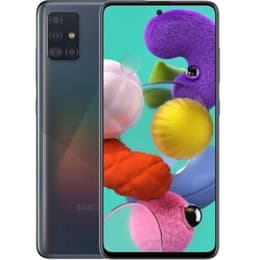
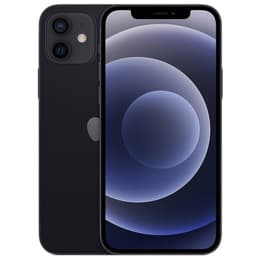
  • Rear Camera Systems: The iPhone 12 features a dual 12MP camera system, including a wide-angle lens with an f/1.6 aperture and optical image stabilization (OIS), and an ultrawide lens with an f/2.4 aperture and a 120-degree field of view. This setup is known for its consistent image quality and strong low-light performance. The Galaxy A51 boasts a quad-camera array, comprising a 48MP main sensor (f/2.0), a 12MP ultrawide lens (f/2.2), a 5MP macro lens (f/2.4), and a 5MP depth sensor (f/2.4). This provides more versatility for different types of shots, including close-ups.
  • Front Camera and Video Recording: For selfies, the iPhone 12 has a 12MP TrueDepth front camera with an f/2.2 aperture, capable of recording 4K video. The Galaxy A51 features a 32MP front camera with an f/2.2 aperture, also capable of 4K video recording. Both devices can record 4K video at 30 frames per second (fps) with their main cameras, but the iPhone 12 extends this to 60fps and supports HDR video recording with Dolby Vision up to 4K at 30fps.
  • Audio Experience: The iPhone 12 offers stereo speakers and features like spatial audio and Voice Isolation for calls. The Galaxy A51 includes a loudspeaker and a 3.5mm headphone jack, providing a traditional audio output option.

Main camera

48 megapixels

12 megapixels

Front camera

32 megapixels

12 megapixels

Miscellaneous

Beyond core performance and display, several practical elements differentiate these two smartphones, impacting daily convenience and user interaction.

  • Connectivity: The iPhone 12 supports 5G connectivity across both sub-6 GHz and mmWave bands, along with Wi-Fi 6 (802.11ax) and Bluetooth 5.0. The Galaxy A51 offers 4G connectivity, with specific variants supporting 5G, and includes Wi-Fi 5 (802.11ac) and Bluetooth 5.0. Both devices feature NFC for contactless payments.
  • Ports and Sensors: The iPhone 12 utilizes Apple's proprietary Lightning port for charging and data transfer, and includes Face ID for secure authentication. The Galaxy A51 features a USB-C port, a 3.5mm headphone jack, and an in-display fingerprint sensor for biometric security.
  • Design and Build Materials: The iPhone 12 has a flat-edged design with an aerospace-grade aluminum frame and a glass back, weighing 164 grams. It also boasts an IP68 rating for water and dust resistance, allowing submersion up to 6 meters for 30 minutes. The Galaxy A51 features a plastic frame and back, with a weight of 172 grams.

Weight

172 oz

164 oz

Screen size (in)

6.5

6.1

Network

4G

5G

SIM card

Physical SIM

Physical SIM + eSIM

Carrier compatibility

Unlocked

Unlocked

The Samsung Galaxy A51 and iPhone 12 cater to different user preferences, each excelling in specific areas. Users often praise the iPhone 12 for its powerful performance, vibrant OLED display, and robust build quality with features like Ceramic Shield and IP68 water resistance. Its consistent camera performance, especially in video recording with Dolby Vision, is also a frequent highlight. However, some users note that its battery life can be moderate for heavy usage, and the lack of expandable storage or a headphone jack might be a drawback for certain individuals.

The Galaxy A51 is frequently commended for its large, bright Super AMOLED display, versatile quad-camera system that includes a macro lens, and the practical advantage of expandable storage via microSD. Its inclusion of a 3.5mm headphone jack is also a positive for many. Criticisms sometimes point to its performance not matching higher-end devices and its battery life being average for power users.

Users prioritizing a powerful and fluid operating system experience, advanced display technology, and strong video capabilities, along with a more durable design, may find the iPhone 12 well-suited to their needs. Those who value camera versatility, expandable storage, a traditional headphone jack, and a larger display for media consumption might lean toward the Galaxy A51. Both devices offer a quality-assured refurbished option, providing an eco-friendly alternative for consumers looking to make an informed and sustainable choice.

See all articles

Our recent comparisons