
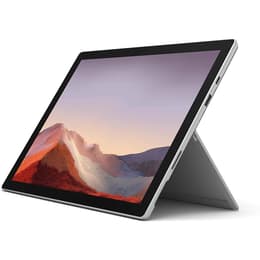

Dell Latitude 5300 13" vs Microsoft Surface Pro 7+ 12"

Dell Latitude 5300 13"
Starting at

Refurbished price:A$459.00

Versus A$750.00 new

See options
Microsoft Surface Pro 7+ 12"
Starting at

Refurbished price:A$491.00

Versus A$2,967.04 new

See options

The Dell Latitude 5300 13, released in 2019, is a business-oriented laptop designed for productivity, while the Microsoft Surface Pro 7 Plus 12, launched in 2021, is a versatile 2-in-1 device that functions as both a tablet and a laptop. Both devices operate on the Windows ecosystem, offering a familiar user experience. The primary distinction lies in their form factor and intended use cases: the Latitude 5300 is a traditional clamshell laptop with some convertible options, whereas the Surface Pro 7 Plus is fundamentally a tablet designed for portability and touch-first interaction, with an optional detachable keyboard.

Scores

Durability

When considering the long-term usability of these devices, their release timelines and design philosophies play a significant role. The Dell Latitude 5300, released in 2019, typically receives several years of driver and firmware support from Dell, generally extending for 5-7 years from its release date. The Microsoft Surface Pro 7 Plus, launched in 2021, benefits from a more recent release, potentially offering a slightly longer period of manufacturer support and compatibility with newer software. Both devices run on Windows, ensuring consistent operating system updates for an extended period.

  • Software Longevity: The Surface Pro 7 Plus, being a newer device, is likely to receive major Windows feature updates for a slightly longer duration than the Latitude 5300.
  • Repairability: Dell Latitude models are often designed with business environments in mind, facilitating easier repair and upgrades, with user-accessible components like RAM and SSD. The Surface Pro 7 Plus features a removable SSD, which is a notable improvement for data retention and some serviceability, but other components can be more challenging to access.
  • Build Durability: The Latitude 5300 utilizes carbon fiber in its construction, contributing to a sturdy yet lightweight design. The Surface Pro 7 Plus features a unibody magnesium design, offering a premium feel and robust build for a tablet-first device.

Release year

2019

2021

Last Os Compatibility

Yes

Yes

Operating system

Windows 11

Windows 11

Performance

The performance capabilities of these two devices cater to different generations of hardware and user expectations. The Dell Latitude 5300 is equipped with 8th Generation Intel Core processors, which provide solid performance for everyday business applications, multitasking, and light creative tasks. The Microsoft Surface Pro 7 Plus, featuring 11th Generation Intel Core processors, offers enhanced speeds and improved graphics performance, making it well-suited for more demanding workloads and smoother handling of modern applications.

  • Processing Power: The Surface Pro 7 Plus generally offers a more responsive experience for intensive applications and complex multitasking due to its newer generation processor, while the Latitude 5300 handles typical office tasks efficiently.
  • Multitasking and Memory: The Latitude 5300 supports up to 32GB of DDR4 RAM across two user-accessible SODIMM slots, allowing for significant memory expansion and robust multitasking. The Surface Pro 7 Plus offers up to 32GB of LPDDR4x RAM, providing ample memory for demanding tasks, though it is not user-upgradable.
  • Storage Options: Both devices offer fast NVMe SSD storage, with the Latitude 5300 supporting up to 1TB and the Surface Pro 7 Plus offering removable SSD options up to 1TB, which can be beneficial for data security and upgrades.

Memory (GB)

8 GB

8 GB

Processor

Core i5 - Gen 8 (U)

Core i5-1135G7

Graphic card

Integrated Graphics

Intel Iris Xe Graphics

Screen quality

The visual experience on these devices is shaped by their display technologies and form factors. The Dell Latitude 5300 typically features a 13.3-inch Full HD (1920 x 1080) IPS display, often with an anti-glare finish and optional touch capabilities, providing clear visuals suitable for productivity tasks. The Microsoft Surface Pro 7 Plus boasts a 12.3-inch PixelSense touchscreen with a higher resolution of 2736 x 1824, offering a sharper and more vibrant visual experience, particularly for content consumption and creative work.

  • Display Technology and Clarity: The Surface Pro 7 Plus's PixelSense display provides a higher pixel density (267 PPI) compared to the Latitude 5300's Full HD (166 PPI), resulting in finer detail and crisper text and images.
  • Brightness and Outdoor Use: The Latitude 5300's FHD display typically offers around 300 nits of brightness, which is adequate for indoor use. The Surface Pro 7 Plus generally provides a brighter display, enhancing visibility in various lighting conditions, including outdoors.
  • Aspect Ratio and Viewing Experience: The Surface Pro 7 Plus features a 3:2 aspect ratio, which offers more vertical screen real estate, beneficial for document work and web browsing. The Latitude 5300 uses a more traditional 16:9 aspect ratio, common for media consumption.

Resolution

1920 x 1080

2736 x 1824

Screen type

LED

IPS

Audiovisual

The camera and audio capabilities of these devices reflect their primary design intentions. The Dell Latitude 5300, as a business laptop, includes a functional 0.9 MP (720p) webcam, suitable for standard video conferencing. The Microsoft Surface Pro 7 Plus, designed with a tablet-first approach, offers more advanced camera systems, including both front and rear cameras, enhancing its versatility for various visual tasks and communication.

  • Camera System: The Surface Pro 7 Plus features a 5.0MP front-facing camera with 1080p HD video and an 8.0MP rear-facing autofocus camera with 1080p full HD video, providing clearer images and video for calls, scanning documents, or capturing moments. The Latitude 5300's webcam is primarily for basic video calls.
  • Microphone Quality: The Surface Pro 7 Plus incorporates dual far-field Studio Mics, designed to capture clear audio during calls and recordings, even in noisier environments. The Latitude 5300 offers standard microphone performance for business communication.
  • Speaker Output: Both devices provide integrated speakers for media consumption and calls. The Surface Pro 7 Plus includes 1.6W stereo speakers with Dolby Atmos, offering a more immersive audio experience. The Latitude 5300's speakers are generally considered average for a business laptop, suitable for typical use.

Miscellaneous

Beyond core performance, several practical elements differentiate these two devices, impacting their daily usability and integration into various workflows. The Dell Latitude 5300, as a traditional laptop, offers a comprehensive array of physical ports, catering to a wide range of peripherals and external displays. The Microsoft Surface Pro 7 Plus, with its hybrid design, prioritizes a more streamlined port selection while offering modern wireless connectivity.

  • Connectivity Options: The Latitude 5300 supports Wi-Fi 5 (802.11ac) with optional Wi-Fi 6 and 4G LTE, along with Bluetooth 5.0 and a Gigabit Ethernet port for wired network connections. The Surface Pro 7 Plus features Wi-Fi 6 (802.11ax) and Bluetooth 5.0, with optional LTE Advanced for mobile connectivity, but relies on adapters for wired Ethernet.
  • Port Selection: The Latitude 5300 includes multiple USB-A ports, a USB-C port (with optional Thunderbolt 3), HDMI, and a microSD card reader, offering broad compatibility with older and newer accessories. The Surface Pro 7 Plus provides one USB-C, one USB-A, a 3.5mm headphone jack, a Surface Connect port, and a MicroSDXC card reader, requiring more reliance on USB-C hubs for extensive peripheral use.
  • Security and Biometrics: The Latitude 5300 often includes a fingerprint reader and optional SmartCard reader for secure authentication. The Surface Pro 7 Plus features Windows Hello face authentication, offering convenient and secure login.

Weight

1240 oz

770 oz

Screen size

13

12

User feedback for the Dell Latitude 5300 13 often highlights its robust build quality, comfortable keyboard, and good repairability as key strengths, making it a reliable choice for business and productivity. Some users note that its display could be brighter and the webcam quality is basic. For the Microsoft Surface Pro 7 Plus 12, common praise points include its vibrant touchscreen display, versatile 2-in-1 design, and improved performance over its predecessor. Criticisms sometimes focus on the battery life, which, while improved, may not consistently meet all-day expectations for heavy users, and the fact that essential accessories like the keyboard are sold separately.

Users prioritizing a traditional laptop experience with strong upgradeability and a wide array of legacy ports will find the Dell Latitude 5300 13 well-suited to their needs. It is a solid choice for professionals and students who value a dependable workhorse for office applications and general computing. Conversely, individuals seeking a highly portable, touch-first device with a high-resolution display and enhanced camera capabilities for creative tasks, presentations, or on-the-go flexibility may lean towards the Microsoft Surface Pro 7 Plus 12. Its detachable keyboard and pen support make it adaptable for various interactive scenarios. Both devices offer a quality-assured refurbished option, providing an eco-friendly alternative for those looking to make a sustainable choice.

See all articles

Our recent comparisons