Compare models

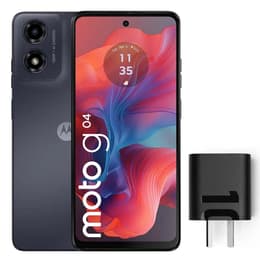
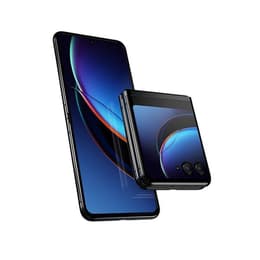
Motorola Moto G04 vs Motorola Razr 40 Ultra

  • 1-year warranty
  • Free standard shipping
  • Free 30-day returns
Motorola Razr 40 Ultra
Starting at

Refurbished price:A$551.00

Versus A$2,158.00 new

See options

Differences at a glance

The Motorola Moto G04 (2024) and the Motorola Razr 40 Ultra (2023) represent two entirely different philosophies in the smartphone market, contrasting a traditional budget-friendly bar phone with a high-end foldable device. While both run on the Android operating system, they serve drastically different segments of users through unique form factors and internal capabilities. Choosing between them depends heavily on whether daily priorities center around a simple, straightforward mobile experience or advanced foldable versatility.

Available Models

Colour

Storage

Scores

Durability

These two devices approach longevity and structural design from opposite angles, reflecting their respective market tiers and release schedules.

  • Software support and release timeline: The Moto G04 arrived in early 2024 running Android 14, while the Razr 40 Ultra launched in mid-2023 with Android 13. Foldable devices generally require more careful physical handling over time due to the moving hinge mechanism and flexible internal screen, whereas traditional bar phones like the Moto G04 feature fewer mechanical vulnerabilities.
  • Expected practical lifespan: Everyday software maintenance will keep both models functional for basic communication tasks, though high-end components in the Razr 40 Ultra handle evolving application demands more comfortably over several years of use.

Release year

2024

2023

Compatible with latest Update

Yes

Yes

Operating system

Android

Android

Foldable

No

Yes

Performance

Processing power and multitasking behavior differ significantly due to the hardware architecture packed inside each device.

  • Everyday responsiveness and multitasking: The Razr 40 Ultra handles demanding applications, heavy multitasking, and immersive gaming smoothly without stuttering. In contrast, the Moto G04 is optimized for essential daily tasks such as web browsing, messaging, and media streaming, utilizing modest RAM configurations that suit straightforward routines.
  • Storage and battery behavior: The Razr 40 Ultra provides generous internal storage options paired with a battery capacity that supports moderate daily use alongside fast wired and wireless charging. The Moto G04 features a larger physical battery capacity that easily stretches across multiple days of light use due to its less power-demanding hardware, complemented by standard wired charging speeds.

Screen quality

Visual output and display engineering are major differentiators between these two Motorola models.

  • Display technology: The Razr 40 Ultra features a vibrant foldable organic light-emitting diode internal screen paired with a large, highly functional external cover display, offering deep contrast and high refresh rates for seamless scrolling. The Moto G04 utilizes a standard liquid crystal display panel with an adequate refresh rate, providing clear visuals for daily reading and video playback.
  • Outdoor visibility and size: The Razr 40 Ultra's panels reach higher peak brightness levels for comfortable outdoor viewing in direct sunlight, while the Moto G04 offers a traditional, flat viewing surface with standard brightness levels suitable for indoor and shaded environments.

Resolution

720 x 1612

1080 x 2640

Screen type

IPS LCD

Foldable LTPO AMOLED

Audiovisual

Photography and media consumption capabilities vary widely to match the target use cases of each smartphone.

  • Camera system versatility: The Razr 40 Ultra includes a dual rear camera setup with a main sensor and an ultra-wide lens, supported by advanced software processing for detailed low-light photos and crisp video recording. The Moto G04 keeps photography simple with a single rear camera suitable for casual snapshots and basic document scanning.
  • Media and audio output: Audio playback on the Razr 40 Ultra delivers rich stereo sound suitable for media streaming, whereas the Moto G04 provides standard single-speaker audio adequate for routine calls and alarms.

Main camera

16 megapixels

12 megapixels

Front camera

5 megapixels

32 megapixels

Miscellaneous

Physical dimensions, connectivity standards, and daily handling characteristics establish distinct user experiences.

  • Build and portability: The Razr 40 Ultra folds into a compact square that slips easily into small pockets, utilizing premium frame materials and glass panels. The Moto G04 adopts a lightweight plastic unibody build that is easy to grip and comfortable for extended one-handed use.
  • Connectivity and sensors: The Razr 40 Ultra supports modern fifth-generation network connectivity and advanced wireless standards, while the Moto G04 relies on fourth-generation network compatibility and standard Bluetooth connectivity. Both models include responsive side-mounted fingerprint sensors for secure unlocking.

Weight

179 oz

192 oz

Screen size (in)

6.56

6,9

Network

4G

5G

SIM card

Dual Physical SIM

Physical SIM

Carrier compatibility

Unlocked

Unlocked

What the community thinks

User feedback from online communities highlights distinct preferences for each device. Owners of the Motorola Razr 40 Ultra frequently praise its innovative cover screen and compact folding design, though some note that foldable inner displays require careful handling. Meanwhile, users of the Moto G04 appreciate its straightforward reliability and dependable battery endurance, while acknowledging that its processing power is best kept to light, everyday tasks rather than heavy gaming.

Users prioritizing advanced multitasking, premium media consumption, and a compact pocket footprint will find the Razr 40 Ultra well-suited to their needs. Conversely, users seeking a simple, no-frills device focused on core communication and extended battery life will lean toward the Moto G04. For conscious consumers exploring sustainable choices, a quality-assured refurbished option provides an eco-friendly alternative to purchasing newly manufactured hardware. Ultimately, evaluating personal daily workflow requirements remains the most effective way to choose between these two distinct mobile experiences.
Our recent comparisons