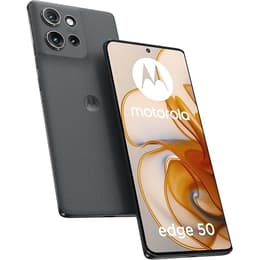

Google Pixel 6a vs Motorola Edge 50

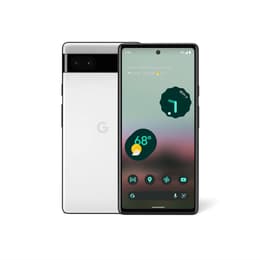
Google Pixel 6a
Google Pixel 6a
Starting at

Refurbished price:A$237.00

Versus A$569.00 new

See options
Motorola Edge 50
Motorola Edge 50
See options

The Google Pixel 6A, released in July 2022, and the Motorola Edge 50, launched in April 2024, represent distinct approaches to smartphone design and functionality. While both operate on the Android platform, the Pixel 6A focuses on Google's integrated software experience and computational photography, whereas the Motorola Edge 50 emphasizes a more modern display, faster charging capabilities, and a versatile camera system. These differences cater to varying user priorities, from software longevity to multimedia consumption.

Scores

Durability

When considering the long-term usability of these devices, their release timelines and software support policies are key factors. The Google Pixel 6A, launched in mid-2022, benefits from Google's commitment to software updates, while the Motorola Edge 50, a 2024 release, offers a more recent starting point for its support cycle.

  • Software Updates: The Google Pixel 6A is expected to receive Android OS updates until at least July 2025 and security updates until at least July 2027, providing a solid period of continued functionality and security enhancements. The Motorola Edge 50, having launched with Android 14, is typically promised three major OS updates, extending its Android version support further into the future, likely up to Android 17, with security updates generally lasting for four years from its release.
  • Build Quality and Durability: The Pixel 6A features a Gorilla Glass 3 front, an aluminum frame, and a plastic back, along with an IP67 rating for dust and water resistance. The Motorola Edge 50 offers an IP68 rating, indicating enhanced protection against dust and water immersion, and typically uses Gorilla Glass for its display, often paired with a vegan leather or acrylic back and an aluminum frame, suggesting a robust construction.
  • Practical Lifespan: Given the current date of 2026, the Motorola Edge 50, being a newer device, inherently offers a longer practical lifespan in terms of hardware and software relevance. However, the Pixel 6A's extended software support from Google helps it remain a viable option for users who prioritize software experience over the absolute latest hardware.

Release year

2022

2024

Compatible with latest Update

Yes

Yes

Foldable

No

No

Performance

The performance of a smartphone is largely determined by its internal components, influencing how smoothly applications run and how efficiently it handles demanding tasks. Both devices offer capable performance for everyday use, but they differ in their underlying architecture and resulting responsiveness.

  • Processing Power: The Google Pixel 6A is equipped with Google's first-generation Tensor processor, designed for efficient AI and machine learning tasks, contributing to smooth navigation and quick app launches. The Motorola Edge 50 utilizes a current-generation Snapdragon 7 series processor, which provides strong performance for multitasking, gaming, and general productivity.
  • Multitasking and Storage: The Pixel 6A comes with 6GB of RAM and 128GB of internal storage, which is sufficient for most users and common applications. The Motorola Edge 50 typically offers configurations with 8GB or 12GB of RAM and storage options up to 512GB, providing more headroom for heavy multitasking and storing a larger volume of data and applications.
  • Battery Behavior: The Pixel 6A houses a 4410 mAh battery, which generally provides a full day of moderate use, though heavy usage may require a midday top-up. The Motorola Edge 50 features a 4500 mAh battery, and user reports suggest it offers a long battery life, often lasting through a full day even with intensive use.

Memory (GB)

6 GB

12 GB

Screen quality

The display is a primary interface for smartphone interaction, and both the Pixel 6A and Motorola Edge 50 offer distinct visual experiences tailored to different preferences.

  • Display Technology and Clarity: The Google Pixel 6A features a 6.1-inch OLED display with a resolution of 1080 x 2400 pixels, delivering deep blacks and vibrant colors suitable for media consumption and daily tasks. The Motorola Edge 50 boasts a larger 6.7-inch pOLED display with a higher 1.5K resolution (1220 x 2712 pixels), offering enhanced sharpness and detail.
  • Brightness and Smoothness: The Pixel 6A's display provides adequate brightness for indoor and outdoor viewing, though it has a standard 60Hz refresh rate. The Motorola Edge 50 stands out with a 144Hz refresh rate, resulting in noticeably smoother scrolling and more fluid animations, and can reach a peak brightness of up to 2000 nits, making it highly visible even in bright sunlight.
  • Viewing Experience: The Pixel 6A's smaller screen size makes it more manageable for one-handed use, while the Motorola Edge 50's larger, curved display offers a more expansive and immersive viewing experience, particularly for videos and gaming.

Resolution

1080 x 2400

1220x2712

Audiovisual

Both smartphones offer capable camera systems, but they approach photography with different hardware configurations and processing philosophies, impacting the final image and video output.

  • Rear Camera System: The Google Pixel 6A features a dual-camera setup with a 12.2 MP main sensor with optical image stabilization (OIS) and a 12 MP ultrawide lens. Its strength lies in Google's computational photography, which enhances image quality, especially in challenging lighting. The Motorola Edge 50 offers a more versatile triple-camera system, including a 50 MP main sensor with a wide aperture and OIS, a 13 MP ultrawide lens that doubles as a macro camera, and a 10 MP telephoto lens with 3x optical zoom.
  • Photography Performance: The Pixel 6A is praised for its consistent and detailed photos in various conditions, with strong low-light performance thanks to its software processing. The Motorola Edge 50's main camera captures impressive detail and sharpness in well-lit environments, and its telephoto lens provides good results for zoomed shots.
  • Video Recording and Front Camera: Both devices are capable of recording 4K video at 30fps, with the Pixel 6A also offering 4K at 60fps on its main camera. The Pixel 6A has an 8 MP front camera. The Motorola Edge 50 features a high-resolution 50 MP front camera with autofocus, which is noted for its detailed selfies and video calls.

Front camera

8 megapixels

32 megapixels

Miscellaneous

Beyond the core features, several practical elements contribute to the overall user experience and differentiate these two smartphones.

  • Connectivity and Ports: Both devices support 5G connectivity. The Pixel 6A includes Wi-Fi 6 and Bluetooth 5.2, with a USB-C 3.1 port. The Motorola Edge 50 offers more advanced Wi-Fi 6E and Bluetooth 5.4, also featuring a USB-C 3.1 port. Neither device includes a traditional headphone jack.
  • Biometric Security: Both smartphones incorporate under-display fingerprint sensors for secure unlocking.
  • Design and Handling: The Pixel 6A has dimensions of 152.2 x 71.8 x 8.9 mm and weighs 178g, making it a more compact and lighter device. The Motorola Edge 50 is slightly larger and heavier at 161.2 x 73.7 x 8.2 mm and 186g, offering a larger screen but potentially requiring two-handed operation for some users. The Motorola Edge 50 also features stereo speakers with Dolby Atmos support, enhancing its audio output.

Weight

250 oz

180 oz

Screen size (in)

6.1

6.7

SIM card

Physical SIM + eSIM

Physical SIM

Carrier compatibility

Unlocked

Unlocked

The Google Pixel 6A and Motorola Edge 50 cater to different user needs, each presenting a compelling set of features. The Pixel 6A is often praised for its exceptional camera performance, driven by Google's advanced software, and its consistent, timely software updates. Users frequently highlight its clean Android experience and reliable day-to-day performance. Some common criticisms have included its 60Hz display, which can feel less fluid compared to higher refresh rate screens, and its battery life, while good, may not be as extended as some competitors under heavy use.

The Motorola Edge 50, on the other hand, receives acclaim for its vibrant, high-refresh-rate display, fast charging capabilities, and a versatile camera system that includes a telephoto lens. Users appreciate its premium design and robust build quality. However, some user feedback points to occasional camera processing delays and a less consistent software update track record compared to Google's Pixel line, though Motorola has been working to improve this.

Users prioritizing a compact device with a strong emphasis on computational photography and guaranteed long-term software support may find the Google Pixel 6A well-suited to their needs. Conversely, those who value a larger, smoother display, faster charging, and a more comprehensive camera hardware setup, including optical zoom, might lean towards the Motorola Edge 50. Both devices offer a quality-assured refurbished option, providing an eco-friendly alternative for consumers looking to make informed and sustainable choices.


See all articles

Our recent comparisons