iPhone 13 mini vs Motorola Razr 40 Ultra

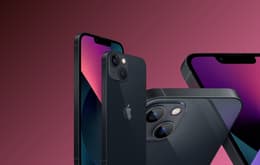
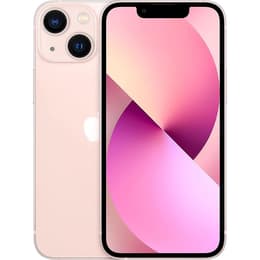
iPhone 13 mini
iPhone 13 mini
Starting at

Refurbished price:A$368.00

Versus A$1,049.00 new

See options
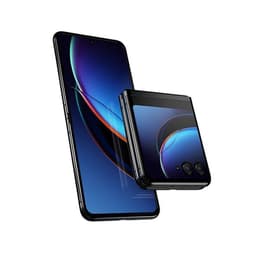
Motorola Razr 40 Ultra
See options

The iPhone 13 Mini, released in September 2021, is a compact smartphone running Apple's iOS ecosystem. In contrast, the Motorola Razr 40 Ultra, launched in June 2023, is a foldable Android smartphone that offers a unique clamshell design. These devices cater to different user preferences, with the iPhone 13 Mini focusing on a traditional small form factor and the Razr 40 Ultra emphasizing a large, flexible display in a pocketable design when folded. Both offer distinct operating system experiences, iOS for the iPhone and Android for the Razr.

Scores

Durability

The expected practical lifespan of a smartphone is influenced by its release timeline, software support, and physical resilience.

  • Release Timeline and Software Support: The iPhone 13 Mini, released in September 2021, benefits from Apple's extended software support, typically receiving iOS updates for five to six years from its launch. As of early 2026, it is compatible with iOS 18, suggesting continued support for several more years. The Motorola Razr 40 Ultra, launched in June 2023, runs on Android 13 and is expected to receive multiple major Android updates, though the exact duration of support can vary.
  • Physical Durability: The iPhone 13 Mini features a Ceramic Shield front cover and an aluminum frame, offering robust protection against drops and scratches. It also boasts an IP68 rating for water and dust resistance, allowing submersion up to 6 meters for 30 minutes. The Motorola Razr 40 Ultra, as a foldable device, has a different durability profile. Its main display is flexible, which inherently introduces different considerations compared to a rigid screen. It carries an IP52 rating, indicating splash resistance rather than full water immersion protection.
  • Repairability: The iPhone 13 Mini initially received a lower repairability score, but this improved to 6 out of 10 after a software update addressed Face ID issues related to screen replacements. Foldable phones like the Razr 40 Ultra generally present more complex repair challenges due to their intricate hinge mechanisms and flexible display technology.

Release year

2021

2023

Compatible with latest Update

Yes

Yes

Operating system

iOS

Android

Foldable

No

Yes

Performance

Both devices offer capable performance for daily tasks, but their underlying architectures and user experiences differ.

  • Processing Power and Responsiveness: The iPhone 13 Mini is equipped with a powerful processor that handles demanding applications, multitasking, and graphic-intensive games smoothly. Users can expect quick app loading times and fluid navigation through the operating system. The Motorola Razr 40 Ultra features a current-generation processor designed to deliver strong performance across various tasks, from everyday browsing to more intensive gaming and productivity applications. Its performance ensures a responsive user experience, even with the demands of a foldable interface.
  • Storage and Multitasking: The iPhone 13 Mini is available with storage options up to 512GB, providing ample space for apps, photos, and videos. It typically comes with 4GB of RAM, which is optimized by iOS for efficient multitasking. The Motorola Razr 40 Ultra offers storage configurations up to 512GB and typically includes 8GB or 12GB of RAM. This larger RAM capacity supports extensive multitasking and ensures that multiple applications can run concurrently without significant slowdowns, which is beneficial for power users.
  • Battery Behavior: The iPhone 13 Mini, despite its smaller physical size, offers improved battery life compared to its predecessor, often lasting a full day for moderate usage. However, heavy users might find themselves needing to recharge before the day ends. The Motorola Razr 40 Ultra has a 3800 mAh battery. Its battery life is generally considered average for a flagship device, with some users potentially requiring a charge during a day of heavy use, especially given its high refresh rate displays.

Memory (GB)

4 GB

8 GB

Screen quality

The display experience on these two devices is a primary differentiator, owing to their distinct form factors and display technologies.

  • Display Technology and Clarity: The iPhone 13 Mini features a 5.4-inch Super Retina XDR OLED display, offering deep blacks, vibrant colors, and excellent contrast. Its resolution of 2340x1080 pixels results in a sharp 476 pixels per inch (ppi), providing clear and detailed visuals. The Motorola Razr 40 Ultra boasts a 6.9-inch foldable pOLED main display with a resolution of 1080x2640 pixels. This larger, flexible screen provides an expansive viewing area when unfolded. It also features a highly functional 3.6-inch pOLED external cover display with a resolution of 1056x1066 pixels, allowing for significant interaction without opening the phone.
  • Brightness and Refresh Rate: The iPhone 13 Mini's display reaches a typical brightness of 800 nits and a peak of 1200 nits for HDR content, ensuring good visibility in various lighting conditions. It has a standard 60Hz refresh rate. The Motorola Razr 40 Ultra's main display offers a high 165Hz refresh rate, contributing to exceptionally smooth scrolling and fluid animations. Its peak brightness can reach 1400 nits, providing excellent outdoor visibility. The cover display also features a high 144Hz refresh rate and up to 1100 nits peak brightness.
  • Viewing Experience: The iPhone 13 Mini provides a compact and easily manageable viewing experience, ideal for one-handed use and users who prefer a smaller device. The Motorola Razr 40 Ultra, when unfolded, offers a large, immersive screen suitable for media consumption and multitasking, while its versatile cover display allows for quick interactions and even running full apps without opening the device.

Resolution

1080 x 2340

1080 x 2640

Screen type

Super Retina XDR OLED

Foldable LTPO AMOLED

Audiovisual

Both smartphones offer capable camera systems, but with different strengths and features tailored to their respective designs.

  • Rear Camera System: The iPhone 13 Mini features a dual 12-megapixel camera system, comprising a wide-angle lens with a f/1.6 aperture and sensor-shift optical image stabilization (OIS), and an ultra-wide-angle lens with a f/2.4 aperture. This setup is known for producing consistent, high-quality images with good color accuracy and detail in various lighting conditions. The Motorola Razr 40 Ultra also has a dual rear camera setup, with a 12-megapixel main sensor featuring a f/1.5 aperture and OIS, alongside a 13-megapixel ultra-wide-angle lens (f/2.2) that also supports macro photography. Its main camera performs well in good lighting, though overall camera performance is often described as good but not exceptional for a flagship.
  • Low-Light and Video Performance: The iPhone 13 Mini excels in low-light photography with its Night mode and sensor-shift OIS, capturing bright and detailed images. It supports 4K video recording at up to 60 frames per second, including a Cinematic mode that adds a shallow depth-of-field effect to videos. The Razr 40 Ultra's main camera, with its wide aperture and OIS, also offers decent low-light capabilities. It records 4K video at up to 60 frames per second.
  • Front Camera and Audio: The iPhone 13 Mini includes a 12-megapixel front-facing camera (f/2.2) that supports Face ID and offers good quality for selfies and video calls. The Motorola Razr 40 Ultra has a 32-megapixel front camera on its main display, which uses pixel binning to produce 8-megapixel images. A unique advantage of the Razr is the ability to use its higher-quality main rear cameras for selfies when the phone is folded, utilizing the cover display for framing. Both devices offer stereo speakers for media consumption and clear microphone quality for calls.

Main camera

12 megapixels

12 megapixels

Front camera

12 megapixels

32 megapixels

Miscellaneous

Beyond core specifications, several practical elements differentiate these two devices in daily use.

  • Connectivity and Ports: Both devices support 5G connectivity for fast mobile data. The iPhone 13 Mini features Wi-Fi 6 and Bluetooth 5.0, and uses Apple's proprietary Lightning port for charging and data transfer. The Motorola Razr 40 Ultra supports Wi-Fi 6E and Bluetooth 5.2, offering slightly newer wireless standards. It uses a universal USB-C port, which is a common standard across many modern electronic devices.
  • Biometric Security and Sensors: The iPhone 13 Mini relies on Face ID for secure facial recognition and authentication. It includes standard sensors like an accelerometer, gyroscope, proximity sensor, and barometer. The Motorola Razr 40 Ultra incorporates a side-mounted fingerprint sensor for biometric security, a common and convenient method for unlocking the device. It also includes a similar array of sensors.
  • Design, Weight, and Materials: The iPhone 13 Mini is known for its compact and lightweight design, measuring 131.5 x 64.2 x 7.65 mm and weighing 141 grams. It features an aluminum frame with a glass front (Ceramic Shield) and glass back. The Motorola Razr 40 Ultra has a distinct foldable design. When unfolded, it measures 170.83 x 73.95 x 6.99 mm, and when folded, it becomes a compact 88.42 x 73.95 x 15.1 mm. It weighs 188.5 grams. Its construction involves an aluminum alloy frame and Gorilla Glass Victus on the cover display, with a flexible plastic display on the interior.

Weight

140 oz

1 oz

Screen size (in)

5,4

6.9

Network

5G

5G

SIM card

Physical SIM + eSIM

Dual Physical SIM

Carrier compatibility

Unlocked

Unlocked

The iPhone 13 Mini and Motorola Razr 40 Ultra cater to distinct user preferences, each offering a unique smartphone experience. Users often praise the iPhone 13 Mini for its compact size, making it comfortable for one-handed use and easy pocketability. Its consistent camera performance, robust software support, and the overall reliability of the iOS ecosystem are frequently highlighted as strong points. Some criticisms, however, point to its smaller battery capacity compared to larger phones, which might necessitate more frequent charging for heavy users, and its standard 60Hz display refresh rate.

The Motorola Razr 40 Ultra receives commendation for its innovative foldable design and the highly functional external cover display, which allows for significant interaction without opening the device. Its high refresh rate displays and modern Android features are also frequently praised. Common concerns revolve around the long-term durability of the foldable screen and hinge mechanism, as well as its camera performance, which, while good, may not always match the top-tier flagships in all conditions.

Users prioritizing a traditional, compact smartphone experience with long-term software support and a focus on consistent performance and camera quality may prefer the iPhone 13 Mini. Its smaller form factor is ideal for those who value portability and ease of one-handed use. Conversely, users who are drawn to cutting-edge design, a large and immersive flexible display, and the versatility of a foldable form factor, coupled with the customization options of Android, will find the Motorola Razr 40 Ultra well-suited to their needs. It appeals to those who want a device that stands out and offers a different way to interact with their smartphone.

For those considering either of these devices, exploring quality-assured refurbished options can be an eco-friendly alternative, providing access to these technologies while supporting sustainable consumption.

See all articles

Our recent comparisons