
iPhone 12 Pro vs Motorola Razr 40 Ultra

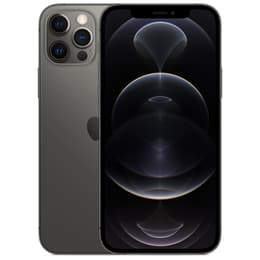
iPhone 12 Pro
iPhone 12 Pro
Starting at

Refurbished price:A$411.00

Versus A$1,119.00 new

See options
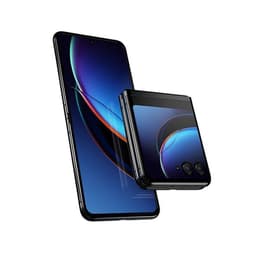
Motorola Razr 40 Ultra
See options

The iPhone 12 Pro, released in October 2020, and the Motorola Razr 40 Ultra, launched in June 2023, represent distinct approaches to smartphone design and functionality. While the iPhone 12 Pro offers a traditional premium smartphone experience with Apple's iOS ecosystem, the Razr 40 Ultra introduces a modern foldable clamshell design running on Android. The primary differentiators lie in their form factor, operating systems, and the unique user interactions enabled by the Razr 40 Ultra's folding screen and external display.

Scores

Durability

These two devices have different release timelines and, consequently, varying expectations for software support and practical lifespan.

  • Release and Software Support: The iPhone 12 Pro, released in late 2020, typically receives iOS updates for approximately 5-6 years from its launch, with current iOS versions still supported as of late 2025. The Motorola Razr 40 Ultra, launched in mid-2023, benefits from a more recent release, implying a longer period of Android operating system and security updates.
  • Physical Durability: The iPhone 12 Pro features a Ceramic Shield front cover and an IP68 rating for water and dust resistance, allowing submersion in up to 6 meters of water for 30 minutes. The Razr 40 Ultra has an IP52 water-repellent design and Gorilla Glass Victus on its cover screen, offering splash protection. However, as a foldable device, some users have reported concerns regarding the long-term durability of the internal folding screen and hinge mechanism.
  • Repairability: The iPhone 12 Pro received an iFixit repairability score of 6 out of 10, indicating that while some components are modular and accessible, proprietary screws and increased waterproofing can complicate repairs. Information on the Razr 40 Ultra's repairability score is less widely available, but foldable designs generally present more complex repair challenges due to their intricate hinge and flexible display components.

Release year

2020

2023

Compatible with latest Update

Yes

Yes

Operating system

iOS

Android

Foldable

No

Yes

Performance

The performance of both devices is influenced by their respective processors and software optimizations, impacting daily usage and demanding applications.

  • Processing Power: The iPhone 12 Pro is equipped with a powerful processor that ensures smooth operation for everyday tasks, multitasking, and graphically intensive applications. Users generally report a fluid experience across the iOS interface and within apps. The Motorola Razr 40 Ultra features a current-generation processor that also delivers smooth performance for general use and gaming, though some users note it can generate heat during prolonged heavy use.
  • Multitasking and Storage: The iPhone 12 Pro typically comes with 6GB of RAM, contributing to efficient multitasking and app management. Storage options range from 128GB to 512GB. The Razr 40 Ultra offers 8GB or 12GB of RAM, providing ample capacity for running multiple applications simultaneously, and is available with 256GB or 512GB of internal storage.
  • Battery Behavior: The iPhone 12 Pro's battery capacity is designed to last through a typical day of moderate use, though heavy activities like video calls can lead to quicker drainage. The Motorola Razr 40 Ultra's battery is reported to offer decent endurance, potentially lasting a full day with moderate usage, especially when utilizing its external display. However, continuous use of the main folding screen can lead to faster battery depletion.

Memory (GB)

6 GB

8 GB

Screen quality

The display experience differs significantly between these two smartphones, primarily due to the Razr 40 Ultra's unique foldable design and dual-screen setup.

  • Main Display Technology: The iPhone 12 Pro features a 6.1-inch Super Retina XDR OLED display, known for its deep blacks, vibrant colors, and excellent contrast. It offers a resolution of 2532x1170 pixels at 460 ppi. The Motorola Razr 40 Ultra boasts a larger 6.9-inch pOLED main display with a resolution of 2640x1080 pixels, providing a sharp and immersive viewing experience.
  • Refresh Rate and Brightness: The iPhone 12 Pro has a standard 60Hz refresh rate, which provides a smooth experience for most users. Its display reaches a typical brightness of 800 nits and a peak of 1200 nits for HDR content, ensuring good visibility in various lighting conditions. In contrast, the Razr 40 Ultra's main display offers a high 165Hz refresh rate, resulting in exceptionally fluid scrolling and responsiveness, and a peak brightness of 1400 nits.
  • External Display (Razr 40 Ultra): A key feature of the Razr 40 Ultra is its large 3.6-inch pOLED cover display, which has a resolution of 1056x1066 pixels and a 144Hz refresh rate. This external screen is highly functional, allowing users to interact with apps, view notifications, and take selfies without opening the phone. The iPhone 12 Pro does not feature an external display.

Resolution

1170 x 2532

1080 x 2640

Screen type

Super Retina XDR OLED

Foldable LTPO AMOLED

Audiovisual

Both smartphones offer capable camera systems, but they cater to slightly different photographic needs and user experiences.

  • Rear Camera Systems: The iPhone 12 Pro features a versatile triple 12MP camera system, including Wide, Ultra Wide, and Telephoto lenses, along with a LiDAR scanner for improved low-light autofocus and Night mode portraits. It excels in capturing detailed images with good dynamic range and natural white balance. The Motorola Razr 40 Ultra comes with a dual-camera setup on the rear: a 12MP wide-angle lens with optical image stabilization (OIS) and a 13MP ultra-wide lens that also functions for macro photography. Its main camera performs well in good lighting conditions, producing vibrant colors.
  • Low-Light and Video Performance: The iPhone 12 Pro's Night mode is effective across all its rear cameras, significantly brightening photos in very dim conditions. It supports HDR video recording with Dolby Vision at up to 60 frames per second (fps) in 4K. The Razr 40 Ultra's main camera, with its wide aperture and OIS, aids in low-light shooting, though some users have noted that its HDR optimization can sometimes lead to duller whites. It records 4K video at 30/60fps.
  • Front Camera and Unique Features: Both devices feature 12MP front-facing cameras for selfies and video calls. The Razr 40 Ultra's large external display allows users to utilize the higher-quality rear cameras for selfies, offering a distinct advantage for self-portraits. The iPhone 12 Pro also supports Apple ProRAW for advanced photo editing.

Main camera

12 megapixels

12 megapixels

Front camera

12 megapixels

32 megapixels

Miscellaneous

Beyond core functionalities, several other features contribute to the overall user experience and practical utility of these smartphones.

  • Connectivity and Ports: Both devices support 5G cellular communication, Wi-Fi 6, and Bluetooth 5.0 (iPhone 12 Pro) or 5.2 (Razr 40 Ultra). The iPhone 12 Pro uses Apple's proprietary Lightning port for charging and data transfer. The Motorola Razr 40 Ultra features a more universal USB-C 2.0 port.
  • Biometric Security and Sensors: The iPhone 12 Pro relies on Face ID for secure facial recognition. It also includes a U1 Ultra Wideband chip for spatial awareness and NFC for contactless payments. The Razr 40 Ultra incorporates a fingerprint sensor for biometric authentication, often integrated into the power button.
  • Design and Handling: The iPhone 12 Pro has a flat-edged design with a stainless steel frame and a glass back, weighing 189 grams and measuring 146.7 x 71.5 x 7.4 mm. Its build quality is often praised. The Motorola Razr 40 Ultra's clamshell design allows it to fold into a compact form (88.4 x 73.95 x 15.1 mm) from its open state (170.83 x 73.95 x 6.9 mm), making it highly portable. It weighs between 184.5g and 188.5g, depending on the finish.

Weight

187 oz

1 oz

Screen size (in)

6.1

6.9

Network

5G

5G

SIM card

Physical SIM + eSIM

Dual Physical SIM

Carrier compatibility

Unlocked

Unlocked

The iPhone 12 Pro and Motorola Razr 40 Ultra cater to different user preferences, each offering a distinct set of advantages. The iPhone 12 Pro is frequently praised for its robust build quality, consistent performance, and a camera system that delivers reliable results across various conditions, particularly with its advanced video capabilities and LiDAR-assisted low-light photography. Users appreciate the seamless integration within the Apple ecosystem and the long-term software support. However, some users have noted its 60Hz display as a point of comparison to newer devices and its battery life can be a concern for heavy users.

The Motorola Razr 40 Ultra stands out with its innovative foldable design and highly functional external display, which users find incredibly useful for quick interactions and creative photography. Its high refresh rate main display offers a noticeably smoother visual experience. Criticisms often revolve around battery life for prolonged main screen use and, for some, the camera performance compared to traditional flagships. Concerns about the durability of the folding screen and hinge have also been raised by a segment of users.

Users prioritizing a traditional, highly polished smartphone experience with strong camera performance and extended software longevity may find the iPhone 12 Pro well-suited to their needs. Conversely, individuals seeking a compact, stylish device with a unique folding form factor and an interactive external display, who value portability and a fresh user experience, might lean towards the Motorola Razr 40 Ultra. Both devices offer compelling features, and considering a quality-assured refurbished option for either model can provide an eco-friendly alternative for consumers.
See all articles

Our recent comparisons