iPhone 13 vs Motorola Edge 50 Fusion

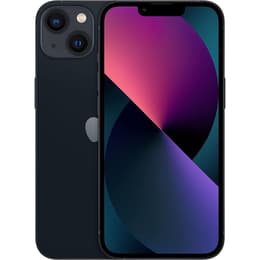
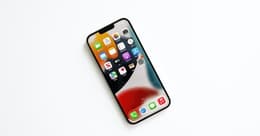
iPhone 13
iPhone 13
Starting at

Refurbished price:A$413.00

Versus A$1,099.00 new

See options
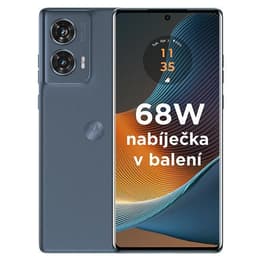
Motorola Edge 50 Fusion
See options

The iPhone 13, released in September 2021, and the Motorola Edge 50 Fusion, launched in April 2024, represent distinct approaches to smartphone design and functionality. While the iPhone 13 operates on Apple's iOS ecosystem, the Edge 50 Fusion runs on Android, offering different user experiences. Key differentiators include their respective operating systems, display technologies, and camera philosophies, catering to varied user preferences.

Scores

Durability

When considering the practical lifespan of these devices, several factors come into play, including software support, physical durability, and ease of repair.

  • Software Longevity: The iPhone 13, launched in 2021, is expected to receive major iOS updates until approximately 2028, with security updates potentially extending beyond that. The Motorola Edge 50 Fusion, a newer device from 2024, is promised three major Android OS updates, likely up to Android 17, and four years of security updates.
  • Physical Durability: Both devices feature an IP68 rating for dust and water resistance, indicating a high level of protection against environmental elements. The iPhone 13 incorporates a Ceramic Shield front cover for enhanced drop performance, while the Edge 50 Fusion uses Corning Gorilla Glass 5 for screen protection.
  • Repairability: The iPhone 13 initially received a repairability score of 5 out of 10 from iFixit, which later improved to 6 out of 10 after an iOS update addressed a Face ID issue related to screen replacements. Information regarding the Motorola Edge 50 Fusion's repairability score is less widely available, but its construction typically involves modular components.

Release year

2021

2024

Compatible with latest Update

Yes

Yes

Operating system

iOS

Android

Foldable

No

No

Performance

The performance of a smartphone is influenced by its internal components, affecting everything from app responsiveness to multitasking capabilities and battery endurance.

  • Processing Power: The iPhone 13 is equipped with a powerful processor that handles demanding applications and graphics-intensive games smoothly, providing a responsive user experience. The Motorola Edge 50 Fusion features a current-generation mid-range processor that capably manages everyday tasks, multitasking, and moderate gaming, though it may not match the peak performance of higher-end chipsets for the most intensive applications.
  • Storage and Multitasking: Both devices offer various storage configurations, allowing users to choose based on their needs for apps, photos, and videos. The amount of RAM in each device contributes to its ability to keep multiple applications open and switch between them efficiently.
  • Battery Behavior: The iPhone 13 provides reliable battery life, often lasting through a full day of typical usage, with up to 19 hours of video playback. The Motorola Edge 50 Fusion, with its larger battery capacity, is noted for its extended endurance, frequently offering up to two days of use for moderate users.

Memory (GB)

4 GB

12 GB

Screen quality

The display is a primary interface for smartphone interaction, and differences in technology, resolution, and refresh rate significantly impact the visual experience.

  • Display Technology and Clarity: The iPhone 13 features a 6.1-inch Super Retina XDR OLED display, known for its deep blacks, vibrant colors, and high contrast. The Motorola Edge 50 Fusion boasts a larger 6.7-inch pOLED display, also offering rich colors and good contrast. Both provide clear visuals for media consumption and daily use.
  • Brightness and Refresh Rate: The iPhone 13 offers a typical brightness of 800 nits and a peak HDR brightness of 1200 nits, ensuring good visibility in various lighting conditions. Its refresh rate is 60Hz. The Edge 50 Fusion features a higher peak brightness of 1600 nits and a smoother 144Hz refresh rate, which can result in more fluid scrolling and a more responsive feel during interactions.
  • Viewing Experience: The iPhone 13's display provides a compact yet immersive viewing experience. The Motorola Edge 50 Fusion's larger screen and curved edges offer an expansive display area, which can enhance media viewing and gaming.

Resolution

1170 x 2532

1080 x 2400

Screen type

Super Retina XDR OLED

P-OLED

Audiovisual

Camera capabilities are a significant consideration for many users, encompassing photo and video quality, as well as specialized features.

  • Rear Camera Systems: The iPhone 13 features a dual 12-megapixel camera system with a wide and an ultra-wide lens. Its wide camera includes sensor-shift optical image stabilization (OIS) for improved low-light performance and stability. The Motorola Edge 50 Fusion offers a dual rear camera setup with a 50-megapixel main sensor featuring OIS and a 13-megapixel ultra-wide lens that also functions for macro photography.
  • Photography Performance: The iPhone 13 is recognized for its consistent image quality, producing detailed and well-balanced photos in various lighting conditions, with notable improvements in low-light scenarios. The Edge 50 Fusion's main camera performs well in good lighting, capturing clear and vibrant images, and offers decent results in low-light situations.
  • Video and Audio: The iPhone 13 supports video recording up to 4K at 60 frames per second and includes features like Cinematic mode for depth-of-field effects. The Motorola Edge 50 Fusion records video at up to 4K at 30 frames per second. Both devices provide capable microphone quality for calls and recording, and their speaker outputs are suitable for media consumption.

Main camera

12 megapixels

50 megapixels

Front camera

12 megapixels

32 megapixels

Miscellaneous

Beyond core features, several practical elements contribute to the overall user experience, from connectivity to physical design.

  • Connectivity and Ports: Both smartphones support 5G connectivity for fast mobile data. The iPhone 13 uses Wi-Fi 6 and Bluetooth 5.0, featuring a Lightning port for charging and data transfer. The Motorola Edge 50 Fusion supports Wi-Fi 6E and Bluetooth 5.2, and utilizes a USB-C port, offering broader compatibility with modern accessories.
  • Biometric Security: The iPhone 13 relies on Face ID for secure facial recognition. The Motorola Edge 50 Fusion incorporates an in-display fingerprint sensor for biometric authentication, alongside face unlock capabilities.
  • Design and Handling: The iPhone 13 has dimensions of 146.7 x 71.5 x 7.65 mm and weighs 174 grams, featuring a flat-edged design and an aluminum frame. The Motorola Edge 50 Fusion is slightly larger and marginally heavier at 161.9 x 73.1 x 7.9 mm and 175 grams, with a slim profile and curved display edges that contribute to comfortable handling. It is available with vegan leather or PMMA back finishes.

Weight

173 oz

175 oz

Screen size (in)

6,1

6.7

Network

5G

5G

SIM card

Physical SIM + eSIM

Dual Physical SIM

Carrier compatibility

Unlocked

Unlocked

Connector

Lightning

USB-C

User feedback for the iPhone 13 frequently highlights its robust camera performance, particularly its low-light capabilities and the introduction of Cinematic mode, as well as its significantly improved battery life compared to previous models. Common criticisms often point to the 60Hz refresh rate display, which some users find less fluid than higher refresh rate screens on competing devices, and the continued use of the Lightning port instead of USB-C.

For the Motorola Edge 50 Fusion, users often praise its vibrant and smooth 144Hz pOLED display, extended battery life, and fast charging capabilities. Its stylish design, often with vegan leather finishes, also receives positive remarks. Some users note that while its processor is capable for daily use, it may not offer flagship-level performance for the most demanding games or applications. The curved screen, while aesthetically pleasing, can be a divisive feature for some regarding accidental touches or screen protector application.

Users prioritizing a long-term software support commitment and a highly optimized ecosystem with consistent camera performance may find the iPhone 13 well-suited to their needs. Conversely, users who value a larger, high-refresh-rate display, extended battery life with rapid charging, and the flexibility of the Android operating system might lean towards the Motorola Edge 50 Fusion. Both devices offer compelling features for different user profiles, and considering a quality-assured refurbished option for either model can be an eco-friendly alternative.
See all articles

Our recent comparisons